
Steel Grating RFQ Photo Checklist: Product, Measurement, Packing and Loading Views
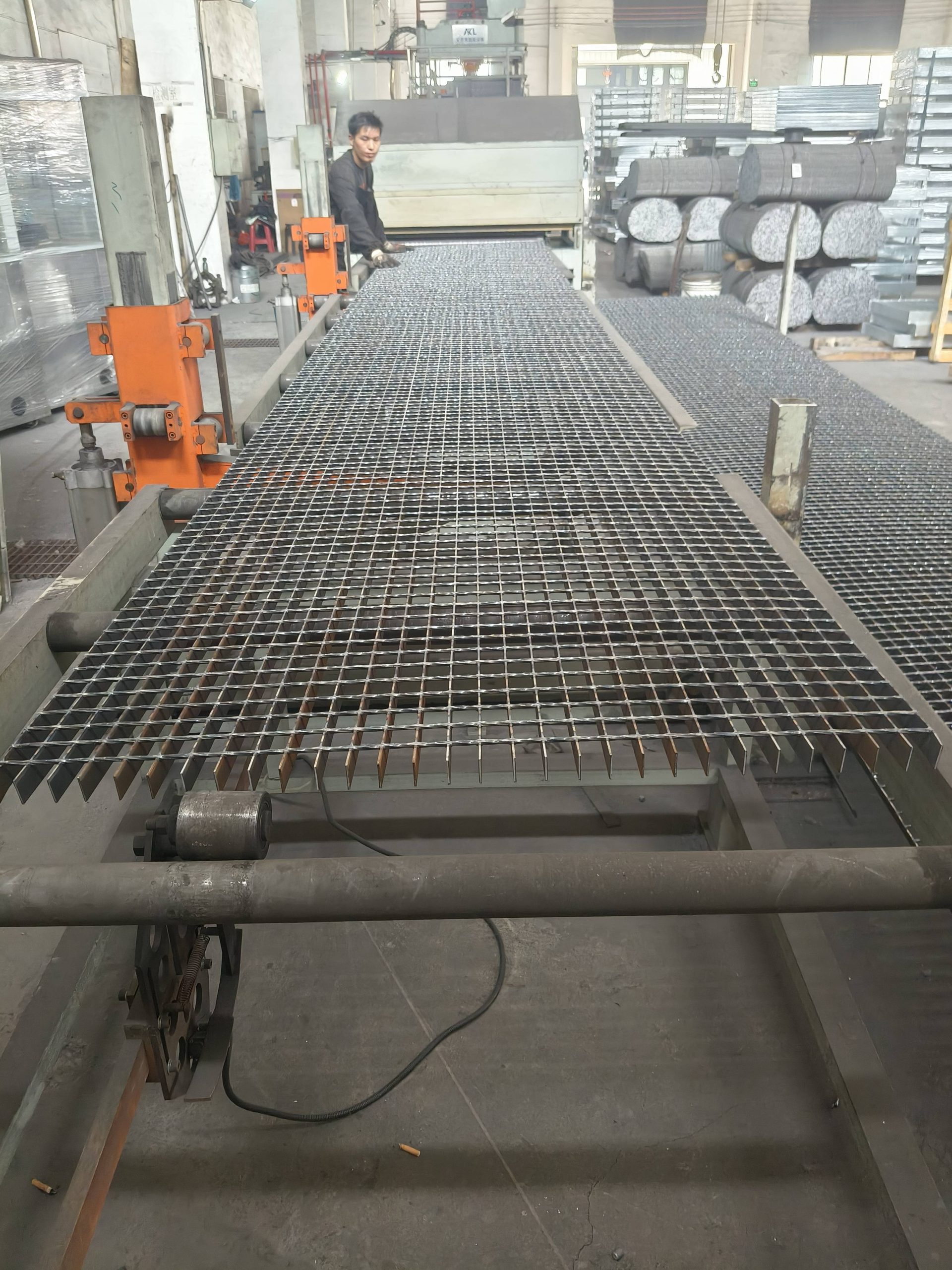
A useful steel grating photo set should answer one named buyer question at one production stage. Ask for a product or form view, a measurement-context view, a finished-panel or mark view, and a packing or loading view. Tie each image to the item mark or drawing revision, and keep every unstated value or acceptance decision unverified. Photos support an RFQ review; they do not replace the specification, drawing, test report or inspection record.
Start with the question the photo must answer
“Please send photos” is too broad. A distant factory image may show that grating is present but not identify the construction, panel mark or measurement. A close-up may show a tape or caliper but not the feature being checked, the units, the reference points or the specified tolerance.
Write the question first. Examples include:
- Is this image linked to the quoted construction and item mark?
- Does the photo show the complete panel or only a local detail?
- Which feature is the tape or caliper positioned against?
- Are bundle marks and the loading stage visible?
For the product and quotation fields that belong in the controlled request, use the steel bar grating product page and the steel grating export packing and loading guide. The photo checklist adds visual context; it does not redefine either owner.
Request four stage-labeled views
| Requested view | What to include | What the image can support | What it cannot prove by itself |
|---|---|---|---|
| Product or form view | Overall grating, visible construction, current stage and item reference | Visible product-family and production context | Construction code, dimensions, material, capacity, certification or completion |
| Measurement-context view | Overview plus close-up, instrument, units, contact points and measured feature label | That a measurement activity and its setup were photographed | The reading, method validity, calibration, tolerance, lot coverage or acceptance |
| Finished-panel or mark view | Full panel, edge condition, panel mark and drawing reference where permitted | Visible finished form, stacking and identification context | Current stock, exact size, finish specification, quantity, approval or delivery date |
| Packing or loading view | Bundle, protection, marks, handling stage and container context | Visible packing and loading activity | Packing adequacy, order quantity, destination, transport result or delivery |
The table is a request guide, not an inspection plan. If a numeric value or pass/hold decision matters, request the separate controlled record that states the specified value, method, result, tolerance source, reviewer and date.
Pair an overview with the detail
One close-up rarely carries enough context. Ask for an overview that identifies the panel or bundle, followed by the detail that answers the question. Keep the same item mark visible in both views when confidentiality rules allow it. If the mark cannot be shown publicly, use a privacy-safe reference that the buyer and QY can reconcile outside the public article.
For measurement context, the overview should show where the check occurs on the grating. The close-up should show the instrument, its orientation, units and contact or reference points. Do not read a value from an angled or low-resolution image and enter it into the specification. A photograph of a tape across a panel still does not establish the measured feature, correct method, tolerance or acceptance.
Keep visible facts separate from controlled facts
Use three columns in the buyer record:
| Record column | What belongs there | Example treatment |
|---|---|---|
| Visible in image | Direct observations only | “Tape is positioned across grating” |
| Confirmed by controlled document | Values and identities tied to a drawing, order or report | “Panel mark and required dimension: see drawing revision” |
| Unverified or follow-up required | Anything not supported by the image and document together | “Measured feature, reading and acceptance: request inspection record” |
This separation prevents a photograph from becoming an unsupported product claim. A bright surface does not confirm stainless grade or coating. Stacked panels do not confirm current stock. A factory scene does not confirm production capacity. A loaded container does not confirm that the packing method is suitable for a specific order.
Turn the QY photos into clear RFQ follow-ups
Use the four QY photos to organize the next request: link the factory view to the product stage and item mark; pair the tape image with a named feature and its controlled measurement record; tie the finished-panel view to the panel reference; and connect the loading view to bundle marks and the order-specific packing documents.
Know when a photo is not enough
Request a controlled drawing when panel geometry, bearing direction, cutouts, support interfaces or item marks matter. Request a test or product-data record when a performance value is required. Request a formal inspection record when the buyer needs the measured feature, specified value, method, actual result, tolerance source and acceptance decision.
Photos can accompany those records, but they should not silently replace them. Project approval, structural suitability, regulatory compliance and final acceptance remain with the responsible parties and the applicable controlled documents.
Send one concise photo request with the RFQ
For each requested image set, state:
- Product or construction requested.
- Item, panel or bundle reference.
- Drawing or specification revision.
- Production stage and view required.
- Date and quantity context.
- The exact unresolved question.
- The controlled document required for any value or decision.
Use the QY services page for the public drawing-review, fabrication, inspection and packing workflow. When the specification, drawing references and photo questions are ready, send the controlled package through the contact page. QY can review the quotation inputs and identify missing evidence without treating a photograph as proof of an unstated value or acceptance result.
Related links
Related products and RFQ guides
- Steel grating productsOpen the related product family section.
- Steel grating topic entrySteel grating family page for platform grating, stair treads, drain covers, serrated grating, galvanized grating and drawing-based RFQs.
- Galvanized steel gratingRelated product or guide page.
- Steel grating stair treadsRelated product or guide page.
- Steel Grating RFQ Checklist for International BuyersRFQ checklist for steel grating buyers covering application, panel or opening size, bearing bar direction, support span, finish, quantity, packing, destination and drawings.
- FRP Grating vs Galvanized Steel Grating for Wet AreasComparison guide for wet or corrosive area grating selection, covering FRP grating and galvanized steel grating by environment, traffic, support, cutouts and quotation details.


