
How to Record Woven Wire Mesh Crimp Geometry for an RFQ
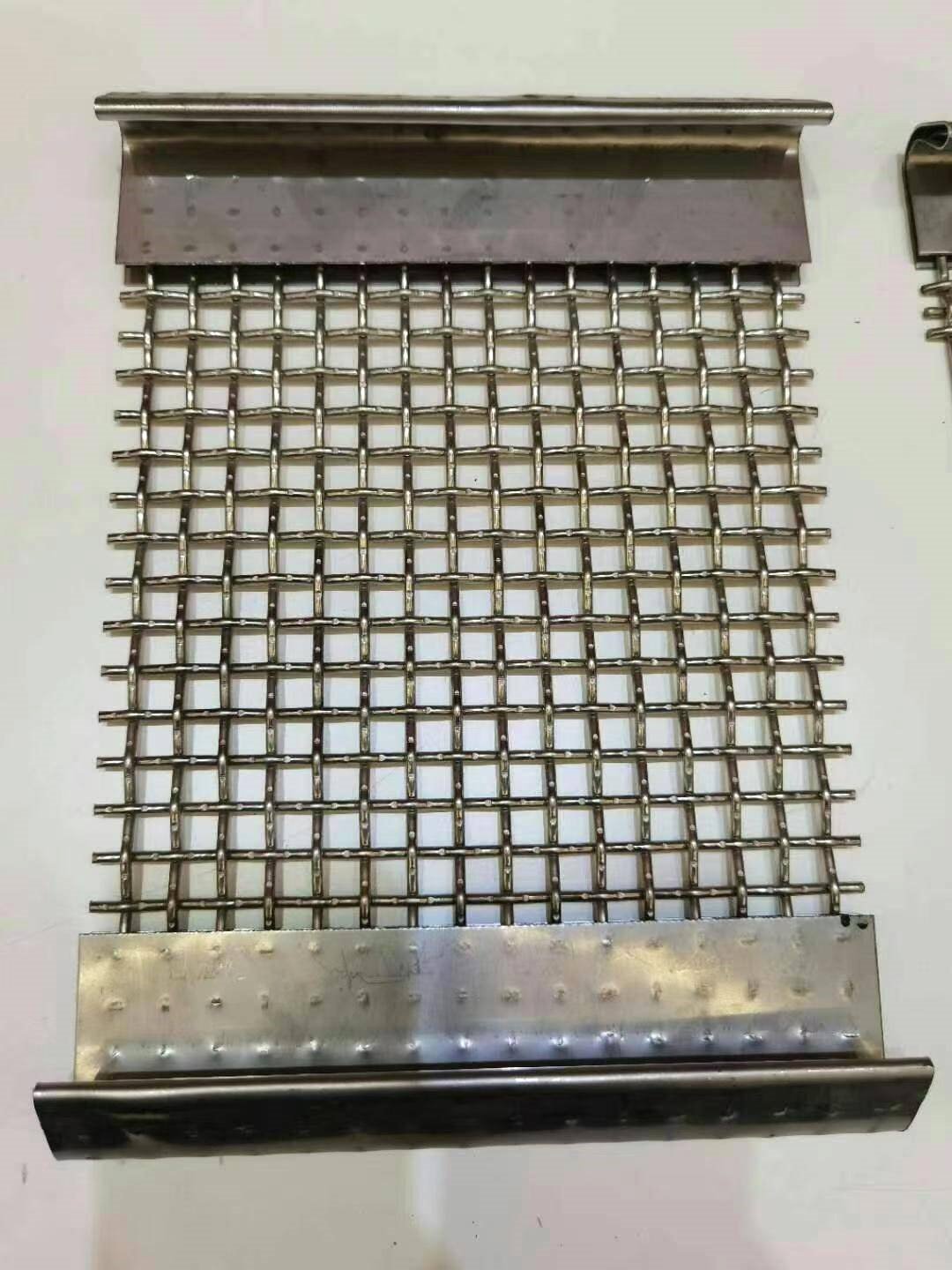
A crimp label alone is not a complete woven wire mesh specification. If a drawing, sample or supplier record says double crimp, lock crimp, intercrimp or flat top, keep that wording as a provisional identification and record the visible geometry, opening, wire diameter, directions, material, finished form and unknown fields separately. QY can review the resulting quotation record against its available woven-mesh scope; the name or photograph does not prove availability, interchangeability or performance.
Separate the crimp label from the mesh specification
Crimp describes corrugations or bends placed in the warp and fill wires to enable weaving and locate or lock the intersections. Weave, crimp and opening are related, but they are not interchangeable fields. A buyer still needs to define the two wire directions, opening or count, wire diameter, material and supplied form.
Names also vary between drawings and supplier catalogs. Common labels include plain or double crimp, lock crimp, intercrimp and flat top. Direct Metals' woven-wire terminology and Grating Pacific's woven-wire page confirm that these labels are used in supplier catalogs, but each page describes that supplier's conventions and products. Treat a supplied name as evidence from that source, not as a universal QY product code. When the name and the visible geometry do not clearly agree, mark the crimp as unknown and send the sample or controlled drawing for review.
The woven wire mesh product page confirms QY's published woven-mesh scope and identifies crimped or project-specified construction as a buyer-confirmation field. It does not state that every catalog label or construction is available.
Compare labels by visible geometry, not performance
Use the following clues to organize an inspection record. They are not acceptance criteria and do not prove that QY supplies the named construction.
| Provisional catalog label | Geometry to record | What remains unproven |
|---|---|---|
| Plain or double crimp | Record the over/under sequence, the positions of visible bends, and whether the source specifically calls it plain weave or double crimp | Supplier naming, finished opening, stability and suitability |
| Lock crimp | Whether a defined pocket or sharper bend appears to hold each crossing in position | Lock geometry, rigidity, tolerance and service result |
| Intercrimp | Whether additional bends appear along a wire between adjacent crossings | Number and spacing of intermediate crimps, strength and screening result |
| Flat top | Whether one face appears comparatively level while most visible offsets are on the opposite face | Required working face, wear behavior, flow and application approval |
Do not decide from the table alone. Photograph both faces and an edge, then preserve the drawing or previous-supplier term as a separate source field. A QY reviewer must confirm the applicable terminology and supply position case by case.
Photograph and mark the sample before choosing a name
Use a front view, back view and low-angle or edge view. Include a ruler or another controlled scale in at least one image. Mark the warp and fill directions if they are known, and identify which face is intended to face the material, walkway or visible side. For a sample described as flat top, the face orientation must remain explicit rather than inferred from one photograph.
Record what is observed and what is documented in separate columns. Do not turn an estimate from a photograph into an opening, wire diameter, alloy or tolerance.
| Record field | Buyer input | Hold point before quotation |
|---|---|---|
| Source label | Exact crimp term from the drawing, tag or previous order | Keep provisional when its source is unknown |
| Visible geometry | Front, back and low-angle photographs with direction marks | Do not name the construction from one distant image |
| Opening or count | Values in both directions, with units and measurement basis | Do not treat count and clear opening as the same field |
| Wire diameter | Measured or documented diameter in each direction | Do not use gauge without naming the gauge system |
| Material | Requested alloy or material record | Do not infer grade from color or appearance |
| Finished form | Roll, sheet, cut piece or framed item, including dimensions | Confirm edges, orientation and fabrication scope separately |
| Unknowns | Every unverified field marked `QY to review` | Do not fill gaps with a competitor catalog value |
Keep opening, count and wire diameter together
Two samples with similar surface patterns can still have different openings or wire diameters. Record both directions when the mesh is not visibly square or when the wires differ. The mesh count and opening guide explains why count, clear opening and wire diameter must stay together. If a gauge number is the only wire reference, use the gauge and decimal diameter guide and preserve the named gauge system.
For a replacement sample, do not assume the new mesh is interchangeable because the crimp looks similar. The replacement sample guide provides a controlled way to separate measured, documented and unknown fields.
Define form, edges and orientation as separate decisions
A crimp description does not define whether the mesh is supplied as a roll, cut sheet, strip or framed panel. State finished width and length, quantity, edge condition, orientation, flatness requirement, packing and any fabrication drawing. If the mesh will be tensioned, supported, cleaned or installed with one face in a specific direction, include that project condition for review without converting it into an unsupported performance claim.
The purchaser or responsible designer must approve application suitability, screening result, loading, wear, service life and any regulatory requirement. QY's review is limited to the requested product and quotation inputs unless a separate controlled test or approval record is provided.
Send one controlled crimp-identification package
For quotation review, send the source crimp name, front/back/edge photographs, opening or count in both directions, wire diameter, material, finished form, dimensions, edges, orientation, quantity, packing and the list of unknown fields. QY must confirm the applicable terminology and availability case by case.
The approved QY image associated with this article shows a real woven-wire sample. It does not identify a crimp type, opening, wire diameter, material, tolerance or performance. Send the controlled record and available sample evidence through the contact page; do not use a third-party catalog value as a QY specification.
Related links
Related products and RFQ guides
- Wire mesh and sheet metal productsOpen the related product family section.
- Wire mesh and sheet metal topic entryWire mesh and sheet metal family page for welded wire mesh, woven wire mesh, expanded metal mesh and perforated metal sheet RFQs.
- Welded wire meshRelated product or guide page.
- Woven wire meshRelated product or guide page.
- Expanded Metal vs Perforated Sheet: What to Confirm Before RFQComparison and RFQ guide for expanded metal and perforated sheet, covering manufacturing method, pattern, open area, material, thickness, sheet size, finish, quantity and packing.
- Wire Mesh Opening and Wire Diameter: What Buyers Should ConfirmWire mesh RFQ guide explaining opening, wire diameter, material, roll or panel format, finish, size, quantity, packing, destination and buyer confirmation details.


