
Perforated Sheet Edge Margins, Blank Areas and Hole Direction: RFQ Details Buyers Should Confirm
Updated:
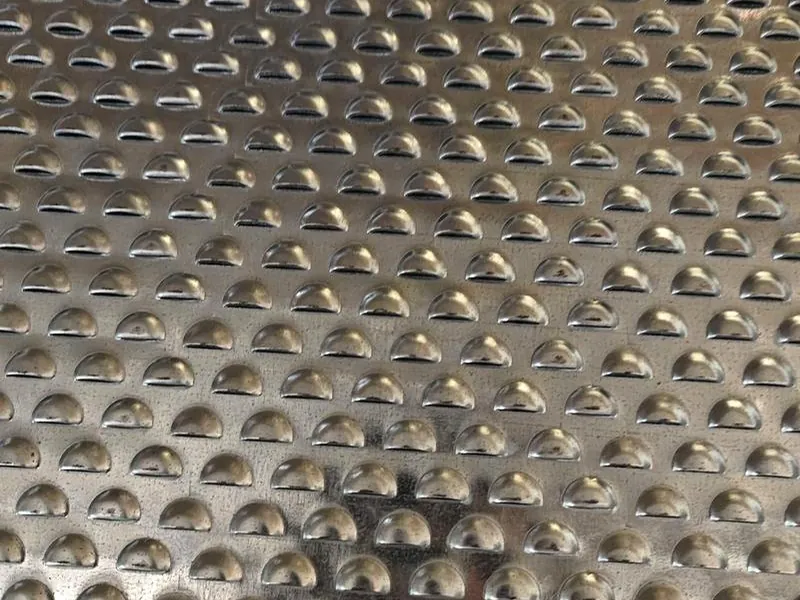
Measure a perforated sheet margin from the finished sheet edge to the nearest hole boundary, and label any hole-center dimension separately. Also draw internal blank zones and pattern direction. This prevents the same “10 mm margin” note from being interpreted as two different hole positions or as a blank strip that has not been located.
Why edge margins matter
Perforated metal sheets are not always perforated from edge to edge. Some panels need blank margins for bending, frames, bolts, welding, machine guards, screens, cabinets or architectural fixing. If the buyer sends only hole size and sheet size, the quotation may still need edge margin and blank area details.
The safest RFQ includes a drawing or marked sketch showing where perforation starts and stops. If a blank area is needed on one side, around all sides or around mounting holes, it should be shown clearly before quotation.
For product context, see perforated metal sheet, perforated hole pattern RFQ guide and machine guard perforated sheet RFQ.
Specification details to confirm
| Detail | Why it matters | What buyers should send |
|---|---|---|
| Finished sheet size | Defines the panel boundary | Width, length, tolerance and quantity |
| Hole shape and size | Defines the perforation pattern | Round, square, slot or drawing-specified hole size |
| Pitch or spacing | Defines hole layout | Center-to-center pitch, staggered pattern or drawing wording |
| Edge margin | Affects usable perforated area | Clear edge-to-hole-boundary distance; label any center offset separately. |
| Blank area | Affects fabrication and fixing | Unperforated strip, corner area, bending zone or mounting zone |
| Hole direction | Important for slots or directional patterns | Slot direction, long way direction or orientation on drawing |
| Material and thickness | Defines quotation basis | Carbon steel, stainless steel, aluminum and sheet thickness |
| Finish | Affects appearance and exposure review | Galvanized, powder coated, painted, brushed, mill finish or project wording |
| Packing and destination | Needed for export review | Pallet, protective film, bundle marks, loading note and destination |
Key terms to clarify
- Edge margin: The clear distance from the finished sheet edge to the nearest hole boundary; label any hole-center offset separately.
- Blank area: A non-perforated area reserved for bending, fixing, framing or mounting.
- Pitch: The center-to-center distance between holes.
- Hole direction: The orientation of slots or directional patterns on the finished sheet.
State the edge and hole datum explicitly
For a round hole, an edge-to-hole-boundary margin and an edge-to-center offset differ by the hole radius when measured normal to that edge. Hypothetical example: a 6 mm diameter hole with a 10 mm clear margin has its center 10 + 6 / 2 = 13 mm from the edge. If 10 mm instead denotes the center offset, the clear margin is 10 − 6 / 2 = 7 mm. These are drawing examples, not QY manufacturing limits.
Label left, right, upper and lower margins in one stated finished view; do not assume opposite sides are equal. Show internal blank strips, mounting areas and bend zones separately from the outer borders. A required blank region still needs a location and dimensions, rather than only the words “leave margin”.
Mark the long axis of slots or the pattern direction relative to the finished panel and the chosen face. Identify whether dimensions describe a flat blank or the formed part, and show the bend lines where relevant. Press feed direction, slot direction and finished-part orientation should not be left as an unlabeled single arrow.
Before approval, coordinate hole diameter, center pitch, row arrangement, edge-hole treatment, final sheet dimensions and tolerances on the same revision. The example above locates one edge; it does not prove that every requested margin and pitch fits a complete repeated pattern. Resolve that layout on the finished drawing, then quote the actual blank and perforated zones.
RFQ checklist
Before sending a perforated sheet RFQ, confirm:
- Finished sheet size.
- Hole shape and hole size.
- Pitch or spacing.
- Edge margins.
- Blank areas.
- Hole direction.
- Material and thickness.
- Finish or coating.
- Quantity.
- Drawing and packing request.
Related QY pages
- Perforated metal sheet for the main product page.
- Perforated hole pattern RFQ guide for hole shape, size and pitch details.
- Machine guard perforated sheet RFQ for guarding panel context.
- Expanded metal vs perforated sheet for product comparison.
- Expanded and perforated sheet notes for existing sheet metal resource context.
- Contact QY Metal Tech when drawings and perforated sheet details are ready.
FAQ
What information is needed for perforated sheet edge margins?
Send finished sheet size, hole shape, hole size, pitch, edge margin on each side, blank areas, material, thickness, finish, quantity, packing and drawings.
Is edge margin the same as blank area?
Not exactly. An edge margin is the clear distance from the finished sheet edge to the nearest hole boundary; a hole-center offset must be labeled separately. A blank area can also be an internal unperforated zone reserved for bending, fixing, framing or mounting.
Do all perforated sheets need blank margins?
No. Some sheets may be perforated closer to the edge, while others need blank margins for fixing or fabrication. The buyer should confirm this from the drawing or application.
Can QY calculate open area from a general perforated sheet request?
QY should not claim exact open area from a general request. Open area review needs confirmed hole size, pitch, pattern and perforated zone details.
Related links
Related products and RFQ guides
- Wire mesh and sheet metal productsOpen the related product family section.
- Wire mesh and sheet metal topic entryWire mesh and sheet metal family page for welded wire mesh, woven wire mesh, expanded metal mesh and perforated metal sheet RFQs.
- Welded wire meshRelated product or guide page.
- Woven wire meshRelated product or guide page.
- Expanded Metal vs Perforated Sheet: What to Confirm Before RFQComparison and RFQ guide for expanded metal and perforated sheet, covering manufacturing method, pattern, open area, material, thickness, sheet size, finish, quantity and packing.
- Wire Mesh Opening and Wire Diameter: What Buyers Should ConfirmWire mesh RFQ guide explaining opening, wire diameter, material, roll or panel format, finish, size, quantity, packing, destination and buyer confirmation details.


