
Steel Grating Weight: What Buyers Should Confirm Before RFQ
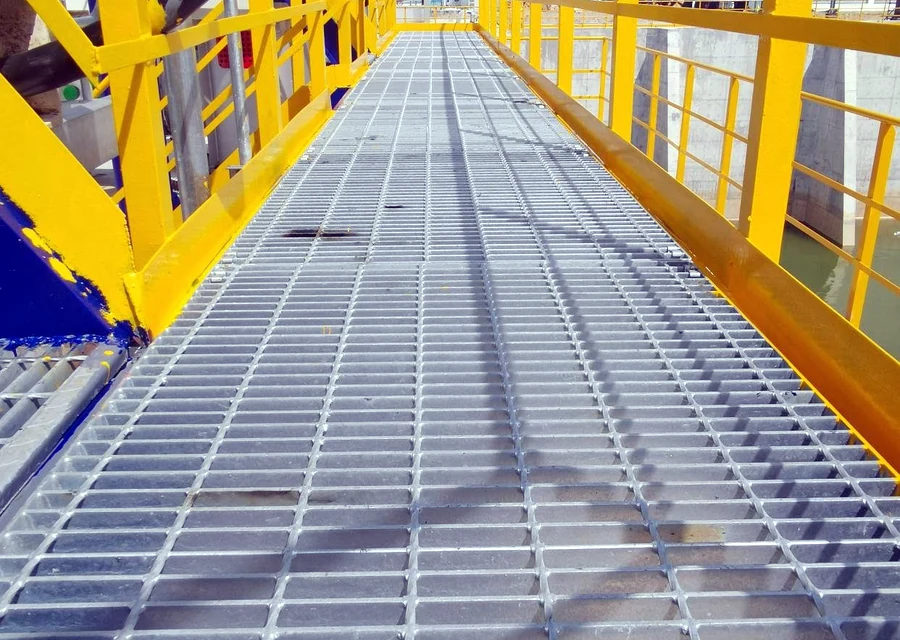
Steel grating weight is usually estimated from the bearing bar size, bar spacing, cross bar pitch, panel size, edge banding, surface type, finish and quantity. The estimate is useful before RFQ, but the final weight should be checked against the drawing and the supplier's confirmed specification.
Answer summary: To estimate steel grating weight before RFQ, buyers should confirm bearing bar height and thickness, bearing bar spacing, cross bar pitch, panel width and length, edge banding, serrated or smooth surface, finish, quantity and drawings. A weight estimate helps packing and freight planning, but it should not replace the final quotation drawing.
Why steel grating weight changes
Two steel grating panels with the same outside size can have different weight because the bar size and spacing are different. A thicker bearing bar, closer bar spacing, edge banding, serrated surface, toe plate, frame or hot-dip galvanizing can all change the final packed weight.
For product context, see steel bar grating, industrial platform grating and the steel grating RFQ checklist.
Details needed for a useful weight estimate
| Detail | Why it matters | What buyers should send |
|---|---|---|
| Panel size | Sets the total area | Width, length, quantity and panel marks |
| Bearing bar size | Main driver of weight | Bar height and thickness, such as 25 x 3 mm or project wording |
| Bearing bar spacing | Changes how many bars are used | Center-to-center spacing or specification code |
| Cross bar pitch | Adds cross bar material | Pitch, cross bar size or project wording |
| Surface | Can affect bar selection | Smooth or serrated request |
| Edge banding | Adds perimeter steel | Banded or unbanded edges, cutouts and openings |
| Finish | Affects final shipment weight | Hot-dip galvanized, painted, black steel or stainless request |
| Accessories | Adds packed weight | Clips, toe plates, frames, nosing or side plates |
Simple estimate method
A practical steel grating weight estimate starts with the panel area and the grating specification. Buyers do not need to calculate every bar before sending an RFQ, but they should avoid sending only "one square meter steel grating" without bar size and spacing.
Use this simple RFQ logic:
1. Confirm the finished panel width and length. 2. Confirm bearing bar height, thickness and spacing. 3. Confirm cross bar pitch. 4. Add notes for edge banding, cutouts, toe plate, frame or clips. 5. Confirm finish and quantity. 6. Ask the supplier to return confirmed unit weight and total packed weight with the quotation.
This is enough for QY to review whether a preliminary weight estimate is reasonable and whether the quotation should include packing and freight notes.
Weight calculator keywords buyers often use
Search terms such as "steel grating weight", "grating weight calculator" and "steel grating weight per square meter" usually point to the same practical need: the buyer wants an approximate weight before sending drawings or planning shipment.
The safest approach is to treat calculator output as a planning estimate only. A final RFQ should still include the drawing, bar size, spacing, finish and quantity so the supplier can confirm actual manufacturing and packing weight.
Common RFQ gaps
Weight questions become unclear when the buyer sends only the panel outside size. A supplier still needs the bearing bar size, spacing, cross bar pitch and edge detail. If the panel has cutouts, stair nosing, side plates, toe plates or frames, those parts should be listed separately.
Do not use a generic weight table as a substitute for a project drawing when load, support span, compliance or installation responsibility must be reviewed by the buyer's engineer.
RFQ checklist
Before asking for steel grating weight or quotation, prepare:
- Application, such as platform, walkway, trench cover, stair tread or drain cover.
- Panel width, length, quantity and marks.
- Bearing bar height, thickness and spacing.
- Cross bar pitch and cross bar type if known.
- Smooth or serrated surface request.
- Edge banding, cutouts, toe plate, frame or accessory notes.
- Finish request.
- Packing, bundle marks and destination.
- Drawing, sketch, previous specification or site photo.
Related QY pages
- Steel bar grating for the main product family.
- Industrial platform grating for walkway and floor context.
- Steel grating RFQ checklist for full quotation preparation.
- Steel grating export packing and loading RFQ for converting panel and packed-weight inputs into bundle, label and unloading requirements.
- Steel grating clips and fixing method RFQ for accessory and fixing details.
- Steel grating drain cover RFQ for removable cover and frame details.
- Contact QY Metal Tech when drawings and weight details are ready.
FAQ
What information is needed to estimate steel grating weight?
Send panel size, bearing bar size, bearing bar spacing, cross bar pitch, surface type, edge banding, finish, quantity, accessories, packing request and drawings.
Is a grating weight calculator enough for quotation?
No. A calculator can help with early planning, but quotation should be based on confirmed drawings, specification, finish, quantity and packing requirements.
Why is the final packed weight different from the panel weight?
Packed weight may include edge banding, frames, clips, toe plates, galvanizing, bundle material, pallets, labels and other packing items.
Can QY confirm exact steel grating weight from a photo?
A photo can help identify the product type, but exact weight needs size, bar specification, spacing, finish, quantity and drawings.
Related links
Related products and RFQ guides
- Steel grating productsOpen the related product family section.
- Steel grating topic entrySteel grating family page for platform grating, stair treads, drain covers, serrated grating, galvanized grating and drawing-based RFQs.
- Galvanized steel gratingRelated product or guide page.
- Steel grating stair treadsRelated product or guide page.
- Steel Grating RFQ Checklist for International BuyersRFQ checklist for steel grating buyers covering application, panel or opening size, bearing bar direction, support span, finish, quantity, packing, destination and drawings.
- FRP Grating vs Galvanized Steel Grating for Wet AreasComparison guide for wet or corrosive area grating selection, covering FRP grating and galvanized steel grating by environment, traffic, support, cutouts and quotation details.


