
Wire Mesh Cutting, Slitting, Notching and Welding: RFQ Checklist
Wire mesh cutting and fabrication RFQs should identify the mesh first, then define the finished part and each required operation. Send the woven or welded construction, material, opening, wire diameter, sheet or roll form, finished dimensions, edge condition, cutouts, notches, welded seams or frames, tolerances, quantity, drawings and packing. QY Metal Tech reviews operation feasibility against the submitted construction and drawing; listing an operation does not mean it is suitable for every wire, opening or finished shape.
What buyers should send: For wire mesh cutting, slitting, notching or welding, provide the exact mesh construction and a dimensioned finished-part drawing. Mark cut lines, mesh orientation, edge condition, corner radii, cutout and notch locations, welded joints, frame interfaces, tolerances, flatness or appearance requirements, quantity and packing. Separate mandatory dimensions from reference dimensions, and request a sample or first-article review when the edge, fit or appearance is critical.
Start with the mesh construction, not the cutting method
A fabrication request cannot be checked from the finished outline alone. Woven mesh can move or unravel near a cut edge, while welded mesh depends on the relationship between the cut line and the nearest wire intersection. Fine wire, large openings, coated material, springy alloys and close edge distances may each change the practical process or handling plan.
For the base product, use QY's woven wire mesh or welded wire mesh page. The opening and wire diameter guide owns the mesh-geometry intent. The selvage, raw-edge and supply-format guide owns roll-edge and cut-piece terminology. This page focuses only on the additional fabrication information needed after the mesh has been identified.
What each fabrication term should mean in the RFQ
| Requested operation | Buyer decision to define | Drawing or sample evidence to send | Review risk if omitted |
|---|---|---|---|
| Cut to size | Finished width, length and orientation | Overall dimensions, datum and grain or weave direction | Part may be rotated or measured from the wrong wire line |
| Slitting | Narrow strip width and roll or strip length | Slit width, number of lanes, edge requirement and winding request | Edge movement, curl and packing may be misunderstood |
| Notching | Material removed from an edge or corner | Notch width, depth, radius, location and datum | A sketch without datums may not control fit |
| Internal cutout | Opening inside the finished piece | Shape, size, corner treatment and distance to outside edges | Remaining wires or unsupported edges may differ from expectation |
| Welding or seaming | Which wires, edges, parts or frames are joined | Joint location, mating part, weld extent and appearance limit | Heat, distortion, coating damage or joint scope may be overlooked |
| Framing or formed assembly | Finished relationship between mesh and support | Frame section, mesh overlap, attachment side, envelope and interfaces | Mesh size may be quoted without the actual assembly scope |
Operation names are commercial shorthand, not acceptance criteria. A usable RFQ describes the finished result and inspection method as well as the preferred process.
Dimension and tolerance fields that prevent rework
| Field | What to state | Why it matters |
|---|---|---|
| Datum | Edge, centerline, frame or feature used for measurement | Keeps notch, hole and cutout locations consistent |
| Finished envelope | Maximum or target width, length and thickness | Defines the part that must fit the next assembly |
| Mesh orientation | Warp and shute direction, welded-wire direction or visual grain | Prevents a rectangular opening or weave from being rotated |
| Edge condition | Trimmed flush, balanced stubs, retained border wire or project-defined edge | Changes handling, fit and appearance expectations |
| Feature location | X/Y dimensions from named datums | Avoids chained dimensions and accumulated error |
| Tolerance | Project value for critical and noncritical dimensions | Allows the supplier to review feasibility before price confirmation |
| Flatness or curl | Measurement method and acceptable project limit | Important for guards, filters, frames and close-fitting panels |
| Appearance | Visible face, discoloration limit, burr or weld-finish wording | Separates functional parts from appearance-critical parts |
| Inspection level | Sample, first article, batch check or project document | Aligns evidence with the buyer's approval process |
Do not copy a tolerance from an unrelated solid-sheet drawing. Wire mesh has intersections, openings and flexible edges, so the measurement method must match the construction and intended fit. QY should confirm the submitted requirement or state an exception before fabrication.
Decide which details belong on the drawing
Put stable part geometry on the drawing: finished outline, mesh direction, datums, cutouts, notches, joint positions, frame interfaces and critical tolerances. Put variable commercial information in the RFQ schedule: quantity, batch split, packing, labels, destination and requested inspection records. Give every part a mark that appears on the drawing, quantity list and package label.
If the buyer sends a physical sample, also send a drawing or marked photograph. A sample can show the desired edge and appearance, but it may not reveal the material grade, coating, opening, wire diameter or controlled dimensions.
QY review boundary and evidence use
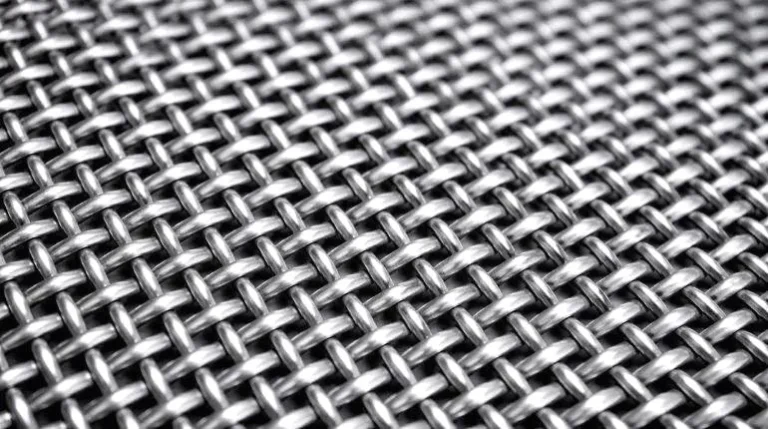
The featured image for this article is an existing QY woven-wire-mesh product image. It supports product-family identification only; it does not prove that every cutting, slitting, notching, welding or framing operation is available for that mesh. QY's useful role is to compare the requested finished part with the selected mesh, identify missing drawing fields and confirm or qualify the quotation scope through the existing drawing review and project service process.
Before release, QY and the buyer should agree on the base mesh, finished part mark, dimensions, edge wording, operation scope, quantity, inspection evidence and packing. Capability, tolerance and finish must be confirmed for the exact combination rather than inferred from a general fabrication list.
Plain-language fabrication terms
- Slitting: Cutting sheet or roll material lengthwise into narrower strips or coils.
- Notch: A controlled removal from an outside edge or corner of the finished piece.
- Cutout: An internal opening or removed area defined by dimensions and location.
- Datum: The named line, edge, plane or center used as the origin for measurements.
- Wire stub: The short wire length remaining beyond an intersection or border after trimming.
- First article: An initial finished part checked against the drawing before the remaining quantity proceeds, when the agreed workflow requires it.
RFQ checklist for fabricated wire mesh
Send the following through QY Metal Tech's contact page:
- Woven or welded construction, material grade and coating or surface condition.
- Opening in both directions, wire diameter and weave or welded-wire arrangement.
- Starting form and size: roll, sheet, panel or buyer-supplied component.
- Finished part mark, width, length, mesh orientation and quantity.
- Dimensioned drawing with datums, cutouts, notches, radii and edge distances.
- Required edge condition and any retained border or balanced-stub detail.
- Welding, seaming, framing or attachment scope with mating-part information.
- Critical tolerances, flatness or curl method and appearance criteria.
- Sample or first-article requirement and requested inspection evidence.
- Packing unit, separators or edge protection, labels, destination and batch sequence.
Do not release a part based only on a screenshot or a list of operations. The approved drawing and quotation should use the same revision and part marks. Guards, filters and other safety- or performance-related assemblies require project-defined acceptance criteria and responsible engineering approval.
Frequently asked questions
Can all woven wire mesh be cut into finished pieces without edge movement?
No. Edge behavior depends on the weave, wire diameter, opening, material, cut position and retained intersections. Send the exact construction and required edge condition for feasibility review.
What should a wire mesh notching drawing show?
Show the notch width, depth, radius, location from named datums, mesh orientation, nearest edge or intersection requirement, finished dimensions and tolerance.
Is a DXF file enough for a fabricated wire mesh quotation?
Not by itself. Include the base mesh specification, material, wire and opening, edge condition, tolerances, operation notes, quantity, inspection requirement, packing and a readable controlled drawing.
Can QY confirm welding or framing from a product photo?
No. QY needs the exact mesh, mating parts, joint locations, finished envelope, appearance and performance requirements. Feasibility and acceptance must be confirmed for the submitted drawing.
Related links
Related products and RFQ guides
- Wire mesh and sheet metal productsOpen the related product family section.
- Wire mesh and sheet metal topic entryWire mesh and sheet metal family page for welded wire mesh, woven wire mesh, expanded metal mesh and perforated metal sheet RFQs.
- Welded wire meshRelated product or guide page.
- Woven wire meshRelated product or guide page.
- Expanded Metal vs Perforated Sheet: What to Confirm Before RFQComparison and RFQ guide for expanded metal and perforated sheet, covering manufacturing method, pattern, open area, material, thickness, sheet size, finish, quantity and packing.
- Wire Mesh Opening and Wire Diameter: What Buyers Should ConfirmWire mesh RFQ guide explaining opening, wire diameter, material, roll or panel format, finish, size, quantity, packing, destination and buyer confirmation details.


