
FRP Grating for Electrical Substation Access: RFQ Checklist
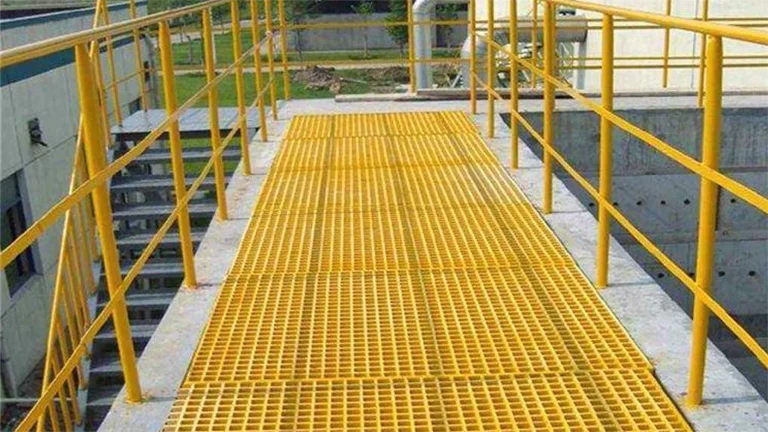
FRP grating for electrical substation access should be specified from an approved product series and project requirements, not from the word "fiberglass" alone. Buyers should send the equipment-area layout, access purpose, environmental exposure, drainage or containment function, required electrical-property evidence, fire and smoke requirements, loads, clear spans, supports, surface, color, removable panels, cutouts, fixing scope, quantity, packing and drawings. QY Metal Tech can review the specified FRP product, finished-panel and quotation scope; the responsible electrical, structural and safety parties must approve suitability for the site.
Answer summary: Treat an electrical-access FRP grating RFQ as a coordinated product-and-site package. Identify whether the panel serves a walkway, maintenance platform or removable trench cover; name the exact molded or pultruded construction; and attach the approved electrical, fire, load, support, drainage, fixing and access requirements. Do not use a generic non-conductive statement as project approval.
When this electrical-access checklist is useful
Use this checklist for substation maintenance routes, transformer containment trenches, generator access, switchgear or equipment platforms and other buyer-defined electrical areas. These uses may look similar in a product photograph, but they create different access, drainage, removal, support and approval questions.
Start with the actual product family. Molded FRP grating may suit layouts that require grid-pattern panels and field-defined cutouts, while pultruded FRP grating has a primary bearing direction that must match the support layout. This statement routes the RFQ; it does not select a product or approve a load case.
Separate the access function before selecting a panel
| Access condition | Information to send | Do not assume |
|---|---|---|
| Maintenance walkway | Route, width, traffic, equipment interfaces, supports and required surface | A visible walkway proves the load, slip or electrical requirement |
| Equipment platform | Plan, elevation, access points, loads, clear spans, handrail or stair interfaces | FRP grating alone defines the complete platform system |
| Transformer or cable trench cover | Clear opening, frame or ledge, drainage/containment purpose, removable zones and lifting approach | One trench-cover detail fits every electrical or containment area |
| Removable access panel | Panel marks, lifting/removal direction, fixing, adjacent equipment and maintenance clearance | A loose panel is acceptable without the approved restraint and access plan |
| Mixed indoor/outdoor route | Exposure by zone, UV/weather requirement, chemicals, temperature and cleaning | One resin, surface or color is suitable for every zone |
The responsible project team should define which safety and operating functions control. QY can compare those submitted requirements with a proposed quotation scope, but it should not infer them from a site photo, voltage description or generic application name.
Specification details to confirm
| RFQ field | What the buyer should provide | Why it matters |
|---|---|---|
| Product construction | Molded or pultruded and exact product series when known | Keeps tables, drawings and fabrication tied to one product |
| Panel geometry | Depth, mesh or bar spacing, width, length and bearing direction | Defines the panel schedule and orientation |
| Loads and deflection | Approved load cases, clear spans, deflection criterion and units | Prevents a generic application from becoming an unsupported capacity claim |
| Supports and bearing | Frame, ledge, angle or beam layout and required edge/intermediate bearing | Connects finished panels to the project structure |
| Electrical requirement | Named project requirement, test method, acceptance evidence and approving party | Separates a controlled requirement from a generic material statement |
| Fire and smoke requirement | Project criterion, required evidence and authority/owner approval | Avoids transferring another product's result to the requested series |
| Environment | Outdoor/indoor zone, chemicals, oils, water, UV, temperature and cleaning | Supports resin, surface and documentation review |
| Drainage or containment | What must pass through, remain contained or stay accessible | Affects opening, covered/open surface and removable-panel decisions |
| Surface and visibility | Grit/meniscus/covered wording, color and marking requirement | Coordinates walking and identification needs without promising performance |
| Cutouts and removable areas | Datums, finished geometry, edge treatment, support relationship and panel marks | Controls fabrication and maintenance access |
| Fixing and interfaces | Clips, fasteners, support angles, handrail/stair interfaces and responsibility | Separates supplied accessories from site installation approval |
| Documents and release | Drawing revision, product data, test evidence, inspection points and approver | Prevents preliminary information from controlling fabrication |
Use the FRP load table and support span guide to identify the product, span, load case, units and deflection inputs. Exact values should come from the selected product record and approved project basis, not from a competitor table or a different FRP series.
Electrical language needs an evidence boundary
FRP products are often considered where electrical conductivity is part of the material-selection discussion. That general reason is not enough to approve a panel for an energized area. The RFQ should identify the exact property required, the applicable product condition, the test or document expected, the installation interfaces and the party responsible for acceptance.
The same caution applies to static control, grounding, arc-flash planning, fire/smoke performance and work-zone clearance. Some project requirements may conflict or require a specialized product. Buyers should not describe a product as both insulating and static-dissipative without a controlled specification explaining the intended function.
QY should quote only the product and evidence it can support. If the required electrical or fire record is unavailable for the requested series, the correct action is to hold the claim and ask the buyer to confirm an acceptable product basis.
Coordinate trench, drainage and maintenance access
Electrical sites may use grating above cable routes, drainage channels or containment areas. Send the clear opening, frame/support detail, liquid or debris condition, equipment clearance, panel removal direction and maintenance procedure. The FRP trench-cover page and frame and support-ledge guide own the trench geometry and support inputs.
Show removable panels and lifting points by mark. Identify whether clips or other restraints are included, who removes and reinstalls them, and whether adjacent equipment must remain accessible. A light-looking panel is not proof that manual removal is safe; the approved panel weight, handling method and site procedure control.
Drawings, cutouts and interfaces
Use a plan and elevation to show equipment, walls, curbs, cable penetrations, drains, stairs, handrails, support lines and restricted zones. Dimension cutouts from named datums and identify surrounding support. The FRP installation drawing checklist coordinates panel marks and supports, while the cutout and edge-trim guide owns fabrication details.
QY can review finished dimensions, orientation, panel marks, cutouts, accessories, quantity, packing sequence and buyer-supplied document references. QY does not approve site electrical safety, structural supports, clearances, containment design or installation methods from those documents.
QY evidence and claim boundary
The featured image is an existing approved QY FRP walkway image. It supports QY's FRP product-family and industrial-access context. It does not prove that the pictured panel or any proposed series meets a substation electrical property, fire/smoke criterion, load, resin, chemical exposure, fastening plan or local requirement.
The useful QY-specific value is the connection between QY's published FRP product pages, its existing load/span, trench, cutout and installation-drawing owners, and its documented drawing-based quotation process. Buyers can use that path to submit one controlled package instead of relying on an application label.
Plain-language terms
- Electrical-property evidence: The named test, product record or approved document used to support a specific electrical requirement.
- Containment trench: A project-defined channel or basin intended to retain or route a liquid; its function and access rules must be stated.
- Removable panel: A marked panel intended to be lifted for inspection or maintenance under an approved handling and restraint procedure.
- Clear span: The unobstructed distance between support edges under the grating, not the overall panel length.
What to prepare before sending RFQ
Send the following through QY Metal Tech's contact page:
- Site/application description and latest plan, elevation and equipment layout.
- Walkway, platform, trench-cover or removable-access function by zone.
- Molded or pultruded construction and exact product series when specified.
- Panel depth, mesh/bar spacing, size, bearing direction, surface and color.
- Approved loads, clear spans, deflection criterion and support details.
- Required electrical, fire/smoke, environmental and document evidence.
- Drainage, containment, oil/chemical, water, UV and temperature conditions.
- Panel marks, cutouts, clearances, lifting/removal and edge-treatment details.
- Clips, fasteners, support angles and interface/supply responsibilities.
- Quantity by mark, spares, inspection points, packing, destination and release status.
QY's drawing and project service process can review the submitted product and fabrication scope before pricing. Missing approval data should remain a buyer-confirmation item, not become a supplier guarantee.
Frequently asked questions
Is all FRP grating automatically suitable for electrical substations?
No. Suitability depends on the exact product, electrical and fire requirements, loads, supports, environment, installation interfaces and project approval. The product series and required evidence must be identified.
Can QY confirm electrical performance from an FRP grating photograph?
No. A photograph can show product or application context, but it cannot verify resin, construction, electrical properties, test results, fire performance, load capacity or compliance.
What should a removable substation trench-cover RFQ include?
Include the clear opening, frame/support, selected product, panel marks, loads, drainage or containment function, cutouts, restraint, lifting approach, maintenance clearance, quantity and approved drawings.
Who approves FRP grating for an energized or controlled electrical area?
The responsible project engineer, electrical safety authority, asset owner or other named approval party should approve the product and installation basis. QY can review the specified supply and quotation scope.
Related links
Related products and RFQ guides
- FRP grating productsOpen the related product family section.
- FRP grating topic entryFRP grating family page for molded FRP grating, trench covers, car wash grating, tree grates and wet or corrosive access areas.
- FRP trench coversRelated product or guide page.
- FRP grating selection guideRelated product or guide page.
- FRP Grating vs Galvanized Steel Grating for Wet AreasComparison guide for wet or corrosive area grating selection, covering FRP grating and galvanized steel grating by environment, traffic, support, cutouts and quotation details.
- FRP Grating RFQ Checklist for Corrosive and Wet FlooringFRP grating RFQ checklist covering wet or corrosive environment, panel size, support condition, thickness, mesh size, surface, color or resin request, quantity and destination.


