
FRP Grating Load Tables, Support Span and Deflection Guide
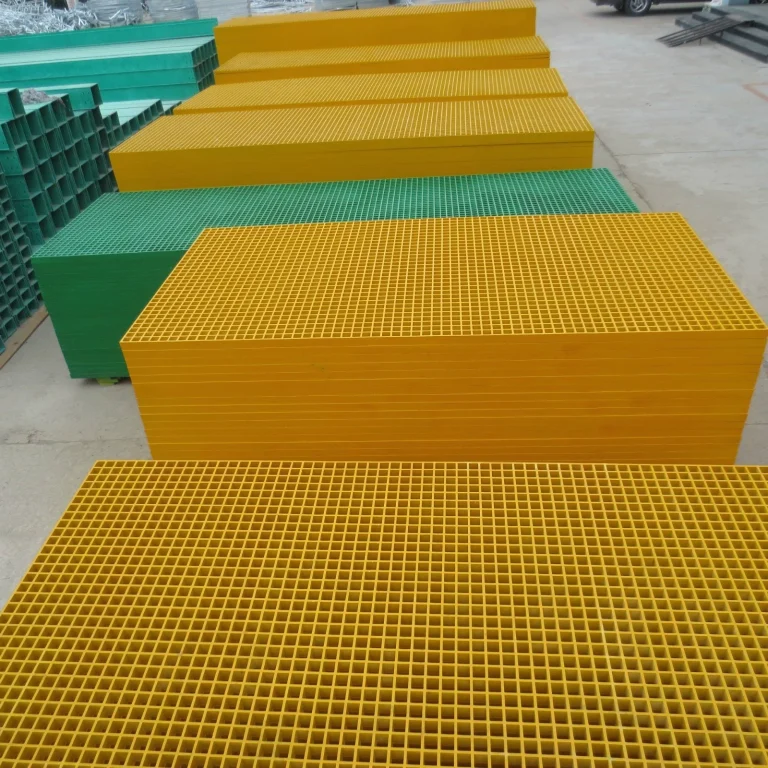
FRP grating load tables should be read together with the product series, panel depth, mesh or bearing-bar configuration, clear support span, load type and deflection limit. A value from a steel grating table or a different FRP series should not be transferred to the project.
Answer summary: To review an FRP grating load or span table, confirm the exact FRP product series, panel depth, mesh or bar spacing, bearing direction, clear span, uniform or concentrated load, allowable deflection, support condition and the table revision. Send these details with the panel layout and project requirement for QY review before quotation.
How to read an FRP grating load table
Start with the exact product family and table heading. Molded and pultruded FRP grating use different construction and load paths, so their rows and columns are not interchangeable. Then match the clear span and load case. A uniform load distributed over an area is not the same as a concentrated point or line load.
The listed load and deflection must also use the same units and stated conditions as the project. If the required series, span, load type, deflection criterion, units or revision is missing, treat the table as incomplete for selection rather than assuming a value.
For product context, see molded FRP grating, the FRP grating selection guide, and FRP trench covers.
FRP load and span fields to confirm
| Field | Why it matters | What buyers should send |
|---|---|---|
| Product type and series | Identifies the applicable table | Molded or pultruded type, series reference or approved product description |
| Panel depth and mesh | Separates table rows and product configurations | Panel depth, mesh size or bearing-bar spacing from the drawing |
| Bearing direction | Defines the load path for directional products | Span direction and marked panel orientation |
| Clear support span | Selects the correct table column | Clear distance between supports, not the overall panel length |
| Load type | Prevents mixing unlike load cases | Uniform load, concentrated point load, line load or project-defined case |
| Deflection limit | Defines the acceptance basis | Project limit, authority requirement or engineer-approved criterion |
| Units and conditions | Keeps values comparable | Load and deflection units, support condition and any stated test conditions |
| Table revision | Identifies the evidence used | Manufacturer, series, issue date or revision shown on the source table |
| Application | Adds the project context | Walkway, platform, trench cover, maintenance access or other stated use |
| Drawings and quantity | Connects selection to quotation | Panel layout, cut list, support details, quantity by size and destination |
Clear span, load and deflection are different inputs
- Clear support span: the unobstructed distance between supporting edges under the panel. It is not the full panel length.
- Uniform load: a load distributed over the stated area under the table conditions.
- Concentrated load: a localized point or line load. It should not be substituted for a uniform-load value.
- Deflection: the stated movement under the defined load and span. A table value is meaningful only with its units, load case and limit.
- Panel weight: useful for handling, packing and freight review, but it does not by itself prove load capacity.
Panel size and support details for quotation
The same square-meter total can produce different cut plans, support arrangements and packing groups. Buyers should therefore send the finished panel sizes, standard panel size if known, support layout, cutouts, surface request, resin or color wording, quantity by size and destination.
For a trench cover, include the clear opening, frame or support ledge, removable-panel requirement and traffic condition. For a platform or walkway, mark the support direction and panel joints on the layout. QY can review the submitted product, drawings, quantity, finish, packing and destination before quotation; final structural suitability and local compliance remain subject to the project engineer or approving authority.
What not to transfer from a steel grating table
Steel grating and FRP grating use different product definitions and evidence. Do not carry a steel bearing-bar value, steel kg/m2 figure, or steel load-table result into an FRP selection. Use the product-specific FRP table for the stated series and conditions.
If the project is actually for steel bar grating, use the steel grating load table or steel grating weight chart instead.
RFQ checklist
Before sending an FRP grating load and span RFQ, confirm:
- Application and environment.
- Molded or pultruded product type and series reference.
- Panel depth, mesh size or bearing-bar spacing.
- Clear support span and bearing direction.
- Uniform, concentrated or project-defined load case.
- Required deflection limit and units.
- Source table manufacturer, revision and stated conditions.
- Finished panel sizes, cutouts, supports and quantity by size.
- Surface, resin or color request.
- Packing, marks, destination and drawings.
Related QY pages
- Molded FRP grating for the main molded-panel product page.
- FRP grating selection guide for product-type and environment review.
- FRP trench covers for opening, frame and support-ledger context.
- FRP grating resin system selection for exposure and resin wording.
- FRP anti-slip surface selection for surface-request context without a site safety guarantee.
- Contact QY Metal Tech when the load case, span, panel layout and table reference are ready.
FAQ
What is an FRP grating load table?
An FRP grating load table relates a stated product series and panel configuration to support span, load case and deflection under specified units and conditions. Use only the table that identifies the relevant product and revision.
How do I choose the support span in an FRP grating span table?
Use the clear distance between the supporting edges under the panel, not the overall panel length. Confirm the bearing direction and support layout from the drawing before selecting a table column.
Are uniform and concentrated loads interchangeable?
No. A uniform load is distributed over the stated area, while a concentrated load is localized. Match the project load case to the same load type in the product-specific table.
Does FRP grating weight per square meter show load capacity?
No. Weight per square meter can support handling, packing and freight estimates, but it does not by itself verify capacity, span or deflection.
Can QY confirm FRP grating load capacity from panel size alone?
No. Buyers should provide the product series, panel depth, mesh or bar spacing, clear span, bearing direction, load type, deflection requirement, table reference and drawings. Final structural suitability and local compliance require project approval.
Dock and marina projects should combine the load-table inputs here with the zone, surface, fixing and approval fields in the marine dock and marina walkway guide.
Related links
Related products and RFQ guides
- FRP grating productsOpen the related product family section.
- FRP grating topic entryFRP grating family page for molded FRP grating, trench covers, car wash grating, tree grates and wet or corrosive access areas.
- FRP trench coversRelated product or guide page.
- FRP grating selection guideRelated product or guide page.
- FRP Grating vs Galvanized Steel Grating for Wet AreasComparison guide for wet or corrosive area grating selection, covering FRP grating and galvanized steel grating by environment, traffic, support, cutouts and quotation details.
- FRP Grating RFQ Checklist for Corrosive and Wet FlooringFRP grating RFQ checklist covering wet or corrosive environment, panel size, support condition, thickness, mesh size, surface, color or resin request, quantity and destination.


