
Expanded Metal LWD and SWD Direction: How to Mark an RFQ
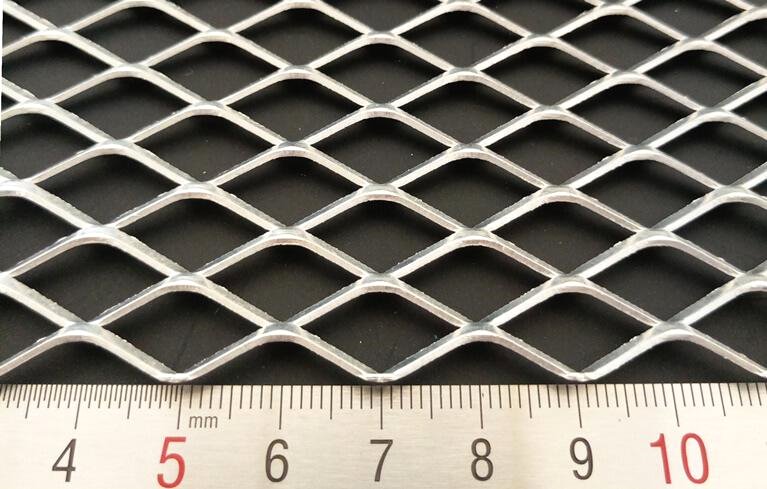
Expanded metal LWD and SWD direction should be marked on the RFQ drawing with arrows tied to the finished sheet width and length. This guide is for buyers ordering full sheets, cut pieces or framed panels where the diamond pattern must face a defined direction. Do not rely on an unmarked product photo: state the design direction, opening dimensions, finished size and edge requirement separately.
Answer summary: Mark the long way of design (LWD) and short way of design (SWD) on the same view as the finished panel dimensions. Also state material, raised or flattened form, opening dimensions, strand details, cut size, edge condition, finish, quantity, packing and the drawing revision used for quotation.
Why does expanded metal pattern direction need its own RFQ field?
Expanded metal has a directional diamond pattern. A size written only as width × length does not tell QY which pattern direction should run with either finished dimension. That uncertainty matters when pieces must align across a frame, match a previous panel, fit a guard opening or follow an architectural drawing.
Pattern direction is not the same as opening size. The existing expanded metal opening and strand guide owns opening, strand and thickness inputs. This page owns how LWD and SWD are oriented on the finished sheet or panel.
For the product family, see expanded metal mesh. A marked drawing or measured sample is more reliable than a general description such as “diamond mesh runs lengthwise.”
How should LWD and SWD be shown on a drawing?
Use one drawing view that shows the finished outside dimensions and two clearly labeled arrows. The buyer should state which arrow is LWD and which is SWD. If a project drawing uses another direction convention, include a small pattern sketch or sample reference so the quotation does not depend on assumed terminology.
| RFQ situation | Direction information to send | Boundary to keep clear |
|---|---|---|
| Full sheets | Finished width and length plus LWD/SWD arrows | Do not assume the stock sheet orientation applies to every source or cut plan |
| Cut-to-size pieces | Piece mark, finished size and direction for each repeated group | Cutting tolerance and edge condition need separate confirmation |
| Framed infill panels | Frame outside size, visible face and pattern direction | The frame does not by itself identify the mesh orientation |
| Matching an existing panel | Marked photo, measured sample and direction arrows | A photo alone does not verify opening, strand or material |
| Mixed panel schedule | Direction by panel mark or a controlled common note | Do not use one blanket note if some panels rotate |
When the visible face matters, identify it on the drawing. Raised expanded metal can present a directional surface appearance, while flattened material has a different surface profile. The selected form still needs its own specification.
Specification details to confirm
| Detail | Why it matters | What buyers should send |
|---|---|---|
| Application | Gives the direction decision context | Guard, screen, infill, enclosure, platform component or drawing description |
| Finished size | Defines the ordered piece | Width, length, quantity and panel mark |
| LWD direction | Controls the long design direction | Arrow tied to a finished dimension |
| SWD direction | Controls the short design direction | Arrow tied to the other finished dimension |
| Opening dimensions | Prevents direction from replacing pattern data | LWO and SWO, drawing dimensions or an approved sample reference |
| Material and thickness | Defines the product basis | Carbon steel, stainless steel, aluminum or project wording plus thickness |
| Expanded form | Affects surface profile and review | Raised, flattened or drawing-controlled form |
| Strand details | Helps identify the pattern | Strand width and thickness when specified |
| Edge condition | Affects cutting and frame coordination | Random edge, bond-centered preference, trimmed edge, framed edge or drawing detail |
| Finish | Affects final quotation and handling | Mill finish, galvanized, painted, powder coated or project wording |
| Packing | Keeps panel marks and direction traceable | Bundle grouping, labels, protection notes and destination |
| Drawing control | Prevents revision conflict | Drawing number, revision and approval responsibility |
QY can compare the marked direction with the actual product and cut-piece schedule before pricing. QY should not promise a cutting tolerance, flatness, open area, load, guarding result or appearance match until the controlling specification and product data are verified.
Terms buyers should keep separate
- LWD: Long way of design; use an arrow to show how that design direction lies in the finished sheet or panel.
- SWD: Short way of design; mark it independently rather than deriving it from an unmarked photo.
- LWO and SWO: Long and short ways of opening. These describe clear opening dimensions, not the complete finished-sheet orientation.
- Bond: The joined area where strands meet. Edge requirements may refer to how cuts relate to bonds, but the requested result must be shown or described.
The abbreviations are useful only when everyone applies the same drawing convention. If the buyer’s specification uses different terminology, the controlled drawing and sample reference should govern the RFQ review.
What does the QY evidence show?
QY’s approved expanded-metal photographs show real diamond-pattern sheet material, cut edges, bundled sheets and framed pieces. One close view includes a ruler beside the pattern, making the difference between visible pattern direction and a measured product value easy to explain.
The photographs support QY’s ability to recognize and discuss real expanded-metal direction, sheet and edge inputs during RFQ review. They do not prove a nominal LWD, SWD, LWO, SWO, strand dimension, tolerance, material grade, open area or performance result for an unverified order.
This boundary is important: the image helps the buyer understand what must be marked, while the drawing and confirmed product data remain the quotation basis.
When is direction information complete or incomplete?
Direction information is reasonably complete when the same controlled drawing shows finished width, finished length, LWD, SWD, panel marks and the visible face if relevant. The RFQ should then connect that drawing to the material, form, pattern, finish and quantity schedule.
The direction information is incomplete when it says only “long way runs lengthwise,” shows an arrow without a label, gives only LWO/SWO values, or supplies a photo with no finished dimensions. It is also incomplete when framed panels are rotated in a layout but the schedule contains only one general orientation note.
For cutting, slitting, notching or welded-frame scope, use the wire mesh fabrication RFQ checklist as the separate fabrication-intent owner.
What should buyers prepare before sending an RFQ?
Prepare one controlled package rather than sending direction details across unrelated messages:
- Application and drawing number or revision.
- Finished sheet or panel width and length.
- LWD and SWD arrows on the drawing.
- Visible face and installation orientation when relevant.
- Material, thickness and raised or flattened form.
- Opening and strand dimensions or approved sample reference.
- Edge, frame, cutout and fixing requirements.
- Finish and color wording.
- Panel marks, quantities and repeated-piece groups.
- Packing, bundle labels, destination and document requirements.
If a physical sample controls, identify which face, edge and direction were measured. A photograph can accompany the sample but should not replace the dimensional record.
RFQ checklist
Before sending an expanded-metal direction RFQ, confirm:
- Finished sheet or panel size.
- LWD and SWD arrows.
- Drawing number and revision.
- Material and thickness.
- Raised or flattened form.
- LWO, SWO and strand details where specified.
- Visible face and pattern alignment requirement.
- Edge, frame, cutout and fixing scope.
- Finish, quantity and panel marks.
- Packing, destination and approval responsibility.
Related QY pages
- Expanded metal mesh for the main product route.
- Expanded metal opening and strand size for LWO, SWO, strand and thickness inputs.
- Raised vs flattened expanded metal for surface-form selection.
- Expanded metal walkway mesh selection for direction, span, supports, sheet edges and fixing inputs.
- Wire mesh cutting, slitting and welding RFQ for finished-part fabrication scope.
- Contact QY Metal Tech when the marked drawing and quantity schedule are ready.
FAQ
Is LWD the same as the long way of opening?
No. LWD identifies the long way of design, while LWO identifies the long clear opening dimension. State and mark them separately when both are required.
Can expanded metal direction be confirmed from a photo?
A clear photo can support preliminary pattern review, but it does not replace labeled LWD/SWD arrows, finished dimensions, opening data and the controlled drawing.
Should every cut piece have its own direction arrow?
Repeated pieces may share a controlled direction note, but rotated or different panels should be identified by mark so the quotation and cut schedule are unambiguous.
Does LWD or SWD direction prove expanded metal performance?
No. Direction is one specification field. Material, thickness, pattern, strand, support, fabrication, loads and project approval still control suitability.
Related links
Related products and RFQ guides
- Wire mesh and sheet metal productsOpen the related product family section.
- Wire mesh and sheet metal topic entryWire mesh and sheet metal family page for welded wire mesh, woven wire mesh, expanded metal mesh and perforated metal sheet RFQs.
- Welded wire meshRelated product or guide page.
- Woven wire meshRelated product or guide page.
- Expanded Metal vs Perforated Sheet: What to Confirm Before RFQComparison and RFQ guide for expanded metal and perforated sheet, covering manufacturing method, pattern, open area, material, thickness, sheet size, finish, quantity and packing.
- Wire Mesh Opening and Wire Diameter: What Buyers Should ConfirmWire mesh RFQ guide explaining opening, wire diameter, material, roll or panel format, finish, size, quantity, packing, destination and buyer confirmation details.


