
Chain-Link Fence Selvage: Knuckled or Twisted Edge for an RFQ?
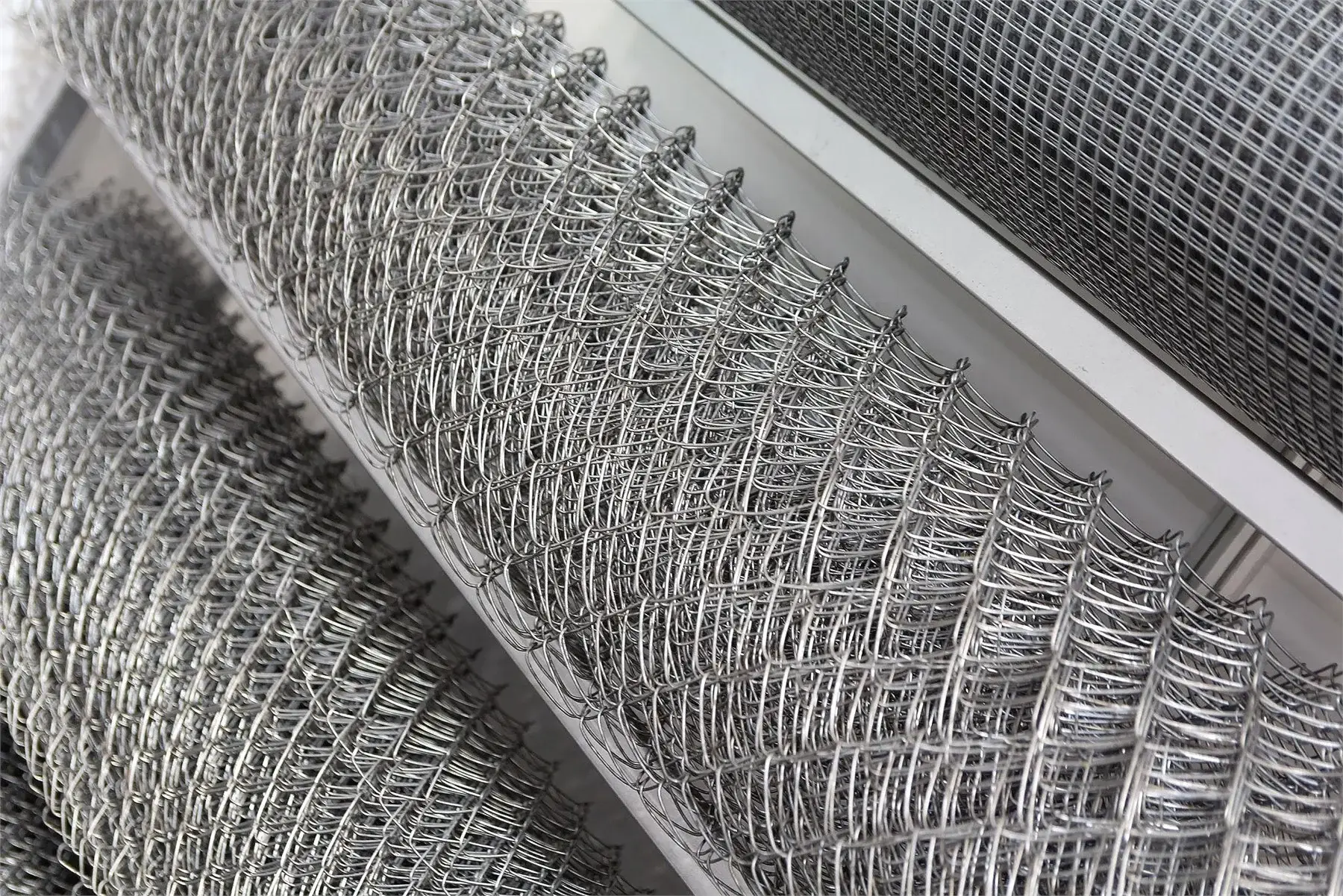
Chain-link fence selvage is the finished top or bottom edge of the woven fabric. A buyer should specify the top and bottom separately as knuckled, twisted or another drawing-controlled finish instead of sending only mesh size and roll height. The correct choice depends on the approved site, safety, security and installation requirements. QY Metal Tech can review the requested fabric, edge, roll, coating, quantity and packing scope; it should not choose or certify a project configuration from a photograph alone.
Answer summary: Put two fields in the RFQ: `top selvage` and `bottom selvage`. A knuckled edge bends adjacent wire ends back into a closed-looking loop; a twisted edge joins the ends into a projecting twist. State the required combination, fabric orientation and controlling drawing or specification. Do not assume one arrangement fits every site.
What is chain-link fence selvage?
Selvage is the edge finish created where the woven wire ends at the top and bottom of chain-link fence fabric. It is separate from mesh opening, wire diameter, coating and roll size. Two rolls can share the same mesh and wire information but still have different top and bottom edges.
The edge is easiest to control when the elevation or fabric schedule shows orientation. Mark which side is top after installation and which side is bottom. If the fabric will be reversed, cut, joined or installed on sloped ground, show how the edge instruction follows the finished layout.
Knuckled or twisted: which edge should an RFQ request?
Neither term should be selected from a generic claim. Use the configuration required by the responsible designer, owner, controlled project specification and site risk review.
| Requested condition | What to write in the RFQ | What still needs approval |
|---|---|---|
| Both edges use a bent-back finish | Top knuckled; bottom knuckled | Site safety, security, installation and standard requirements |
| One edge is knuckled and the other projects as a twist | Identify the top and bottom separately | Installed orientation and the approved reason for the combination |
| Both edges use a twisted finish | Top twisted; bottom twisted | Exposure, handling, security and installation acceptance |
| The drawing uses another termination | Quote the exact drawing note and revision | Fabrication feasibility and responsible-party approval |
| Edge configuration is unknown | Mark it as a clarification hold | Do not let the supplier infer it from roll height or a photo |
This table is an RFQ language guide, not a universal selection rule. Controlled standards may use specific combinations for defined conditions. Buyers should supply the applicable edition and project instruction instead of asking QY to reproduce or infer protected standard requirements.
Specification details to confirm
| RFQ field | What the buyer should provide | Why it matters |
|---|---|---|
| Fabric construction | Chain-link fabric and intended installed orientation | Confirms the product and which edge becomes top or bottom |
| Top selvage | Knuckled, twisted or drawing-specified | Prevents the upper edge from being inferred |
| Bottom selvage | Knuckled, twisted or drawing-specified | Prevents the lower edge from being inferred |
| Mesh opening | Clear opening and unit or controlled designation | Separates opening from wire diameter |
| Wire | Diameter or named gauge system and controlling value | Avoids ambiguous gauge-only requests |
| Coating and color | Metallic or polymer coating request and color when applicable | Defines the requested product condition without promising performance |
| Roll height and length | Finished fabric height, roll length and unit | Controls roll schedule, orientation and quantity review |
| Site layout | Straight, sloped, stepped, corner, gate and terminal locations | Shows where fabric edges and joints meet the system |
| Framework and accessories | Posts, rails, tension wire/bar, ties, gates and other requested items | Separates fabric-only supply from a complete fence-system quotation |
| Packing | Roll identification, binding/protection request, bundle marks and destination | Helps preserve roll identity and edge orientation during handling |
| Documents | Drawing, fabric schedule, standard edition and revision | Keeps the quotation tied to the approved requirement |
For roll size and wire wording, use the existing chain-link roll height and wire gauge guide. That page owns roll dimensions and gauge clarification; this page owns the narrower top-and-bottom edge decision.
Best-fit and not-fit guidance
A knuckled-edge request is appropriate when the approved project documents specifically call for wire ends bent back at that edge. A twisted-edge request is appropriate when the approved documents call for projecting twisted ends at that edge. If the project documents do not make the choice, the RFQ is not ready for final release.
Do not describe knuckled as automatically safe or twisted as automatically secure. The complete fence includes fabric, posts, rails, tension components, gates, terminals, foundations and installation conditions. Edge wording alone cannot prove safety, anti-climb performance, wind resistance or compliance.
The chain-link versus welded-mesh fence guide can help buyers confirm the broader fence construction before the edge detail is finalized.
QY evidence and claim boundary
The featured image is an approved QY chain-link fabric photograph. It shows real chain-link rolls with their woven product form and visible finished roll edges. That evidence directly supports the core buyer decision: edge condition and roll orientation are visible, separate supply details that belong in the RFQ.
The photograph does not prove the mesh size, wire diameter, coating, edge terminology for every roll, roll length, security level, tensile result, standard compliance or installed suitability. QY should confirm the quoted fabric against the buyer's controlled schedule rather than identify specifications from pixels.
Plain-language terms
- Selvage: The finished top or bottom boundary of chain-link fabric.
- Knuckled edge: Adjacent wire ends bent back toward the fabric to form a closed-looking edge.
- Twisted edge: Adjacent wire ends joined into a projecting twisted finish.
- Fabric orientation: The declared relationship between the roll as supplied and the top/bottom direction after installation.
What to prepare before sending RFQ
Send the following through QY Metal Tech's contact page:
- Chain-link fabric type, application and whether the quotation is fabric-only or a full fence supply scope.
- Top selvage and bottom selvage stated separately.
- Mesh opening, unit, wire diameter or named gauge system.
- Base wire/material wording, coating condition and color request.
- Finished roll height, roll length, number of rolls and total quantity basis.
- Straight, sloped or stepped layout and the installed fabric orientation.
- Posts, rails, tension components, ties, gates, terminals and accessories in scope.
- Drawing or fabric schedule with current revision and applicable controlled standard.
- Roll labels, bundle marks, edge protection, packing and destination.
- Inspection or approval documents the buyer requires before release.
QY can review whether the fabric description, edge combination, roll schedule and supply boundary are complete enough for quotation. Project safety, security, wind design, foundations and installation acceptance remain with the responsible parties unless supported by separate controlled evidence.
Related QY pages
- Chain-link fence for the closest QY product context.
- Chain-link roll height and wire gauge guide for roll and wire inputs.
- Chain-link versus welded-mesh fence for the broader construction choice.
- Fence gates and hardware for gate interfaces and accessory scope.
- Chain-link post and brace layout guide for framework roles, components and drawing fields.
- Contact QY Metal Tech when the fabric schedule and drawings are ready.
Frequently asked questions
Is selvage the same as chain-link mesh size?
No. Mesh size describes the opening in the woven fabric. Selvage describes the finished top or bottom edge. Both fields, plus wire and coating, should be stated in the RFQ.
Can the top and bottom selvage be different?
Yes, when the approved fabric schedule or project drawing requires different edge finishes. The RFQ should identify which finish is at the top and which is at the bottom after installation.
Can QY identify the required selvage from a site photograph?
A clear photograph may show an existing edge, but it cannot establish the required replacement configuration, wire, coating, standard revision or site approval. Send the controlled specification and dimensions.
Should a chain-link fabric RFQ include posts and accessories?
Only when they are part of the requested supply scope. State whether posts, rails, tension wire or bars, ties, gates, terminals, fittings and foundations are included or handled separately.
Chain link fence RFQ references
Use these references with the applicable project assumptions. They support pre-quotation screening and are not a certificate or engineering approval. Final quotation follows the confirmed drawing, dimensions, load or service conditions.
Technical checks before quotation
- Confirm mesh opening, wire diameter, panel height and post spacing.
- Provide gate, corner, terminal-post and security-top requirements where applicable.
- Confirm finish, wind/site conditions, foundation details and delivery scope.
Related links
Related products and RFQ guides
- Fencing and guardrails productsOpen the related product family section.
- Fencing and guardrails topic entryFencing and guardrail product pages for highway guardrails, welded mesh fence, chain link fence, double wire fence, municipal guardrails and railings.
- Welded mesh fenceRelated product or guide page.
- Chain link fenceRelated product or guide page.
- Welded Mesh Fence RFQ Guide for Site Boundary ProjectsRFQ guide for welded mesh fence projects covering boundary use, panel size, wire diameter, mesh opening, posts, finish, gates, accessories, quantity and destination.
- Chain Link Fence vs Welded Mesh Fence for Site Boundary RFQsFence comparison and RFQ guide covering chain link fence, welded mesh fence, panel or roll form, posts, coating, gates, accessories, quantity and destination.


