
Square vs Rectangular Woven Wire Mesh: What Changes in the RFQ?
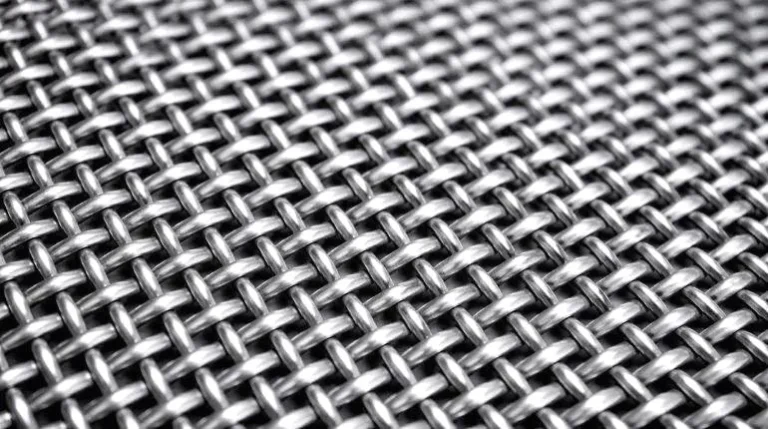
Square woven wire mesh normally uses the same opening or mesh count in both directions, while rectangular woven wire mesh uses different warp and shute spacing or counts. Choose between them from the required opening shape, orientation, material flow or screening task, support layout and approved product specification. An "off-count" description alone is incomplete: buyers should state both directional counts or openings, wire diameter, weave, material, roll or sheet size and application.
Answer summary: Specify square mesh with one confirmed opening or mesh count for both directions only when the construction is genuinely equal in both directions. For rectangular or off-count mesh, list the warp and shute values separately, identify roll length and width directions, and confirm wire diameter in each direction. Do not substitute one geometry for another without reviewing the application's opening, strength, flow, retention, guarding and support requirements.
Square and rectangular mesh answer different RFQ questions
The opening shape is only one part of woven wire mesh construction. Two products can both be described as rectangular mesh while using different counts, wire diameters, weave directions, edge conditions or roll orientations. Buyers should therefore describe the actual geometry instead of relying on a category name.
For the main product range, see woven wire mesh, wire mesh opening and wire diameter and woven wire mesh count vs opening size.
Quick comparison
| Construction wording | Basic geometry | Best RFQ description | Decision caution |
|---|---|---|---|
| Square opening mesh | Equal clear opening in both directions | Opening x opening, wire diameter, weave and material | Equal opening does not automatically mean equal directional behavior |
| Square mesh count | Equal mesh count in warp and shute | Count x count, wire diameter and weave | Confirm whether the buyer means mesh count or clear opening |
| Rectangular opening mesh | Different clear openings by direction | Warp opening x shute opening with orientation | Show which opening runs along roll length and width |
| Off-count mesh | Different mesh counts by direction | Warp count x shute count, wire diameter and weave | The term alone does not define the finished opening or suitability |
No geometry should be selected only because it appears less expensive or looks similar in a photo. The buyer's drawing, retained-particle requirement, flow direction, guarding clearance, support condition or architectural intent may make direction important.
Specification fields to confirm
| RFQ field | Square mesh | Rectangular or off-count mesh |
|---|---|---|
| Warp direction | Identify roll-length direction | Identify roll-length direction and its count or opening |
| Shute direction | Identify roll-width direction | Identify roll-width direction and its count or opening |
| Opening or mesh count | State the equal value and unit | State both directional values and units |
| Wire diameter | State the required diameter | State each directional diameter if they differ |
| Weave or crimp | Confirm the construction | Confirm the construction and orientation |
| Material | Give grade or buyer specification | Give grade or buyer specification |
| Product form | Roll, sheet, panel blank or cut piece | Roll, sheet, panel blank or cut piece with orientation |
| Edge condition | Selvage, raw or trimmed | Identify the edge on each side if direction matters |
| Further fabrication | Cutting, slitting, notching, folding, welding or framing | Include orientation after fabrication |
| Application | Screening, guarding, infill or buyer-defined use | Explain why directional opening is requested |
How to write the mesh construction
Use a two-direction format even when the mesh is square. A useful description includes:
1. Warp count or clear opening and unit. 2. Shute count or clear opening and unit. 3. Warp and shute wire diameter if different. 4. Weave or crimp type. 5. Material grade. 6. Finished roll, sheet or cut-piece size. 7. Direction arrows on the drawing.
Do not mix mesh count and clear opening without labels. Mesh count describes a repeated wire-and-opening pattern over a stated length, while clear opening is the space between adjacent wires. The same count can produce different clear openings when wire diameter changes.
Selection guidance
| Buyer requirement | Starting construction to review | Information still needed |
|---|---|---|
| Equal opening appearance in both directions | Square opening mesh | Wire diameter, weave, material, size and support |
| Different opening by direction | Rectangular mesh | Direction, both openings, wire sizes and application |
| Different count by direction | Off-count construction | Both counts, wire diameters, weave and resulting opening |
| Screening or separation | Buyer-approved opening or count basis | Material, item to retain or pass, flow direction and test basis |
| Machine guard or infill | Project-defined clear opening and support | Safety clearance, frame, fixing and local requirements |
| Cut or framed panel | Either geometry after specification review | Finished orientation, edge, tolerance, frame and connection |
This table is a quotation-preparation guide, not a performance selection. Screening efficiency, filtration rating, open area, pressure drop, structural capacity and guarding compliance need verified product data and project criteria.
Terms to clarify
- Warp: Foundation wires generally running in the length direction of the woven cloth or roll.
- Shute or fill: Wires running across the width direction.
- Square mesh: Mesh with equal spacing or count in both directions, depending on how the buyer specifies it.
- Rectangular mesh: Mesh with different directional openings or counts that produce rectangular geometry.
- Off-count mesh: Woven mesh with different warp and shute counts. Buyers should still provide both values and wire diameters.
Drawings, samples and photos
A dimensioned sketch should show roll or sheet width, length, warp direction, shute direction, opening or count in each direction, wire diameter, edge condition and cut-piece orientation. If matching a sample, send a labeled physical sample or clear photos with a scale plus measured values.
A photo cannot reliably confirm mesh count, wire diameter, material grade, weave or finished orientation. Record measurements and units separately.
RFQ checklist
Before requesting square or rectangular woven wire mesh, confirm:
- Square, rectangular or off-count wording.
- Warp and shute direction.
- Opening or mesh count for both directions and units.
- Wire diameter for each direction.
- Weave or crimp type.
- Material grade and finish request.
- Roll, sheet, panel or cut-piece dimensions.
- Selvage, raw or trimmed edge.
- Cutting, slitting, notching, folding, welding or framing scope.
- Application, orientation and support information.
- Quantity, piece marks, packing, destination and drawings.
Related QY pages
- Woven wire mesh for the main product context.
- Woven wire mesh opening and weave type for screening terminology.
- Woven wire mesh count vs opening size for measurement wording.
- Wire mesh opening and wire diameter for core size fields.
- Woven wire mesh edge conditions for roll and cut-piece edges.
- Contact QY Metal Tech when the two-direction specification and quantity are ready.
FAQ
Is rectangular woven wire mesh the same as off-count mesh?
They can overlap, because different warp and shute counts can produce rectangular openings. However, neither name is a complete specification. State both directional counts or openings, wire diameters, weave, material and orientation.
Can rectangular wire mesh replace square wire mesh?
Not automatically. Different geometry may change opening, orientation, support, flow, retention, appearance or guarding conditions. The buyer should review the substitution against the approved application and product data.
How should warp and shute values be written in an RFQ?
Label the roll-length and roll-width directions, then state the opening or mesh count and wire diameter for each direction. Add units, weave type, material and a direction arrow on the drawing.
Can QY confirm filtration or guarding performance from mesh count alone?
No. Mesh count alone does not confirm clear opening, wire diameter, weave, open area, filtration performance, structural capacity or guarding compliance. Send the full mesh construction and project requirements for review.
Related links
Related products and RFQ guides
- Wire mesh and sheet metal productsOpen the related product family section.
- Wire mesh and sheet metal topic entryWire mesh and sheet metal family page for welded wire mesh, woven wire mesh, expanded metal mesh and perforated metal sheet RFQs.
- Welded wire meshRelated product or guide page.
- Woven wire meshRelated product or guide page.
- Expanded Metal vs Perforated Sheet: What to Confirm Before RFQComparison and RFQ guide for expanded metal and perforated sheet, covering manufacturing method, pattern, open area, material, thickness, sheet size, finish, quantity and packing.
- Wire Mesh Opening and Wire Diameter: What Buyers Should ConfirmWire mesh RFQ guide explaining opening, wire diameter, material, roll or panel format, finish, size, quantity, packing, destination and buyer confirmation details.


