
Woven Wire Mesh Selvage vs Raw Edge: How to Specify Rolls and Cut Pieces
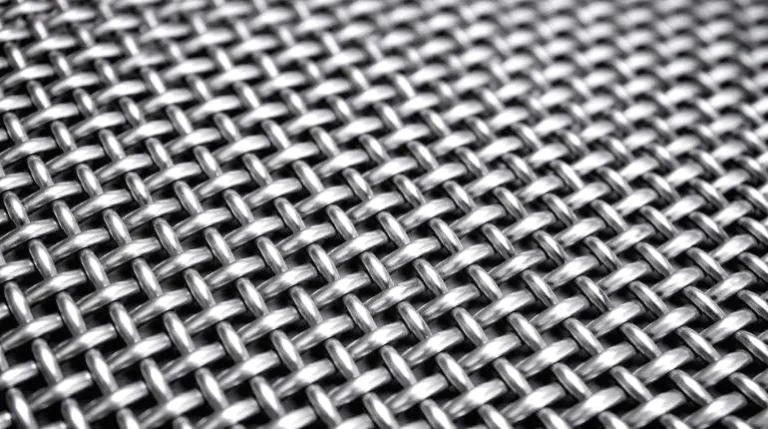
Woven wire mesh RFQs should state whether the edge is selvaged, raw, trimmed or prepared for later framing. Buyers should also confirm material, opening or mesh count, wire diameter, weave type, roll or sheet size, cut-piece dimensions, quantity, packing and drawings. Edge wording alone does not define the complete mesh.
What buyers should send: For woven wire mesh quotation, send the material grade, opening or mesh count, wire diameter, weave type, finished width and length, roll, sheet or cut-piece format, selvage or raw-edge requirement, edge trimming or framing scope, quantity, packing and application. A photo can support identification but cannot reliably confirm opening, wire diameter or finished dimensions.
Why woven wire mesh edge condition matters
Woven mesh is formed from interlacing wires. Depending on the weave, wire diameter, width and manufacturing method, the edge may retain a finished selvage or may have exposed wire ends after cutting. The required edge affects handling, cutting scope, finished width and any later frame or panel work.
Buyers should not use "finished edge" without explaining the expected result. If the mesh will be clamped, folded, welded into a frame, installed in a screen or cut again locally, include that use in the RFQ.
For product context, see woven wire mesh, wire mesh opening and wire diameter and stainless wire mesh material and weave.
Specification details to confirm
| RFQ detail | Why it changes quotation | What buyers should send |
|---|---|---|
| Material | Defines the requested wire basis | Material grade or buyer specification |
| Opening or mesh count | Defines the mesh geometry | Clear opening, mesh count and measurement unit |
| Wire diameter | Must match the opening and weave | Diameter or gauge with unit |
| Weave type | Changes mesh construction | Plain, twill, Dutch or buyer-specified weave |
| Product format | Defines cutting and packing | Roll, sheet, panel blank or individual cut piece |
| Finished size | Defines supplied dimensions | Width, length and tolerance if specified |
| Edge type | Defines the requested boundary | Selvage, raw edge, trimmed edge or drawing detail |
| Further fabrication | Changes the supply scope | Slitting, notching, folding, welding or framing request |
| Quantity and packing | Controls production and export review | Roll count, sheet count, piece marks, wrapping and destination |
Edge terms to clarify
- Selvage: A woven edge intended to retain the outer wires and provide a defined side of the mesh.
- Raw edge: An edge left after weaving or cutting, which may have exposed wire ends depending on the mesh and cut line.
- Trimmed edge: An edge cut back to a requested line or projection. The acceptable projection should be shown when important.
- Cut-to-size piece: An individual mesh piece supplied to finished width and length rather than as a full roll.
Which supply format should buyers request?
| Buyer need | Useful RFQ wording | Details still required |
|---|---|---|
| Full production roll | Roll width, roll length and edge type | Material, opening, wire diameter, weave, quantity and packing |
| Flat sheet or panel blank | Finished sheet size and flatness request if specified | Edge condition, cutting scope and packing method |
| Repeated cut pieces | Piece width, length, quantity and marks | Cut tolerance, edge projection, orientation and packing |
| Mesh for a fabricated frame | Clear frame opening and connection drawing | Mesh size, edge allowance, welding or clamping scope |
What drawings and samples should buyers send?
A dimensioned sketch should label width, length, weave direction where relevant, edge type and any notches or holes. If matching an existing mesh, send a sample or close photos with a scale together with measured opening and wire diameter.
Do not rely on a product photo to decide material grade, mesh count or wire diameter. Those values require buyer records, measurement or a confirmed sample.
RFQ checklist
Before sending a woven wire mesh RFQ, confirm:
- Material grade.
- Opening or mesh count and unit.
- Wire diameter or gauge.
- Weave type.
- Roll, sheet or cut-piece format.
- Finished width and length.
- Selvage, raw or trimmed edge.
- Slitting, notching, folding, welding or framing scope.
- Quantity, marks, packing, destination and drawings.
Related QY pages
- Woven wire mesh for the main product context.
- Wire mesh opening and wire diameter for sizing terminology.
- Woven wire mesh count vs opening size for mesh-count comparison.
- Stainless wire mesh material grade and weave for material wording.
- Welded vs woven wire mesh for construction comparison.
- Contact QY Metal Tech when dimensions, quantity and application details are ready.
FAQ
What is a selvage edge on woven wire mesh?
A selvage is a woven edge that retains the outer wires and forms a defined side of the mesh. Its exact appearance depends on the mesh construction and should be confirmed by sample, photo or specification when critical.
Is a raw edge the same as a trimmed edge?
Not necessarily. A raw edge may remain as produced or cut, while a trimmed edge is cut to a requested line or wire projection. Buyers should describe the acceptable finished condition.
What details are needed for cut-to-size woven wire mesh?
Send material, opening or mesh count, wire diameter, weave, finished width and length, edge condition, tolerance if specified, piece quantity, marks, packing and drawing.
Can QY identify wire mesh specifications from a photo?
Photos can support comparison, but they cannot reliably confirm material grade, opening, mesh count, wire diameter or finished size. Send measurements or a physical sample where matching is required.
Related links
Related products and RFQ guides
- Wire mesh and sheet metal productsOpen the related product family section.
- Wire mesh and sheet metal topic entryWire mesh and sheet metal family page for welded wire mesh, woven wire mesh, expanded metal mesh and perforated metal sheet RFQs.
- Welded wire meshRelated product or guide page.
- Woven wire meshRelated product or guide page.
- Expanded Metal vs Perforated Sheet: What to Confirm Before RFQComparison and RFQ guide for expanded metal and perforated sheet, covering manufacturing method, pattern, open area, material, thickness, sheet size, finish, quantity and packing.
- Wire Mesh Opening and Wire Diameter: What Buyers Should ConfirmWire mesh RFQ guide explaining opening, wire diameter, material, roll or panel format, finish, size, quantity, packing, destination and buyer confirmation details.


