
Curved W-Beam Guardrail: Radius, Hole Spacing and Post Layout RFQs
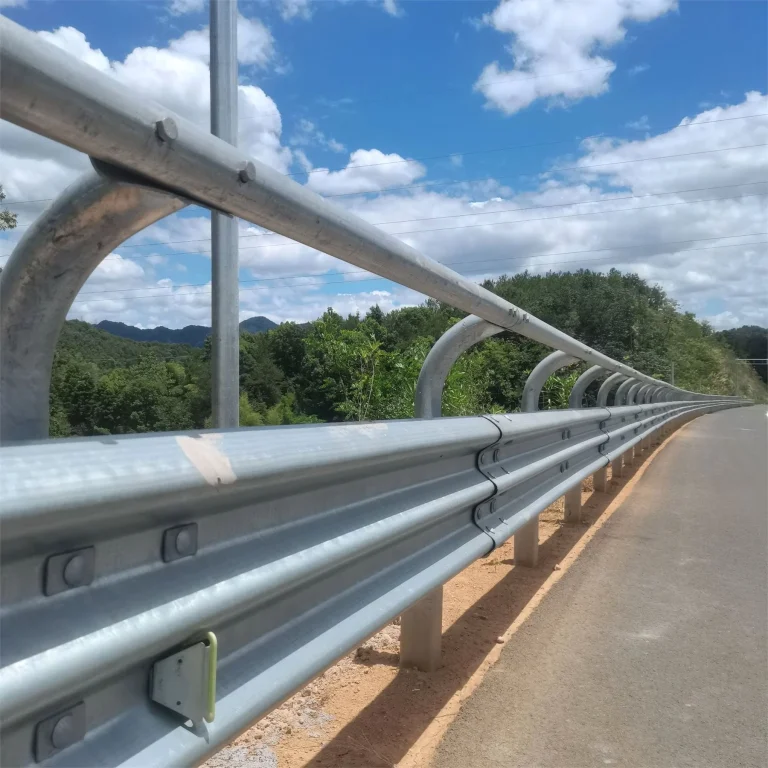
A curved W-beam guardrail RFQ should identify the route radius, whether the radius is measured to the road centerline or guardrail face, curve direction, arc or chord information, beam length, hole pattern, post spacing, lap direction, terminals, transitions, finish, quantity and drawings. Straight-beam wording alone is not enough for a curved route.
Direct answer: For curved W-beam guardrail quotation, send a plan view with the curve radius and reference line, route start and end, inside or outside curve, beam profile and length, hole pattern, post stations, lap direction if specified, terminals or transitions, quantity and finish. QY can review supplied dimensions but should not derive road geometry, impact performance or compliance from a site photo.
When curved guardrail details matter
Curved guardrail may be requested for road bends, ramps, bridge approaches, parking routes or industrial traffic areas. The word "curved" does not show whether the buyer needs factory-curved beam sections, straight sections placed along a large-radius route, or a project-specific transition.
The project designer or road authority should define the required system and acceptance criteria. QY's quotation review should follow the buyer's drawing, bill of quantity and specification rather than selecting the radius or installation layout from general descriptions.
For product context, see highway guardrails, W-beam vs thrie-beam guardrail and guardrail posts, spacers and bolts.
Decision table for the RFQ
| Buyer condition | What to specify | What not to assume |
|---|---|---|
| Factory-curved beam requested | Radius, reference line, curve direction, beam length and drawing | That a radius value without its reference line is complete |
| Straight sections follow a broad curve | Route plan, post stations, beam length, overlap and installation requirement | That straight and factory-curved supply are interchangeable |
| Existing guardrail replacement | Measured beam profile, hole pattern, post spacing, connection photos and drawing | That appearance identifies the original system |
| Transition or terminal is near the curve | Transition drawing, terminal type, connection detail and station | That standard end pieces fit every curved route |
Specification details to confirm
| RFQ detail | Why it changes quotation | What buyers should send |
|---|---|---|
| Beam profile | Defines the main beam section | W-beam or drawing-specified profile |
| Radius reference | Prevents geometry ambiguity | Radius value and whether it follows centerline, traffic face or another line |
| Curve direction | Identifies inside/outside orientation | Plan view, left/right curve or station drawing |
| Arc, chord and angle | Helps verify curved-piece geometry | Values shown on the project drawing where available |
| Beam length | Affects piece count and connections | Finished beam length and route quantity |
| Hole pattern | Controls splice and post connection | Hole spacing, slot detail or standard drawing reference |
| Post layout | Controls support and accessory count | Post type, spacing, stations, spacers or blockouts |
| Lap direction | Controls beam overlap interpretation | Buyer drawing or project-standard wording if required |
| Terminals and transitions | Defines the route ends | End section, terminal, transition and connection detail |
| Finish and packing | Defines export scope | Galvanizing wording, marks, bundles, destination and loading request |
Terms to keep unambiguous
- Radius reference line: The exact line from which the curve radius is measured. A radius without this reference can be interpreted differently.
- Arc length: The distance measured along the curve between two points.
- Chord length: The straight-line distance between the ends of a curved section.
- Post station: A defined location of a post along the project route or alignment.
What drawings and site information should buyers send?
Send a dimensioned plan view rather than only a roadside photo. The drawing should identify the guardrail line, radius reference, curve start and end, post stations, beam joints, terminals, transitions and nearby structures.
For replacement work, add close photos of the beam profile, holes, splice, post, spacer, bolts and end connection. Include a scale or measured dimensions. Photos support identification but do not replace dimensions or the governing project specification.
RFQ checklist
Before sending a curved W-beam guardrail RFQ, confirm:
- Beam profile.
- Radius and reference line.
- Inside or outside curve.
- Arc, chord or angle information where available.
- Beam length and hole pattern.
- Post type, spacing and station layout.
- Lap direction if specified.
- Spacers, blockouts and bolt sets.
- Terminals and transitions.
- Finish, quantity, packing, destination and drawings.
Related QY pages
- Highway guardrails for the main product context.
- Highway guardrail RFQ checklist for full-system quotation inputs.
- W-beam guardrail splice bolts and lap direction for beam-joint details.
- Guardrail posts, spacers and bolts for support accessories.
- Guardrail terminals and transitions for route-end details.
- Contact QY Metal Tech when the plan view and bill of quantity are ready.
FAQ
What information is needed for a curved W-beam guardrail RFQ?
Send the beam profile, radius and reference line, curve direction, arc or chord data where available, beam length, hole pattern, post layout, lap direction, terminals, finish, quantity and drawings.
Is the curve radius alone enough for quotation?
No. The RFQ should also identify the radius reference line, curve direction, beam length, route start and end, hole pattern, post stations and connection details.
Can curved guardrail dimensions be taken from a site photo?
No. Photos can support identification, but radius, chord, arc, post spacing and hole pattern require measured dimensions or a project drawing.
Can QY decide whether straight or factory-curved beams should be used?
That decision should follow the buyer's project design, road-authority requirement and acceptance criteria. QY can quote the documented supply scope.
Related links
Related products and RFQ guides
- Fencing and guardrails productsOpen the related product family section.
- Fencing and guardrails topic entryFencing and guardrail product pages for highway guardrails, welded mesh fence, chain link fence, double wire fence, municipal guardrails and railings.
- Welded mesh fenceRelated product or guide page.
- Chain link fenceRelated product or guide page.
- Welded Mesh Fence RFQ Guide for Site Boundary ProjectsRFQ guide for welded mesh fence projects covering boundary use, panel size, wire diameter, mesh opening, posts, finish, gates, accessories, quantity and destination.
- Chain Link Fence vs Welded Mesh Fence for Site Boundary RFQsFence comparison and RFQ guide covering chain link fence, welded mesh fence, panel or roll form, posts, coating, gates, accessories, quantity and destination.


