
FRP Grating Stair Treads: Nosing, Side Detail and Support RFQ Guide
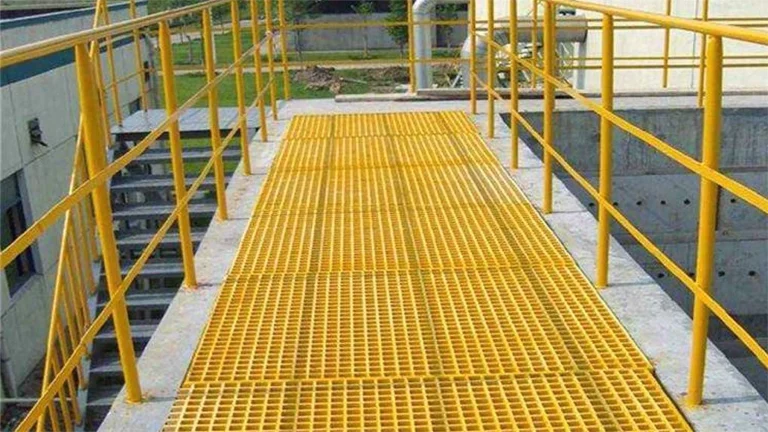
FRP grating stair tread RFQs should confirm tread width, front-to-back depth, grating type, nosing, side connection, support condition, surface, resin or color request, clips or bolts, quantity, packing and drawings. The words "fiberglass stair tread" do not define the finished tread or its connection to the stair stringers.
What buyers should send: To request FRP grating stair treads, send the finished tread width and depth, molded or pultruded construction if specified, panel depth and mesh, nosing detail, side plate or angle connection, bolt-hole layout, support condition, surface, resin or color requirement, quantity and stair drawing. QY can review RFQ details but should not infer load capacity, slip rating or code compliance without project data.
Why FRP grating stair treads need a separate RFQ
A flat FRP grating panel can be reviewed by panel size, thickness, mesh, surface, resin, support span and cutouts. A stair tread also has a front edge, two stringer connections and a repeated layout that must match the stair flight.
The buyer should identify whether the request is for finished stair treads or large panels that will be cut locally. Finished tread quotation may include nosing, side connection pieces, holes, clips, marks and packing by stair flight. Panel supply follows a different cutting and installation scope.
For product context, see molded FRP grating, pultruded FRP grating and FRP grating clips.
Specification details to confirm
| RFQ detail | Why it changes quotation | What buyers should send |
|---|---|---|
| Tread width | Matches the clear distance between stringers | Finished width and dimensioned stair drawing |
| Tread depth | Defines the front-to-back walking area | Finished depth, overlap or projection detail |
| Grating construction | Changes panel structure and bearing direction | Molded, pultruded or buyer-specified construction |
| Panel depth and mesh | Defines the requested grating geometry | Depth, mesh/opening and source specification if available |
| Nosing | Defines the front edge of the tread | Nosing type, color, width or drawing detail |
| Side connection | Connects the tread to the stringers | Side plate, angle, clip or other drawing-specified detail |
| Hole and fixing layout | Controls installation matching | Hole diameter, spacing, slot direction, bolts or clips |
| Support condition | Provides the quotation basis | Stringer type, bearing ledge, clear span and section sketch |
| Surface and resin | Defines the requested finish | Gritted, meniscus or covered surface; resin or color request |
| Marks and packing | Keeps repeated treads organized | Stair number, tread mark, quantity, bundle and destination |
Terms buyers should define
- Nosing: The front edge treatment of a stair tread. Its material, profile, width and color should be shown when required.
- Side connection: The plate, angle, clip or fixing arrangement joining the tread to the stair stringer.
- Clear span: The unsupported distance between bearing points. It should come from the stair or support drawing.
- Bearing direction: The direction in which the grating carries load between supports. This is especially important for pultruded construction.
Finished treads or cut panels?
Buyers should state which supply scope they need:
| Supply scope | Best information to provide | Do not assume |
|---|---|---|
| Finished FRP stair treads | Tread schedule, nosing, side connection, holes, marks and quantities | That one generic tread fits every stair flight |
| FRP panels for local cutting | Panel size, depth, mesh, surface, resin, cutting plan and packing | That nosing or side hardware is included |
| Replacement tread | Existing drawing, measured dimensions and clear photos of both connections | That a photo alone gives reliable dimensions |
What to prepare before sending RFQ
For a faster stair-tread review, prepare:
- Stair layout or tread schedule.
- Finished tread width and depth.
- Molded or pultruded construction if specified.
- Panel depth, mesh and bearing direction where relevant.
- Nosing and side connection detail.
- Hole positions, clips, bolts or fixing method.
- Support ledge, stringer and clear-span information.
- Surface, resin, color, quantity, marks, packing and destination.
RFQ checklist
Before sending an FRP grating stair tread RFQ, confirm:
- Finished width and depth.
- Grating construction, depth and mesh.
- Nosing detail.
- Side connection detail.
- Hole and fixing layout.
- Support condition and bearing direction.
- Surface, resin and color request.
- Quantity and tread marks.
- Packing, destination and drawings.
Related QY pages
- Molded FRP grating for molded panel context.
- Pultruded FRP grating for directional bearing-bar context.
- FRP grating panel size and support span for support inputs.
- FRP grating clips and hold-down accessories for fixing details.
- FRP grating cutouts and edge trim for local fabrication details.
- Contact QY Metal Tech when the stair drawing and tread schedule are ready.
FAQ
What should an FRP grating stair tread RFQ include?
Send the finished width and depth, grating construction, panel depth and mesh, nosing, side connection, hole layout, support condition, surface, resin or color request, quantity, packing and drawings.
Is a stair drawing necessary for quotation?
A dimensioned stair drawing or tread schedule is strongly preferred because it identifies tread size, stringer connection, hole positions and repeated quantities.
Can FRP grating panels be cut into stair treads on site?
That depends on the supplied panel, cutting plan, edge treatment, nosing, support and fixing requirements. State whether QY should quote finished treads or panels for local cutting.
Can QY select the load capacity from tread width alone?
No. Load review also needs the grating construction, depth, mesh, bearing direction, support span, load case and project acceptance requirements.
Related links
Related products and RFQ guides
- FRP grating productsOpen the related product family section.
- FRP grating topic entryFRP grating family page for molded FRP grating, trench covers, car wash grating, tree grates and wet or corrosive access areas.
- FRP trench coversRelated product or guide page.
- FRP grating selection guideRelated product or guide page.
- FRP Grating vs Galvanized Steel Grating for Wet AreasComparison guide for wet or corrosive area grating selection, covering FRP grating and galvanized steel grating by environment, traffic, support, cutouts and quotation details.
- FRP Grating RFQ Checklist for Corrosive and Wet FlooringFRP grating RFQ checklist covering wet or corrosive environment, panel size, support condition, thickness, mesh size, surface, color or resin request, quantity and destination.


