
Molded FRP Grating Weight: Panel, Cut Piece and Shipping Inputs
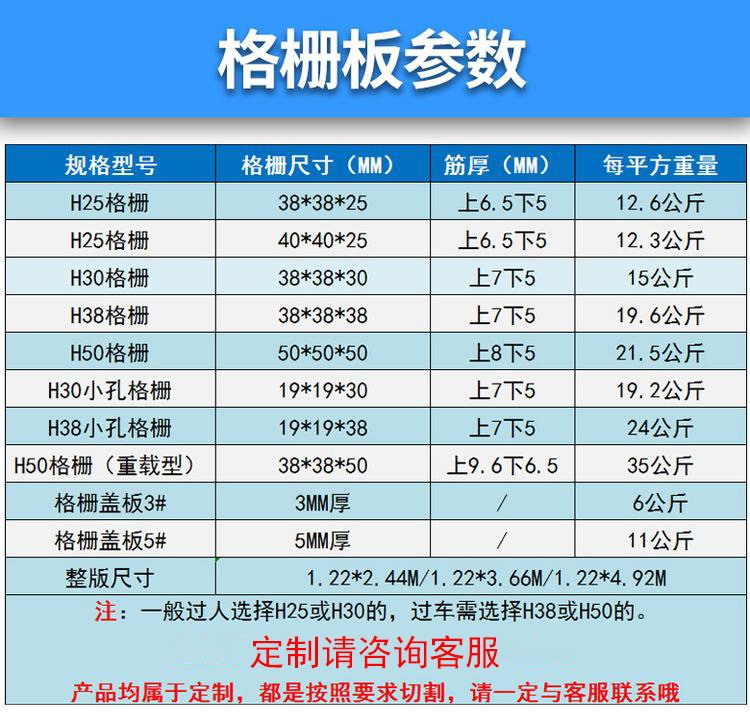
A molded FRP grating weight estimate is useful only when the unit-weight source matches the exact product row. Confirm the construction, depth, mesh or opening, surface, units and panel size first. Calculate net panel weight from finished area and the confirmed unit weight, then keep pallets, wrapping, crates and other packing outside that calculation. The final freight input should be the supplier-confirmed gross shipment weight, not a value copied from a nearby chart row.
Keep four different weights separate
Unit weight, one-panel weight, order net weight and shipment gross weight answer different questions. Unit weight is normally stated per square metre or per square foot for a defined product. One-panel weight applies that value to a finished panel area. Order net weight adds the panels or cut pieces. Gross shipment weight also includes packing and any other shipped items.
| Weight term | Calculation or source | Do not assume |
|---|---|---|
| Unit weight | Confirmed supplier row with units and conditions | That it applies to another depth, mesh or surface |
| Panel net weight | Finished length × width × confirmed unit weight | That a nominal stock-sheet size equals the cut piece |
| Order net weight | Sum of panel or cut-piece weights by quantity | That every piece has the same area |
| Shipment gross weight | Supplier-confirmed packed weight | That net product weight includes pallets or crates |
Match the source before multiplying
Record the source name, product description, units, revision or confirmation date and the conditions attached to the value. A number without those fields cannot be checked later. Convert all dimensions to one unit system before calculating area, and write the conversion beside the result.
The QY parameter image associated with this guide shows the type of row matching buyers should expect: product label, nominal grid or height information, unit weight and panel dimensions. It is used here only to explain the fields. Its visible numbers are not presented as current order specifications and must be confirmed for the quoted product.
Calculate panels and cut pieces transparently
For a rectangular panel, use:
panel net weight = finished length × finished width × confirmed unit weight per area
For an order, calculate each different size separately, multiply by its quantity and add the subtotals. For irregular cut pieces, ask whether the supplier estimates from finished area, parent-sheet usage or another documented basis. Do not invent an area from a photograph.
Keep the working sheet with the RFQ. It should show the value used, units, dimensions, quantity and rounding method. That makes a later correction possible without rebuilding the estimate from memory.
Add packing only after the net calculation
Packing depends on the panel sizes, quantity, stacking, edge protection, pallets or crates, accessories and handling method. Ask QY to confirm the packed configuration and gross weight after reviewing the actual order. A unit-weight table cannot prove current stock, resin system, loading capacity, packing method, freight cost or delivery time.
Send a checkable weight request
Include:
- the exact molded FRP grating description or requested product row;
- unit-weight source, units and confirmation date;
- finished dimensions and quantity for every panel or cut piece;
- the net-weight calculation and rounding basis;
- accessories or loose items shipped with the panels;
- requested packing, destination and handling constraints;
- a request for confirmed gross shipment weight.
Use the molded FRP grating product page for product context. Keep support and structural questions with the FRP panel size, support and span guide. When the field set is ready, send it to QY for quotation review.
FRP grating technical references
Use these references with the applicable project assumptions. They support pre-quotation screening and are not a certificate or engineering approval. Final quotation follows the confirmed drawing, dimensions, load or service conditions.
Technical checks before quotation
- Confirm resin system, bearing depth, mesh opening and panel dimensions.
- Match span, load direction and deflection requirements to the selection guide.
- Confirm chemical service, color, surface option and support details; screening guidance is not a certificate.
Related links
Related products and RFQ guides
- FRP grating productsOpen the related product family section.
- FRP grating topic entryFRP grating family page for molded FRP grating, trench covers, car wash grating, tree grates and wet or corrosive access areas.
- FRP trench coversRelated product or guide page.
- FRP grating selection guideRelated product or guide page.
- FRP Grating vs Galvanized Steel Grating for Wet AreasComparison guide for wet or corrosive area grating selection, covering FRP grating and galvanized steel grating by environment, traffic, support, cutouts and quotation details.
- FRP Grating RFQ Checklist for Corrosive and Wet FlooringFRP grating RFQ checklist covering wet or corrosive environment, panel size, support condition, thickness, mesh size, surface, color or resin request, quantity and destination.


