
FRP Grating Repair or Replacement: Inspection and RFQ Checklist
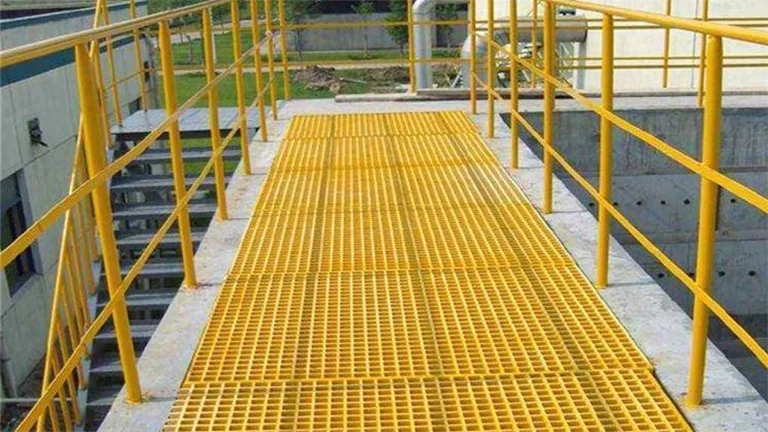
FRP grating repair or replacement decisions should begin with site isolation and review by the responsible engineer, asset owner or original manufacturer—not with a cosmetic patch. Record the grating construction, panel marks, support layout, damage type and extent, exposure history, clips, load requirement, photos and drawings. QY Metal Tech can use that evidence to prepare a replacement-panel RFQ review, but it cannot approve a field repair from a short description or photo alone.
What buyers should send: For an FRP grating repair or replacement review, send the molded or pultruded construction, panel series or available markings, depth and mesh or bar spacing, bearing direction, clear support span, damage location and dimensions, exposure notes, clip and support condition, load requirement, marked photos, layout drawing and quantity. Keep the area under the site's safety process until a competent reviewer decides whether repair, reinforcement or replacement is acceptable.
When this checklist is useful
Use this checklist when a walkway, platform, stair landing, trench cover or access panel shows cracking, broken bars, damaged intersections, exposed fibers, impact damage, burned or charred areas, chemical attack, loose clips, unsupported cutouts or an unknown previous repair. It also helps when the original supplier record is incomplete and the buyer needs a replacement quotation without assuming that a visually similar panel is interchangeable.
For general product selection, start with QY's FRP grating selection guide. For support and load-table inputs, use the FRP panel size and support span guide.
Evidence to collect before requesting a decision
| Inspection or document input | Why it matters | What to send for RFQ review |
|---|---|---|
| Product construction | Molded and pultruded panels distribute load differently | Construction type, product record or clear top/edge photos |
| Panel series and geometry | Depth, mesh or bearing-bar spacing affect replacement matching | Panel depth, opening or spacing, panel size and available markings |
| Bearing direction | Pultruded panels have a primary bearing direction | Direction marked on the layout and support lines |
| Damage location and extent | Surface marks, broken members and support-edge damage are not equivalent | Overall photo, close-up, dimensions and a marked panel drawing |
| Exposure history | Heat, chemicals, UV, impact and contamination need different review | Substance, concentration if known, temperature, duration and incident notes |
| Support and cutouts | Unsupported edges or altered supports can change the panel condition | Clear span, support width, cutouts, penetrations and edge details |
| Clips and fasteners | A loose panel can be a fixing problem, panel problem or both | Clip type, spacing, missing items and support connection photos |
| Project load requirement | Thickness alone does not confirm capacity | Required load case, deflection limit and the governing project document |
| Approval responsibility | Repair acceptance is a site and engineering decision | Responsible reviewer, required standard and inspection hold point |
Repair, reinforcement or replacement: what changes the review?
This is an evidence-routing guide, not a repair instruction.
| Observed condition | Appropriate next question | RFQ implication |
|---|---|---|
| Cosmetic mark with no confirmed member damage | Has the original manufacturer or responsible engineer classified it as cosmetic? | Replacement may not be requested until the condition is classified |
| Exposed fibers, gouge or damaged cut edge | Is sealing or another manufacturer-approved treatment permitted for this product and exposure? | Send the original product record and affected dimensions |
| Cracked bearing member or broken molded intersection | Has the panel been removed from service and assessed for structural damage? | Prepare full-panel replacement details unless an approved repair is documented |
| Burned, charred or heat-affected area | What heat source, duration and affected area were recorded? | Do not infer remaining capacity; include incident records and replacement scope |
| Chemical attack, softening, swelling or surface change | What substance, concentration, temperature and contact time applied? | Resin suitability and replacement material require documented exposure review |
| Loose clips or changed supports | Is the panel damaged, or is the fixing/support system incomplete? | Quote panels and clips separately and show the support layout |
| Unknown old repair | Who approved it, what material was used and what members were affected? | Treat it as an unresolved condition until documentation is available |
QY should not tell a buyer to continue using damaged grating, approve a field patch, or claim remaining load capacity. The site owner and competent project reviewer control isolation, inspection and return-to-service decisions.
Replacement-panel details QY needs
If replacement is selected, do not order by color and outside dimensions alone. Confirm:
- Molded or pultruded construction.
- Original series, resin wording and color when records exist.
- Panel depth, mesh or bearing-bar spacing and cross-rod spacing.
- Bearing direction and clear support span.
- Finished panel dimensions, panel marks and quantity.
- Surface request such as meniscus, grit or covered top.
- All cutouts, notches, removable sections and sealed-edge requirements.
- Clip type, support angle and fixing scope.
- Load case, deflection criterion and required project approval.
- Exposure, packing, destination and replacement sequence notes.
Use the molded FRP grating and pultruded FRP grating pages to identify the broad construction family. Use the FRP clips and hold-down accessories guide when the fixing scope is also being replaced.
Plain-language terms
- Cosmetic damage: A visible condition that has been classified as non-structural by the responsible reviewer; appearance alone cannot establish this classification.
- Structural damage: Damage that may affect a load-carrying bar, intersection, support edge or connection and therefore needs competent assessment.
- Bearing direction: The direction in which a pultruded grating's primary bearing bars span between supports.
- Cut-edge sealing: A product- and exposure-specific treatment for cut or drilled FRP edges; it is not a substitute for repairing a broken load-carrying member.
RFQ package for replacement review
Before contacting QY Metal Tech, prepare:
- Site and application name with the affected area marked.
- Original purchase record, drawing, product series or readable panel markings.
- Overall and close-up photos with a scale reference.
- Damage dimensions, panel mark and location on the plan.
- Panel geometry, bearing direction, clear span and support details.
- Exposure and incident history.
- Clip, fastener, cutout and edge condition.
- Project load requirement and approval contact.
- Replacement quantity, spare quantity, packing and destination.
Send the package through QY Metal Tech's contact page. QY can check quotation completeness, replacement geometry, fabrication notes and packing scope. Final repair acceptance, structural suitability and site return-to-service approval remain with the responsible project parties.
Frequently asked questions
Can QY confirm an FRP grating repair from photos?
No. Photos help identify missing information, but repair acceptance requires the exact product, damage extent, support condition, exposure, load requirement and approval by the responsible manufacturer, engineer or asset owner.
Does matching panel thickness prove the replacement has the same load capacity?
No. Construction type, series, mesh or bearing-bar spacing, bearing direction, clear span, load case, deflection criterion and manufacturer data also matter.
What if the original FRP grating series is unknown?
Send measured geometry, clear top and edge photos, panel and support dimensions, bearing direction, exposure notes and the project requirement. QY can review replacement RFQ options but should not declare an unidentified panel interchangeable.
Should clips and supports be included in a replacement RFQ?
Yes when they are missing, loose, corroded, altered or part of the replacement scope. Show the support layout and separate panel, clip and support-angle quantities.
Related links
Related products and RFQ guides
- FRP grating productsOpen the related product family section.
- FRP grating topic entryFRP grating family page for molded FRP grating, trench covers, car wash grating, tree grates and wet or corrosive access areas.
- FRP trench coversRelated product or guide page.
- FRP grating selection guideRelated product or guide page.
- FRP Grating vs Galvanized Steel Grating for Wet AreasComparison guide for wet or corrosive area grating selection, covering FRP grating and galvanized steel grating by environment, traffic, support, cutouts and quotation details.
- FRP Grating RFQ Checklist for Corrosive and Wet FlooringFRP grating RFQ checklist covering wet or corrosive environment, panel size, support condition, thickness, mesh size, surface, color or resin request, quantity and destination.


