
FRP Grating for Marine Docks and Marina Walkways: RFQ Guide
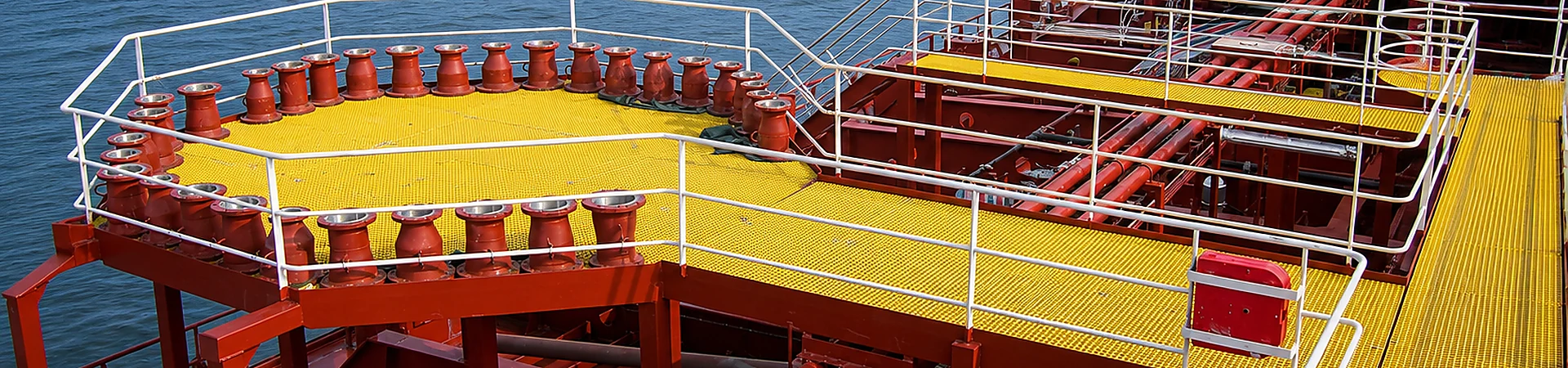
Direct answer: Specify FRP grating for a marine dock or marina walkway from the actual exposure and support conditions—not from the word “marine.” Send the water-contact and cleaning environment, public or private use, traffic and load cases, required surface, open-area or drainage requirement, clear support span, panel layout, cutouts, clips, edge condition, quantity, drawings and the authority that must approve the final selection.
Answer summary
| Decision | Buyer input | Completion rule |
|---|---|---|
| Exposure | Salt spray, splash, intermittent or continuous immersion, chemicals, temperature, UV and cleaning agents | Identify each known medium and concentration instead of writing only “seawater” |
| Access and traffic | Private dock, public marina, pier, gangway or maintenance walkway; pedestrians, carts and other loads | Define users and design load cases; do not infer them from the location |
| Walking surface | Meniscus, grit or another verified surface request; barefoot, footwear, wetness and cleaning condition | Select only after slip, comfort, cleaning and project requirements are reviewed |
| Open area and drainage | Drainage, light-transmission, debris and environmental-permit inputs | State the required criterion and approving authority; do not copy a competitor percentage |
| Structure | Product series, thickness or bar depth, bearing direction, clear span, support width and deflection criterion | Use the selected QY product record and project design basis |
| Layout and fixing | Panel marks, joints, cutouts, edge support, clips, removable areas and tidal or uplift inputs | Issue a coordinated drawing and identify the responsible reviewer |
| Approval | Local code, accessibility, environmental, marina and owner requirements | Record the document, revision and approving party before release |
For QY product context, start with molded FRP grating. Use the FRP load table and support span guide for the correct table inputs and the FRP color and surface guide for surface terminology.
What changes in a marine dock RFQ?
A dock or marina walkway combines several decisions that should not be collapsed into one material label:
- Exposure changes by zone. A splash zone, submerged edge, dry upper deck and cleaning area may not have the same medium, temperature or wetting cycle.
- Walking conditions vary. Public access, barefoot use, wheeled traffic, wet footwear and maintenance work can create different surface and opening requirements.
- Water and environmental controls are project-specific. Open area, light transmission, drainage or debris control may be governed by a permit or local authority.
- Support conditions control the table lookup. Clear span, bearing direction, support width, product series and load type must agree with the drawing.
- Edges and cutouts matter. Field-trimmed openings, unsupported panel edges and uncoordinated joints can change the required panel layout.
- Fixing is not a generic clip count. Clip type, support material, removable access, edge restraint and any uplift or wave-action input require project review.
Best fit: an RFQ with zone-by-zone exposure, controlled drawings, an identified product record and named approval responsibility.
Hold for clarification: “marine-grade FRP grating” with no exposure record, support span, load case, surface, fixing or approval basis.
Marine exposure record
Use one row for each exposure zone.
| Field | What to record | What not to assume |
|---|---|---|
| Water contact | Salt spray, splash, washdown, intermittent wetting or immersion | One resin or product suits every zone |
| Chemical contact | Fuel, oil, cleaner, disinfectant or other known medium and concentration | “Corrosion resistant” proves compatibility |
| Temperature | Normal and upset ranges where known | Ambient air temperature represents the wet surface |
| UV and weather | Outdoor exposure, shade, freeze-thaw or high heat if relevant | Color alone proves UV performance |
| Cleaning | Agent, concentration, frequency, pressure and tools | A rougher surface is always easier to maintain |
| Service life or warranty | Project requirement and evidence requested | A generic material statement proves either one |
QY can screen these inputs against the proposed resin and product documentation. Final chemical compatibility, service life and environmental suitability require the selected product record and responsible project approval.
How should open area and walking surface be specified?
Open area can affect drainage, light transmission, small-object passage, walking feel and permit review. State the governing requirement and its source. Do not reuse another manufacturer’s open-area percentage, accessibility statement or environmental approval for a different QY product.
For the surface, describe the actual walking and cleaning condition:
- Barefoot or footwear use.
- Continuous wetness, spray or occasional washdown.
- Pedestrian, cart or maintenance traffic.
- Required cleaning method.
- Grit, meniscus or other project-specified finish.
- Opening limit, ball-test or accessibility criterion only when the controlling document is supplied.
Use the FRP anti-slip surface guide to organize the decision. A surface description is not a universal slip-resistance guarantee.
Structural and layout inputs
Before QY selects a table row or prepares a panel proposal, send:
- Product type: molded or pultruded, if already controlled.
- Panel thickness or bearing-bar depth and mesh/bar spacing.
- Bearing direction for directional products.
- Clear support span and support width.
- Uniform, concentrated, line or other project load case.
- Load units and deflection limit.
- Panel marks, finished sizes, joints and bearing locations.
- Cutouts, penetrations, edge trim and banded or closed-edge requests.
- Fixed, removable or hinged access areas.
- Clip and fastener requirements, support material and corrosion-isolation notes.
- Any uplift, wave, buoyancy or impact input identified by the project engineer.
The FRP grating installation drawing checklist explains how panel marks, supports, cutouts and clips should be coordinated. It is not a substitute for marine structural design.
What does QY evidence support?
QY’s approved molded-FRP photograph shows a real QY product surface and open-mesh construction. QY’s reviewed load-table and chemical-screening publications support the workflow of checking the exact product series, span, load case, deflection and exposure before quotation.
This evidence supports a real QY product and review path. It does not prove that the photographed panel is suitable for saltwater, public access, a stated load, an environmental permit or another project. Those claims require the selected product record, drawings and approval.
RFQ checklist
Send the following for a marine dock or marina walkway RFQ:
- Project location and dock, pier, gangway or walkway zone.
- Water, salt, chemical, temperature, UV and cleaning exposure.
- Public/private use, footwear or barefoot use and traffic types.
- Design load cases, units and deflection criterion.
- Surface, color and opening or drainage requirements.
- Product type, thickness/depth, mesh or bar spacing if controlled.
- Clear support span, bearing direction and support width.
- Panel layout, marks, cutouts, edges and removable areas.
- Clips, fasteners, support material and uplift/wave inputs when applicable.
- Quantity, packing, destination and required documents.
- Controlling code, permit, accessibility or environmental document.
- Drawing, technical and approval contacts.
When these fields are ready, contact QY Metal Tech with the drawings and exposure schedule.
Related QY pages
- Molded FRP grating for the main product route.
- FRP load table and support span guide for product-specific table inputs.
- FRP resin system selection for chemical and temperature screening fields.
- FRP color and surface RFQ guide for top-surface terminology.
- FRP installation drawing checklist for panel and support coordination.
- Contact QY Metal Tech for a drawing-based quotation.
FAQ
Is all FRP grating suitable for marine docks?
No. FRP and marine do not verify resin compatibility, UV exposure, surface, load, span, fixing, environmental approval or accessibility. Review the exact product and project conditions.
What information is needed to select a resin for saltwater exposure?
Send each known medium, concentration, temperature, contact mode, duration, cleaning chemical and upset condition. Final selection follows the proposed product's documented compatibility and project approval.
Does a high open-area percentage make dock grating compliant?
Not by itself. The project must identify the governing environmental, drainage, accessibility or permit criterion and verify it against the exact product and layout.
Can a marine FRP grating load table replace project engineering?
No. A product table is only one input. The project still needs the correct load case, clear span, bearing direction, support condition, deflection criterion, panel layout and responsible engineering approval.
Related links
Related products and RFQ guides
- FRP grating productsOpen the related product family section.
- FRP grating topic entryFRP grating family page for molded FRP grating, trench covers, car wash grating, tree grates and wet or corrosive access areas.
- FRP trench coversRelated product or guide page.
- FRP grating selection guideRelated product or guide page.
- FRP Grating vs Galvanized Steel Grating for Wet AreasComparison guide for wet or corrosive area grating selection, covering FRP grating and galvanized steel grating by environment, traffic, support, cutouts and quotation details.
- FRP Grating RFQ Checklist for Corrosive and Wet FlooringFRP grating RFQ checklist covering wet or corrosive environment, panel size, support condition, thickness, mesh size, surface, color or resin request, quantity and destination.


