
Welded Wire Mesh Replacement Matching: Panel, Roll and Edge Record
For welded wire mesh replacement, compare the mesh specification and the finished piece separately. The same stated opening and wire size do not settle the piece dimensions, edges or supply form. A missing specification is also different from a stated mismatch. Making those distinctions lets you identify the exact point to resolve before ordering; it does not approve fit or performance.
Compare the mesh description before the finished piece
A description that names only an opening leaves the wire size unresolved. A wire-diameter entry does not answer the opening question either. Compare each against its corresponding field, retaining the stated units and measurement basis. If one document describes a clear opening and another gives centre-to-centre spacing, do not mark them as equal simply because the numbers look similar. The opening and wire-diameter guide explains these separate terms.
Keep material and finish separate from the visible pattern. Where an old order identifies them, first establish which item that order describes. Where only appearance is available, leave those fields unanswered; a visual resemblance is not a substitute for a material or finish record.
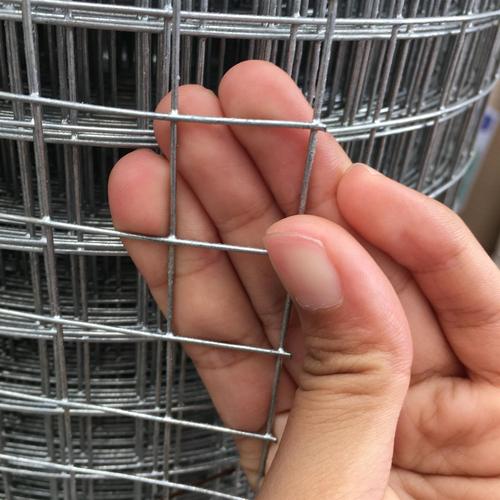
In the accompanying QY photograph, a hand holds wire mesh in front of rolled mesh. No opening measurement or wire-diameter reading is shown. The fingers are not a scale, and the visible section does not establish the size of a required replacement piece. Use the photo as product context, not evidence of dimensions, material, coating, tolerance, weld strength or available stock.
A matching grid still leaves the finished piece unresolved
A short sample cut from an existing item describes that sample, not automatically the size of the replacement required. Keep its dimensions separate from the required finished width and length. For several replacement sizes, identify which finished piece each sample represents.
Likewise, “cut piece” alone does not describe the required edge. Compare the sample edge with the edge stated for the proposed item. If the quotation does not describe it, that part of the comparison remains open even when opening and wire entries agree.
Where an existing frame, clip or adjoining panel will remain, identify it as a retained interface. Agreement on the mesh description does not resolve that interface. This article does not determine clearance, fastening or reuse suitability.
If the real decision is whether to buy panels or rolls, use the panels-versus-rolls comparison. For a replacement comparison, the narrower question is whether the proposed supply form and finished-piece description match what is actually requested.
A missing entry is not the same as a different entry
Consider two hypothetical quotation comparisons—not QY orders or customer cases.
In the first, a replacement description repeats the old opening value but omits wire diameter. You have an apparent agreement on one field and an unanswered question on another. The useful next question is what wire diameter the offer includes, not whether the whole item is “the same.”
In the second, the required item is a finished cut piece, while the offer states a roll. Even if the opening and wire descriptions agree, the supply form differs. Clarify whether the offer will be revised to finished pieces or whether cutting is outside the quoted scope. Do not silently treat an offer for a roll as an offer for the requested finished pieces.
On your copy of an old description and a proposed replacement, mark relevant entries as explicitly the same, explicitly different or not stated. Reserve “the same” for descriptions using the same units and basis, not similar-looking numbers. This leaves a focused comparison you can use with any supplier, rather than another general request for more details.
QY's welded wire mesh page provides the product context. If you want quotation clarification, send QY the particular difference or missing entry with the relevant record or photograph; you do not need to fill every unknown before starting an inquiry. Matching descriptions alone does not establish strength, project suitability, compliance or safe operation. Those conclusions require the applicable evidence and responsible project review.
Related links
Related products and RFQ guides
- Wire mesh and sheet metal productsOpen the related product family section.
- Wire mesh and sheet metal topic entryWire mesh and sheet metal family page for welded wire mesh, woven wire mesh, expanded metal mesh and perforated metal sheet RFQs.
- Welded wire meshRelated product or guide page.
- Woven wire meshRelated product or guide page.
- Expanded Metal vs Perforated Sheet: What to Confirm Before RFQComparison and RFQ guide for expanded metal and perforated sheet, covering manufacturing method, pattern, open area, material, thickness, sheet size, finish, quantity and packing.
- Wire Mesh Opening and Wire Diameter: What Buyers Should ConfirmWire mesh RFQ guide explaining opening, wire diameter, material, roll or panel format, finish, size, quantity, packing, destination and buyer confirmation details.


