
Compound Steel Grating with Checkered Plate: How to Specify an RFQ
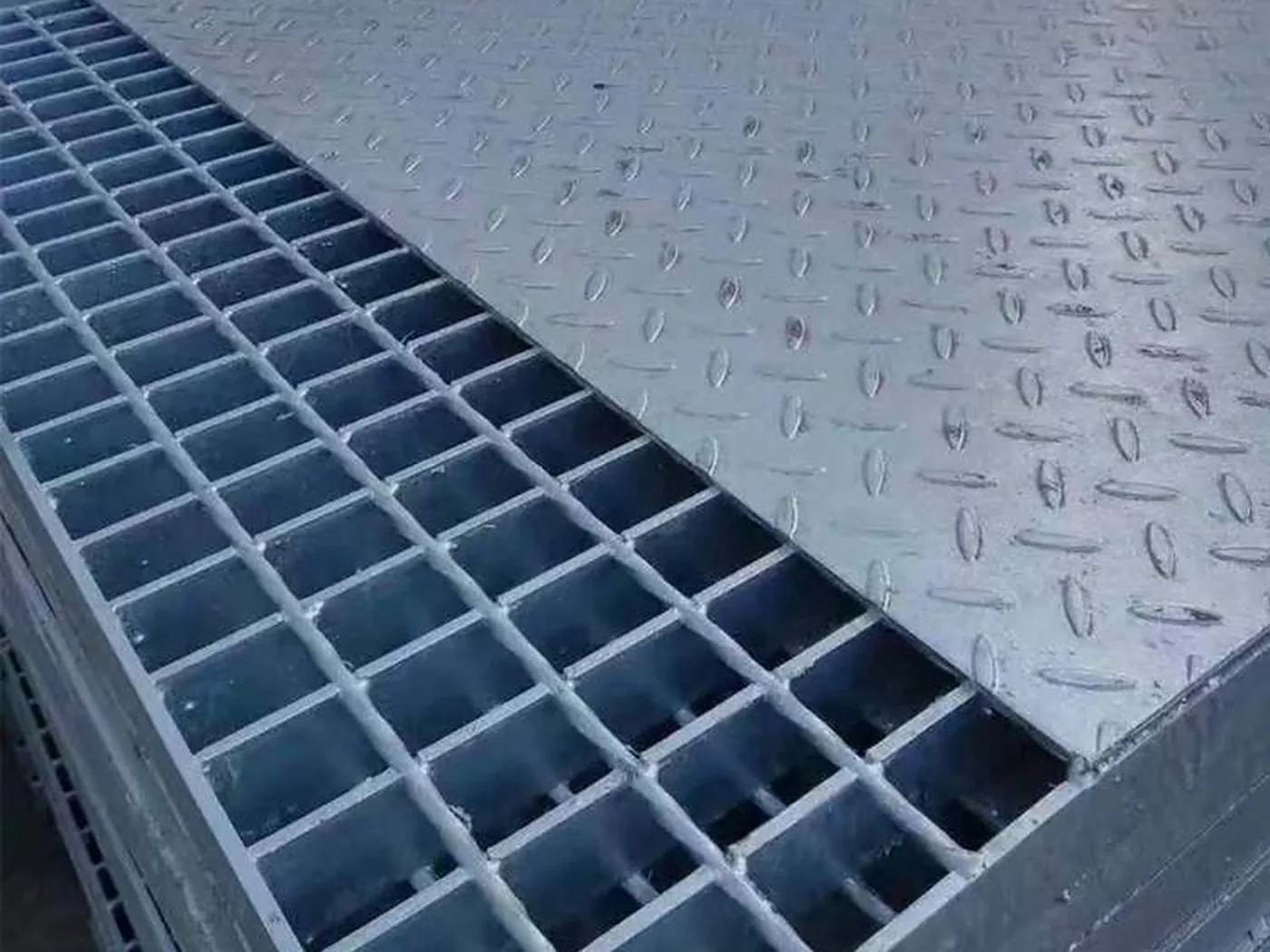
Compound steel grating with checkered plate should be quoted as one fabricated panel assembly, not as an unspecified sheet placed over generic grating. Buyers should identify the base grating construction, bearing direction, support span, plate pattern and thickness, panel size, cutouts, closed or open zones, edge treatment, attachment requirement, finish, quantity, packing and drawing revision. QY Metal Tech can review those product and fabrication inputs before pricing; the responsible project party must approve load, drainage, slip, fire and installation requirements.
Answer summary: Define both layers and their interface. State the base steel grating, the checkered plate, finished panel geometry, supports, cutouts, attachment scope, finish and drawing control. Do not use a photograph or the phrase "compound grating" as proof of a load rating or complete floor-system design.
When should buyers specify compound steel grating?
Use this product wording when the requested panel combines a steel bar-grating base with an attached plate surface. It is a different RFQ from open steel bar grating and from loose checkered plate supplied without a grating base.
The choice usually starts with the required surface condition, drainage or containment plan, inspection access and project drawing. A closed plate surface changes how debris, liquid, cutouts and panel edges are handled. It does not automatically make the assembly suitable for a particular walkway, machine floor or load case.
| Buyer condition | RFQ direction | Do not assume |
|---|---|---|
| Open drainage or ventilation must remain | Review open bar grating or clearly marked open zones | A plate-covered panel will preserve the same open area |
| A plate surface is required over a grating base | Specify a compound panel and define both layers | The product name defines plate thickness or attachment |
| Only a solid floor plate is required | Quote the plate and support system as the controlled design requires | A grating base is always necessary |
| Removable or irregular panels are shown | Provide panel marks, lifting/access notes, cutouts and edge details | One standard rectangular panel fits the layout |
QY's approved compound-grating photographs show real fabricated panels with a checkered plate surface and a visible grating base. That evidence supports product identity and the need to define both components; it does not prove an exact material, thickness, weld, span, load, flatness or project approval.
Specification details to confirm
| RFQ field | What the buyer should provide | Why it matters |
|---|---|---|
| Base grating construction | Welded, press-locked or drawing-specified type | Keeps the quotation tied to the intended product family |
| Bearing bars and direction | Bar shape, size, spacing and bearing direction | Connects the panel to its supports and load review |
| Checkered plate | Material, pattern, nominal thickness and controlling drawing | Defines the closed surface being requested |
| Panel geometry | Finished width, length, orientation and panel mark | Prevents raw sheet size from being mistaken for finished size |
| Open and closed zones | Plate coverage, drainage openings and exposed-grating areas | Controls where the surface remains closed or open |
| Cutouts and notches | Datum, finished shape, edge distance and surrounding support | Supports fabrication review without guessing from a photo |
| Edge treatment | Banding, toe plate, trim, frame or drawing detail | Defines the finished boundary and interface |
| Plate-to-grating interface | Buyer-required attachment detail, inspection point and acceptance note | Separates requested fabrication from unsupported design assumptions |
| Supports and span | Support lines, clear span, bearing length and approved load case | Keeps structural approval outside a generic product description |
| Finish | Base material condition and requested coating sequence | Affects the quoted finishing scope for the assembly |
| Handling and packing | Lifting points if specified, bundle marks, protection and destination | Helps prevent panel marks and finished surfaces from being mixed |
| Document control | Drawing number, revision, bill of quantity and release status | Ensures the quotation follows the current project information |
For bar geometry and load-review inputs, use the steel grating load span and deflection guide. The article explains what data must accompany a load request; it does not supply a universal calculation for a compound panel.
Define the plate-to-grating interface
The interface is part of the product, even when the finished surface hides most of the grating. Show whether the plate covers the whole panel or only selected zones. Mark seams, uncovered drainage areas, cutouts, toe plates, edge bands and any buyer-controlled attachment detail.
Do not specify a generic weld pattern from an unrelated drawing or competitor page. The required attachment, fabrication sequence, inspection and acceptance criteria should come from the approved project design or a verified QY proposal for the exact panel. If those records are missing, keep the interface as a confirmation item before quotation.
The panel layout, cutout and banding guide is the existing owner for panel marks, datums and irregular geometry. This page owns the narrower decision of how the plate and grating are described together.
Control supports, drainage and removable access
A compound panel can change the way a floor handles water, debris and maintenance access. Mark where liquid or debris must pass, where a closed surface is required and whether any panel must be removed. Include adjacent equipment, curbs, walls, frames and clearances on the drawing.
Support information remains essential because overall panel length is not the same as clear span. Identify bearing direction and each support line. If load or deflection is important, provide the approved load case, units, acceptance criterion and source revision for the complete assembly. QY should not transfer a value from open bar grating, another plate thickness or another supplier's table.
QY evidence and claim boundary
The featured image is an approved QY compound steel grating photograph. It visibly shows a checkered plate surface joined to a steel grating base. A second approved QY image shows finished plate-covered panels stacked in the product-handling context. Together they directly support the core RFQ decision: buyers must specify the base grating and plate as one controlled assembly.
These images do not establish the material grade, plate thickness, bar size, weld detail, coating thickness, load capacity, flatness tolerance, drainage result or suitability of a requested panel. Those facts must come from the buyer's drawing, verified QY product record or approved technical review.
Plain-language terms
- Compound steel grating: A fabricated assembly that combines a steel-grating base with an attached plate or another buyer-defined surface layer.
- Checkered plate: A plate with a raised surface pattern. Its material, pattern and thickness still need to be stated.
- Bearing direction: The direction in which the bearing bars span between supports.
- Panel mark: A unique drawing or schedule identifier used to match a finished panel to its location and packing group.
What to prepare before sending RFQ
Send the following through QY Metal Tech's contact page:
- Application and whether the requested surface must be open, closed or divided into zones.
- Base grating construction, material, bearing bar size, spacing and bearing direction.
- Checkered plate material, pattern, thickness and coverage area.
- Finished panel sizes, panel marks, quantity and spare-panel requirement.
- Support layout, clear spans, approved loads, units and acceptance criteria when applicable.
- Cutouts, notches, drainage openings, seams, edge bands and toe-plate details.
- Buyer-required plate-to-grating attachment, inspection and acceptance notes.
- Finish or coating request for the complete assembly.
- Latest drawings, bill of quantity, revision and release status.
- Packing marks, protection, lifting/handling notes and destination.
QY can review whether the submitted product description, finished geometry and fabrication scope are clear enough for quotation. Structural design, site drainage, slip performance, fire performance and installation approval remain with the responsible project parties unless separately supported by controlled evidence.
Related QY pages
- Compound steel grating for the closest QY product context.
- Steel bar grating for the open-grating base product family.
- Steel grating panel layout, cutouts and banding for drawing and fabrication inputs.
- Steel grating load span and deflection guide for controlled load-review inputs.
- Contact QY Metal Tech when the current drawing and panel schedule are ready.
Frequently asked questions
Is compound steel grating the same as open bar grating?
No. Compound steel grating includes a grating base and an attached plate or other specified surface layer. Open bar grating leaves its openings exposed. The RFQ should name the required construction instead of treating the terms as interchangeable.
Can QY quote compound grating from a photograph?
A photograph can help identify the general product form, but it cannot verify bar size, spacing, plate thickness, attachment, supports, load, finish or finished dimensions. A controlled drawing and bill of quantity are still required.
Does checkered plate automatically prove slip resistance?
No. A visible raised pattern does not prove a project-specific slip result, test method or acceptance requirement. Buyers should state the required surface criterion and supporting evidence.
Which dimensions should control the quotation?
Use finished panel dimensions and panel marks from the current drawing. Also identify base-grating orientation, plate coverage, cutouts, edge treatment, supports and any separate raw-material allowance only when it belongs in the supply scope.
Related links
Related products and RFQ guides
- Steel grating productsOpen the related product family section.
- Steel grating topic entrySteel grating family page for platform grating, stair treads, drain covers, serrated grating, galvanized grating and drawing-based RFQs.
- Galvanized steel gratingRelated product or guide page.
- Steel grating stair treadsRelated product or guide page.
- Steel Grating RFQ Checklist for International BuyersRFQ checklist for steel grating buyers covering application, panel or opening size, bearing bar direction, support span, finish, quantity, packing, destination and drawings.
- FRP Grating vs Galvanized Steel Grating for Wet AreasComparison guide for wet or corrosive area grating selection, covering FRP grating and galvanized steel grating by environment, traffic, support, cutouts and quotation details.


