
FRP Trench Cover Frame and Support Ledge: RFQ Details Buyers Should Confirm
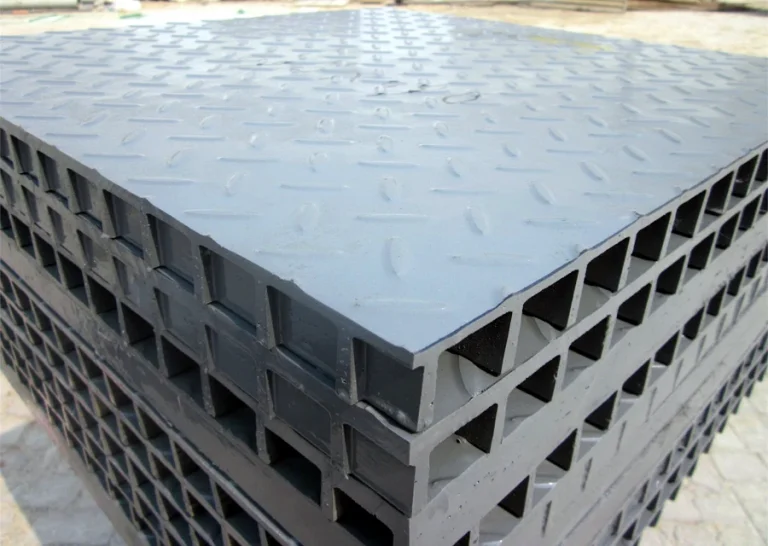
FRP trench cover RFQs should confirm the trench opening, support ledge, frame condition, panel size, thickness, mesh size, surface, cutouts, panel marks, quantity, packing and drawings. The cover is not defined by length and width alone because the support detail changes how the panel is reviewed.
Answer summary: For FRP trench cover frame and support ledge RFQs, buyers should send trench opening size, clear span, support ledge width, frame or angle detail, cover panel size, thickness, mesh size, surface type, resin or color request, cutouts, removable panel marks, quantity, packing and drawings. QY should not claim load capacity or site suitability without confirmed support data.
Why frame and support ledge details matter
FRP trench covers are often used over drainage channels, wet floors, wastewater areas, wash bays and maintenance access routes. The same panel size can be reviewed differently if it sits on a concrete ledge, steel angle frame, removable tray, raised curb or existing support.
Buyers should show the opening and the support detail together. If the trench has several cover sections, panel marks and a layout sketch help avoid confusion during quotation and packing.
For product context, see FRP trench covers, molded FRP grating and the FRP grating panel size and support span RFQ guide.
Support detail comparison
| Situation | What to confirm | Why it matters |
|---|---|---|
| Concrete trench ledge | Clear opening, ledge width and panel overlap | Helps review finished cover size |
| Steel angle frame | Inside opening, frame size and seating detail | Helps match cover to frame condition |
| Removable cover line | Panel marks, lifting direction and sequence | Helps packing and installation matching |
| Cutouts around pipes | Opening size, edge distance and support direction | Helps review cutting scope |
| Wet or chemical area | Surface, resin wording and environment | Helps quotation basis without unsupported claims |
Specification details to confirm
| Detail | Why it matters | What buyers should send |
|---|---|---|
| Trench opening | Defines clear span | Opening width, length and layout |
| Support ledge or frame | Defines seating condition | Ledge width, frame drawing, angle detail or support sketch |
| Cover panel size | Defines finished panel | Width, length, thickness and quantity by mark |
| Mesh size | Defines product review | Mesh size or drawing-specified FRP grating type |
| Surface type | Affects walking discussion | Gritted, concave, covered top or buyer-specified surface |
| Resin or color | Affects quotation basis | Project resin wording, exposure note, color request or "to be reviewed" |
| Cutouts and notches | Affects fabrication | Pipe openings, corner notches, lifting holes or edge trim |
| Packing and destination | Needed for export quotation | Pallet, marks, bundle request, loading note and destination |
Key terms to clarify
- Clear span: The unsupported opening between ledges or frame supports.
- Support ledge: The area where the trench cover sits on the trench or frame.
- Panel mark: A label that matches each cover to the trench layout.
- Gritted surface: A walking surface request that should not be treated as a guaranteed slip rating without project data.
What to prepare before sending RFQ
For a faster FRP trench cover review, prepare:
- Trench layout, opening size and section length.
- Support ledge width or frame drawing.
- Finished cover panel size and panel marks.
- Thickness, mesh size and surface request.
- Wet, outdoor, wastewater or chemical exposure notes.
- Cutouts, notches, lifting holes or removable panel notes.
- Quantity by panel mark.
- Packing, pallet, label and destination request.
- Drawings, sketches, photos or previous order reference.
RFQ checklist
Before sending an FRP trench cover RFQ, confirm:
- Trench opening size.
- Support ledge or frame detail.
- Finished cover panel size.
- Thickness and mesh size.
- Surface type.
- Resin or color request.
- Cutouts, notches or lifting holes.
- Panel marks and quantity.
- Packing and destination.
- Drawings or photos.
Related QY pages
- FRP trench covers for the main trench cover product page.
- Molded FRP grating for FRP grating product context.
- FRP grating panel size and support span RFQ guide for support span review.
- FRP grating cutouts and edge trim for pipe openings and notch details.
- FRP wastewater walkway RFQ guide for wet-area application context.
- Contact QY Metal Tech when trench drawings and panel details are ready.
FAQ
What should an FRP trench cover RFQ include?
Send trench opening size, support ledge or frame detail, cover panel size, thickness, mesh size, surface, resin or color request, cutouts, panel marks, quantity, packing and drawings.
Is trench opening size the same as cover panel size?
No. The trench opening is the clear opening, while the cover panel size may include overlap or seating on a support ledge or frame. Buyers should confirm both.
Can QY quote FRP trench covers without frame drawings?
QY can start a preliminary review from clear dimensions and photos, but frame or support ledge drawings make quotation stronger and reduce misunderstanding.
Do FRP trench cover RFQs need panel marks?
Panel marks are useful when several covers have different sizes, cutouts or installation positions. They help match drawings, packing and site placement.
Related links
Related products and RFQ guides
- FRP grating productsOpen the related product family section.
- FRP grating topic entryFRP grating family page for molded FRP grating, trench covers, car wash grating, tree grates and wet or corrosive access areas.
- FRP trench coversRelated product or guide page.
- FRP grating selection guideRelated product or guide page.
- FRP Grating vs Galvanized Steel Grating for Wet AreasComparison guide for wet or corrosive area grating selection, covering FRP grating and galvanized steel grating by environment, traffic, support, cutouts and quotation details.
- FRP Grating RFQ Checklist for Corrosive and Wet FlooringFRP grating RFQ checklist covering wet or corrosive environment, panel size, support condition, thickness, mesh size, surface, color or resin request, quantity and destination.


