
Serrated vs Smooth Steel Grating: Which Surface Should Buyers Choose?
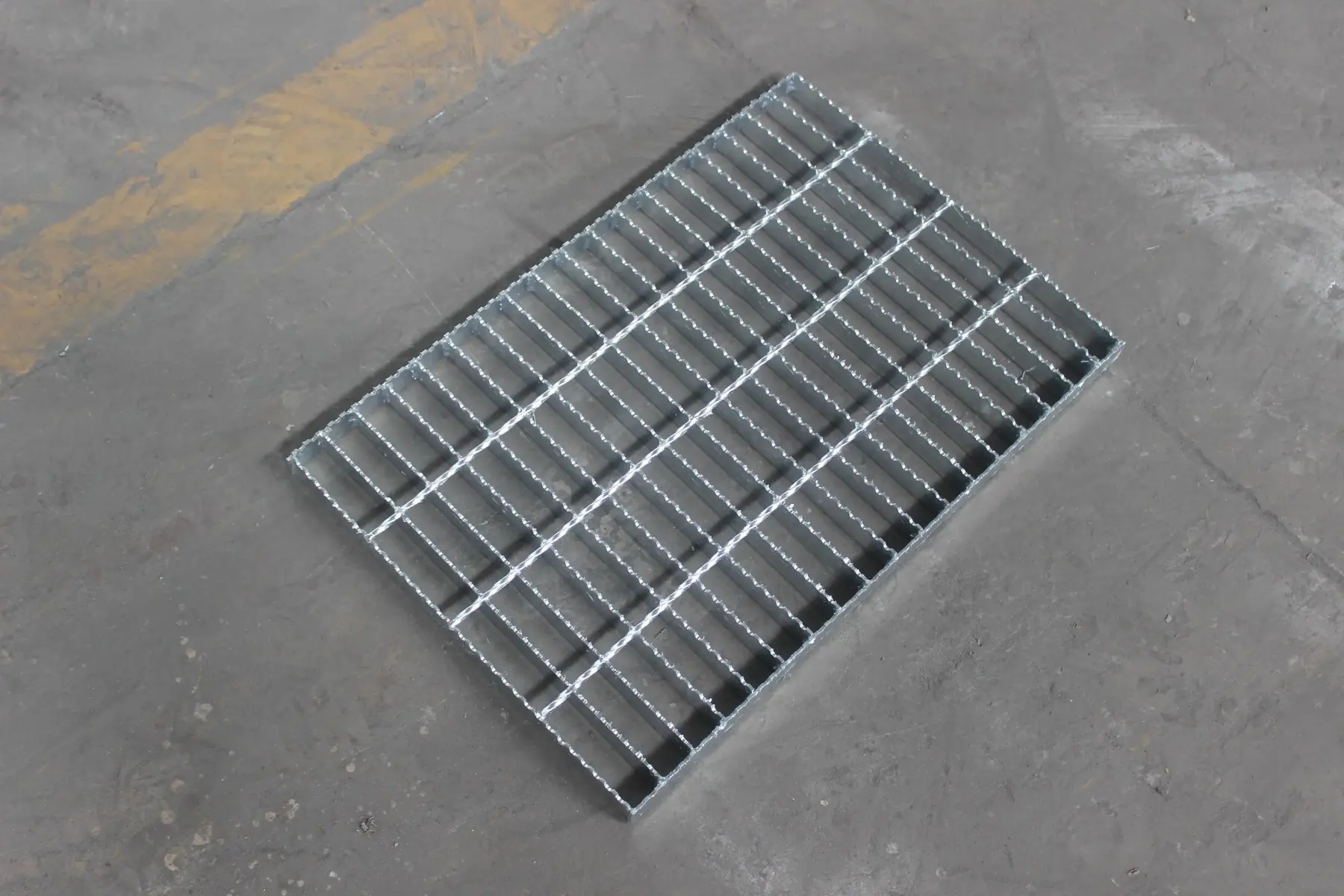
Serrated steel grating and smooth steel grating use different walking surface styles. The right RFQ choice depends on wet or oily conditions, foot traffic, cleaning expectations, project specification, finish, panel layout, quantity, and drawings.
Answer summary: Serrated steel grating is often reviewed when buyers are concerned about wet, oily, or outdoor walking conditions. Smooth steel grating may be discussed when the project needs easier cleaning, a smoother walking surface, or a specification that does not require serration. Buyers should confirm the surface request, application, span, finish, quantity, and drawings before quotation.
What is the practical difference?
Serrated steel grating has notched bearing bars or a toothed walking surface. The serrated surface is usually discussed for platforms, walkways, stair treads, drainage areas, and outdoor access routes where slip concern is part of the RFQ conversation.
Smooth steel grating uses a flat bearing bar surface. It may be suitable when the project specification does not call for serration, when cleaning is important, or when the walking condition is controlled by the site design.
For product context, see serrated bar grating and steel bar grating. For an existing technical note, see serrated vs smooth grating.
Serrated vs smooth steel grating comparison table
| Selection point | Serrated steel grating | Smooth steel grating | What buyers should confirm |
|---|---|---|---|
| Common RFQ reason | Wet, oily, outdoor or higher slip-concern walking areas | General access, controlled indoor areas or project-defined smooth surface | Walking condition and project requirement |
| Surface feel | More aggressive walking surface | Smoother bearing bar surface | Whether serration is required by the buyer |
| Cleaning | Serrations may hold more dirt or residue | Usually easier to clean | Cleaning method and site condition |
| Fabrication details | Serration affects bearing bar selection and quotation | Standard smooth bars may be simpler when allowed | Bar size, spacing, panel size and finish |
| Finish | Often hot-dip galvanized for outdoor use, but finish depends on RFQ | Galvanized, painted or other requested finish | Finish standard and inspection request |
| Caution | Do not treat serration as a guaranteed slip rating | Do not assume smooth is acceptable for every walkway | Buyer specification and local project requirement |
Do not choose by surface name alone
The surface choice is only one part of the steel grating RFQ. Buyers should also confirm bearing bar size, bar spacing, cross bar pitch, panel size, bearing direction, support span if known, finish, cutouts, edge banding, clips, quantity, and destination.
If the grating is used for stair treads, platforms, drainage covers, or maintenance walkways, send the project drawing or a site photo. The same surface name can mean different things when the support condition or traffic condition changes.
When serrated steel grating is usually discussed
Serrated grating is often discussed for wet walkways, outdoor access routes, industrial platforms, stair treads, and service areas where the buyer wants a more aggressive walking surface.
QY should not claim a guaranteed anti-slip performance or site safety result from the surface name alone. Walking safety depends on project design, site condition, maintenance, footwear, contaminants, local standards, and installation.
When smooth steel grating may be discussed
Smooth steel grating may be discussed for general access floors, platforms, covers, or areas where the project standard does not require serration. It may also be reviewed when cleaning, handling, or cost expectations are part of the quotation discussion.
If the buyer only says "steel grating," QY may need to ask whether the surface should be smooth or serrated. This is especially important for stairs, outdoor areas, wet areas, or oily working zones.
RFQ checklist
Before sending a serrated or smooth steel grating RFQ, prepare:
- Application, such as walkway, platform, stair tread, drain cover, or maintenance access.
- Wet, oily, outdoor, indoor, or dry walking condition.
- Serrated or smooth surface request.
- Grating type, bearing bar size, spacing, and cross bar pitch if known.
- Panel size, opening size, cutouts, and bearing direction.
- Support span or traffic/load note if available.
- Finish request, such as hot-dip galvanized, painted, or project-specified coating.
- Edge banding, clips, toe plate, side plate, or nosing details if relevant.
- Quantity and destination.
- Packing, bundle marks, and loading request.
- Drawings, sketches, site photos, or previous order reference.
Related QY pages
- Serrated bar grating for serrated steel grating product review.
- Steel bar grating for the main steel grating product family.
- Serrated vs smooth grating for the existing selection note.
- Steel grating stair treads guide for stair tread dimensions, nosing and side plates.
- Contact QY Metal Tech when drawings and surface requirements are ready.
FAQ
Is serrated steel grating always better than smooth steel grating?
No. Serrated and smooth steel grating should be selected according to walking condition, cleaning expectation, project specification, finish, and drawings. Serration should not be treated as a universal answer for every project.
When should buyers request serrated steel grating?
Buyers often request serrated steel grating for wet, oily, outdoor, stair, or platform areas where a more aggressive walking surface is part of the project discussion. The final requirement should follow the buyer specification.
When can smooth steel grating be used?
Smooth steel grating may be used when the project does not require serration, when the walking condition is controlled, or when cleaning and handling are important. Buyers should confirm this against the project requirement.
What details should be included in a serrated or smooth grating RFQ?
The RFQ should include application, surface request, grating specification, panel size, bearing direction, support span if known, finish, quantity, packing, destination, and drawings or photos.
Related links
Related products and RFQ guides
- Steel grating productsOpen the related product family section.
- Steel grating topic entrySteel grating family page for platform grating, stair treads, drain covers, serrated grating, galvanized grating and drawing-based RFQs.
- Galvanized steel gratingRelated product or guide page.
- Steel grating stair treadsRelated product or guide page.
- Steel Grating RFQ Checklist for International BuyersRFQ checklist for steel grating buyers covering application, panel or opening size, bearing bar direction, support span, finish, quantity, packing, destination and drawings.
- FRP Grating vs Galvanized Steel Grating for Wet AreasComparison guide for wet or corrosive area grating selection, covering FRP grating and galvanized steel grating by environment, traffic, support, cutouts and quotation details.


