
Steel Grating Stair Treads: Dimensions, Nosing and Side Plates
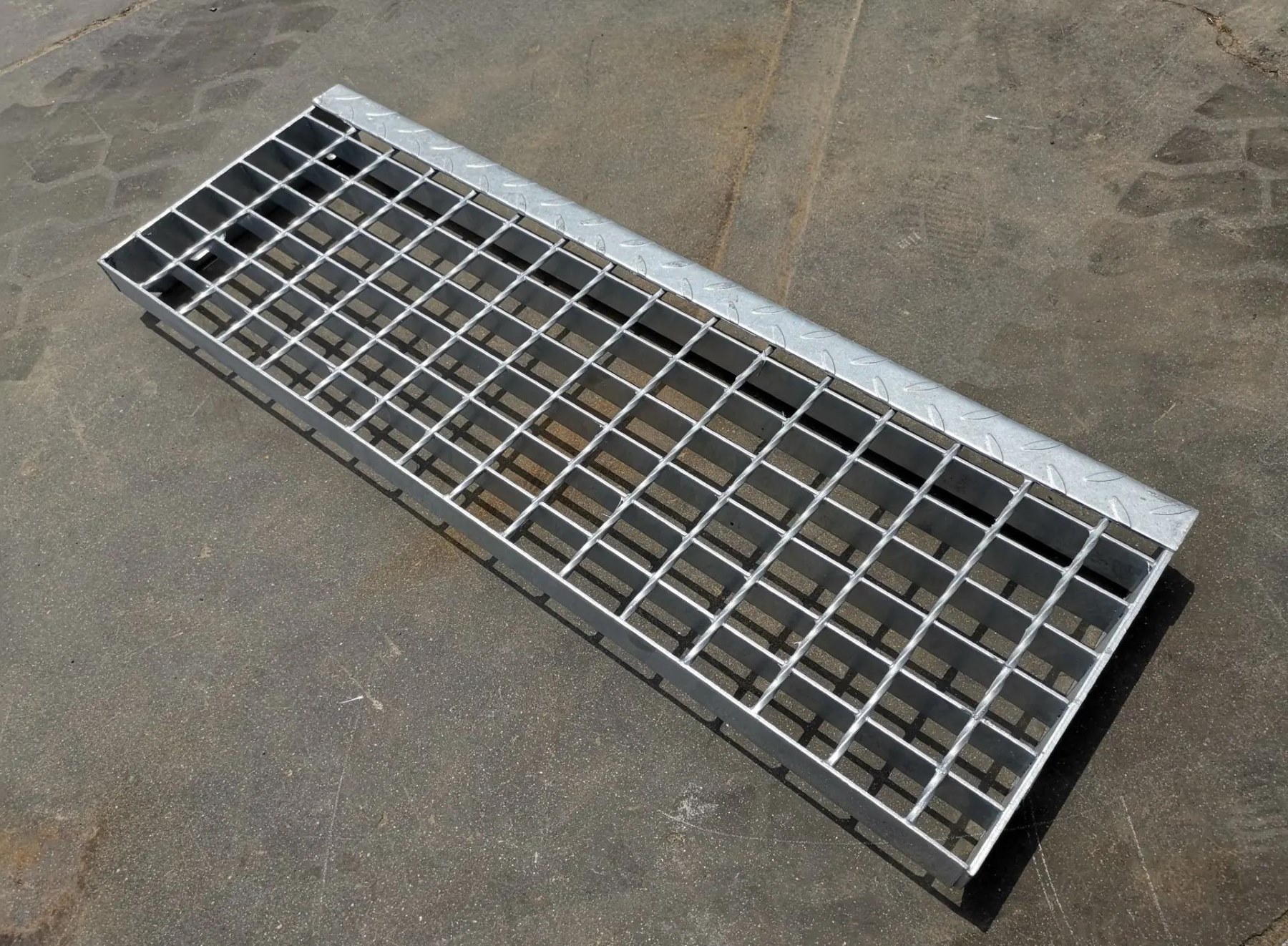
Steel grating stair treads are ordered differently from flat platform panels because each tread connects to a stair stringer and often includes a front nosing, side plates, bolt holes, and a defined walking direction. A useful RFQ should confirm tread width, tread depth, nosing type, side plate details, bolt hole position, serrated or smooth surface, finish, quantity, drawings, and destination.
Answer summary: Do not request only "standard steel grating stair treads." Buyers should send the tread size, nosing, side plate, fixing holes, surface, finish, quantity, and drawing or sample photo before quotation.
What makes a grating stair tread different from a flat panel?
A flat steel grating panel is usually quoted by panel size, bearing direction, bearing bar, cross bar, finish, quantity, and packing. A stair tread needs those details plus installation features.
The most common stair tread RFQ items include:
- Tread width or overall length between stringers.
- Tread depth from front to back.
- Nosing style at the front edge.
- Side plate shape, thickness, and hole layout if known.
- Bolt hole size and center distance.
- Smooth or serrated walking surface.
- Finish, such as hot-dip galvanizing, paint, or another request.
- Quantity, packing, and destination.
For the closest product page, see stair treads. For the broader steel grating family, see steel bar grating.
Confirm tread width and tread depth before pricing
Buyers often use the word "length" in different ways, so the RFQ should define the dimension labels clearly. In many stair tread discussions, the width or overall length is the dimension between the stair stringers, while the depth is the front-to-back walking dimension.
QY should not assume a standard tread dimension without buyer confirmation. If the project follows a drawing, stair detail, or previous sample, attach that document to the inquiry. If no drawing is available, send a sketch with clear arrows for width, depth, and fixing position.
Nosing and side plates affect fabrication
The front nosing helps define the visible tread edge and can affect the fabrication description. Side plates connect the tread to the stair stringer and may include bolt holes, slots, or project-specific hole spacing.
Useful side plate details include:
- Whether side plates are required on both ends.
- Plate size and thickness if specified.
- Bolt hole diameter.
- Hole center distance.
- Distance from hole center to plate edge.
- Whether the buyer has an old sample to match.
If the buyer only sends a photo, QY may still need a drawing or measurement marks before confirming the quotation basis.
Surface and finish should match the stair environment
Steel grating stair treads may be requested with a smooth or serrated surface. The right choice depends on walking condition, project requirement, cleaning expectation, and the buyer's specification.
Finish should also be stated clearly. Common RFQ wording may include hot-dip galvanized stair treads, painted stair treads, or other project-specific finishes. QY should not claim coating life, slip performance, or compliance without project documents and site information.
Practical RFQ table for stair treads
| RFQ detail | Why it matters | What buyers should send |
|---|---|---|
| Tread width | Defines the overall size between stair stringers | Drawing, width mark, or old sample size |
| Tread depth | Defines the front-to-back walking dimension | Depth measurement or stair drawing |
| Bearing bar direction | Helps avoid wrong interpretation of the tread layout | Direction arrow or drawing note |
| Nosing | Affects front edge fabrication | Nosing type, photo, or project note |
| Side plates | Affects connection to stringers | Plate size, thickness, and shape if known |
| Bolt holes | Affects installation fit | Hole diameter, center distance, and edge distance |
| Surface | Affects walking surface selection | Serrated or smooth request |
| Finish | Affects fabrication and packing expectation | Galvanized, painted, stainless, or other finish request |
| Quantity and destination | Needed for quotation and export packing | Piece quantity, packing request, country or port |
What should buyers avoid in a stair tread RFQ?
To reduce back-and-forth, avoid these common problems:
- Asking for "standard stair treads" without width and depth.
- Sending a photo without measurements.
- Forgetting side plates and bolt hole layout.
- Mixing several tread types in one list without marks.
- Changing finish, nosing, or quantity after quotation.
- Asking for load or compliance confirmation without project drawings and standards.
If the stair is part of a platform or access structure, include platform drawings and support notes as well. The steel grating load table can help buyers prepare the discussion, but final project review still depends on the actual drawing and requirement.
RFQ checklist
Before sending a steel grating stair tread RFQ, prepare:
- Stair tread width or overall length.
- Tread depth.
- Bearing bar direction.
- Nosing type.
- Side plate requirement.
- Bolt hole diameter and spacing.
- Smooth or serrated surface.
- Finish request.
- Quantity and destination.
- Packing, marks, or loading request.
- Drawing, sketch, old sample photo, or stair detail.
Related QY pages
- Stair treads for steel grating tread product review.
- Steel bar grating for the main steel grating product family.
- Steel grating load table for reference before discussing support and load requirements.
- Contact QY Metal Tech when the tread list, drawings, and quantity are ready.
FAQ
What details are needed for steel grating stair treads?
A steel grating stair tread RFQ should include tread width, tread depth, bearing direction, nosing, side plates, bolt hole layout, surface type, finish, quantity, destination, and drawings or sample photos.
Can QY quote stair treads without drawings?
QY may be able to start a preliminary review from clear photos, measurements, finish request, quantity, and destination. A final quotation may still require a drawing or sketch with side plate and bolt hole details.
Are there standard dimensions for steel grating stair treads?
Buyers should not rely on a generic standard dimension without confirming the project requirement. Stair tread size, nosing, side plate, and bolt holes should match the buyer's stair layout or drawing.
Should stair treads be serrated or smooth?
The surface choice depends on walking condition, project requirement, cleaning expectation, and buyer specification. QY should not make a slip-performance guarantee without project data.
Related links
Related products and RFQ guides
- Steel grating productsOpen the related product family section.
- Steel grating topic entrySteel grating family page for platform grating, stair treads, drain covers, serrated grating, galvanized grating and drawing-based RFQs.
- Galvanized steel gratingRelated product or guide page.
- Steel grating stair treadsRelated product or guide page.
- Steel Grating RFQ Checklist for International BuyersRFQ checklist for steel grating buyers covering application, panel or opening size, bearing bar direction, support span, finish, quantity, packing, destination and drawings.
- FRP Grating vs Galvanized Steel Grating for Wet AreasComparison guide for wet or corrosive area grating selection, covering FRP grating and galvanized steel grating by environment, traffic, support, cutouts and quotation details.


