
Welded Wire Mesh Weight: Calculate from a Wire Schedule
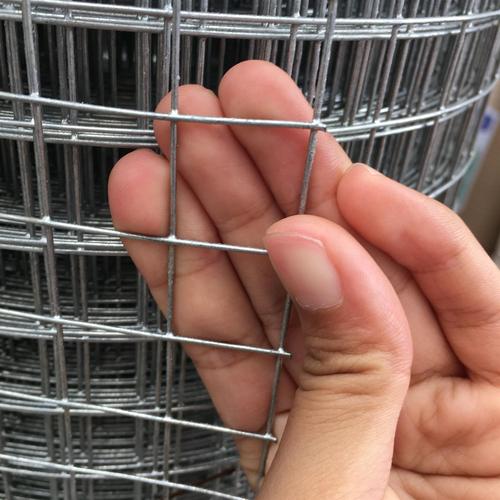
Calculate welded wire mesh weight for a supplied wire schedule by multiplying each group’s given wire count, actual cut length in metres and mass per metre, then adding the group totals. Keep the result labelled wire-only schedule mass. To compare it with finished net or packed gross weight, reconcile the coating basis, frames, accessories and packing separately; the wire sum alone does not supply those missing masses.
Build the rows from the wire list
For this worksheet, let n be the given number of wires, L the actual cut length of each wire in metres, and mu the supplied mass per metre in kg/m. Calculate each row as n × L × mu, in kilograms, and add the rows.
Use separate rows for the two directions and for any group with a different cut length or mass per metre. Do not substitute an average diameter for the supplied mass-per-metre figures. Convert lengths to metres before using a kg/m input; a kg/m² figure belongs to a different calculation.
Take counts and cut lengths from the actual drawing or wire list. This worksheet does not derive wire counts from panel dimensions and pitch. Record a missing input as unconfirmed rather than guessing it from a photograph or entering zero.
A hypothetical two-direction calculation
Every input below is invented to demonstrate the arithmetic. These are not QY product weights, a measured sample, a manufacturing layout or a universal mass for a particular wire diameter. The example includes only the two stated wire groups.
| Wire group | Given count n | Given cut length L (m) | Given mu (kg/m) | Calculated mass (kg) |
|---|---|---|---|---|
| Longitudinal | 21 | 2.000 | 0.025 | 1.050 |
| Transverse | 41 | 1.000 | 0.025 | 1.025 |
| Wire-only schedule sum | 2.075 | |||
The row calculations are 21 × 2.000 × 0.025 = 1.050 kg and 41 × 1.000 × 0.025 = 1.025 kg. Adding them gives 1.050 + 1.025 = 2.075 kg. The decimal places describe this calculation, not a manufacturing or weighing tolerance.
For your own schedule, replace all three inputs in each row with the corresponding values for that group. If an edge wire is already included in a row, do not add that same wire again as an accessory.
Reconcile the weight scope before comparing totals
| Figure being compared | What to keep with the record |
|---|---|
| Wire-only schedule mass | The given counts, cut lengths, mass-per-metre values and each value’s material/coating basis. Keep this calculated result separate from a weighing record. |
| Coating scope | If mu already includes the specified coating, do not add its mass twice. If mu describes bare wire, do not label the result as coated finished weight. Leave an unknown coating addition unconfirmed. |
| Finished-product net mass | Request the specified finished product’s net figure, or a separately labelled estimate with its full basis. Reconcile frames, edge components, fittings and coating; do not relabel the wire-only sum as measured finished net mass. |
| Packed gross mass | Match the same product quantities and net basis, then identify the documented packing/tare included in the gross figure. Do not add packing again if it is already included. |
If a frame, coating addition or packing mass is still unknown, keep that item visible as unconfirmed. Report the known subtotal with its scope instead of presenting an incomplete sum as a complete net or gross weight. A schedule calculation alone does not establish the measured finished weight, product quality or load capacity.
Send the schedule with the specific weight question
QY’s welded wire mesh page lists rolls, flat sheets, cut panels and framed panels. Name the required form when identifying what the weight figure includes.
Send the actual wire list, units, drawing revision and the particular unconfirmed mass item through the project quotation contact page. The contact route accepts drawings and quantity lists for quotation requests; keep the calculation and any actual weighing record clearly distinguished.
Related links
Related products and RFQ guides
- Wire mesh and sheet metal productsOpen the related product family section.
- Wire mesh and sheet metal topic entryWire mesh and sheet metal family page for welded wire mesh, woven wire mesh, expanded metal mesh and perforated metal sheet RFQs.
- Welded wire meshRelated product or guide page.
- Woven wire meshRelated product or guide page.
- Expanded Metal vs Perforated Sheet: What to Confirm Before RFQComparison and RFQ guide for expanded metal and perforated sheet, covering manufacturing method, pattern, open area, material, thickness, sheet size, finish, quantity and packing.
- Wire Mesh Opening and Wire Diameter: What Buyers Should ConfirmWire mesh RFQ guide explaining opening, wire diameter, material, roll or panel format, finish, size, quantity, packing, destination and buyer confirmation details.


