
Bar Grating or Wire Mesh? Look at the Members
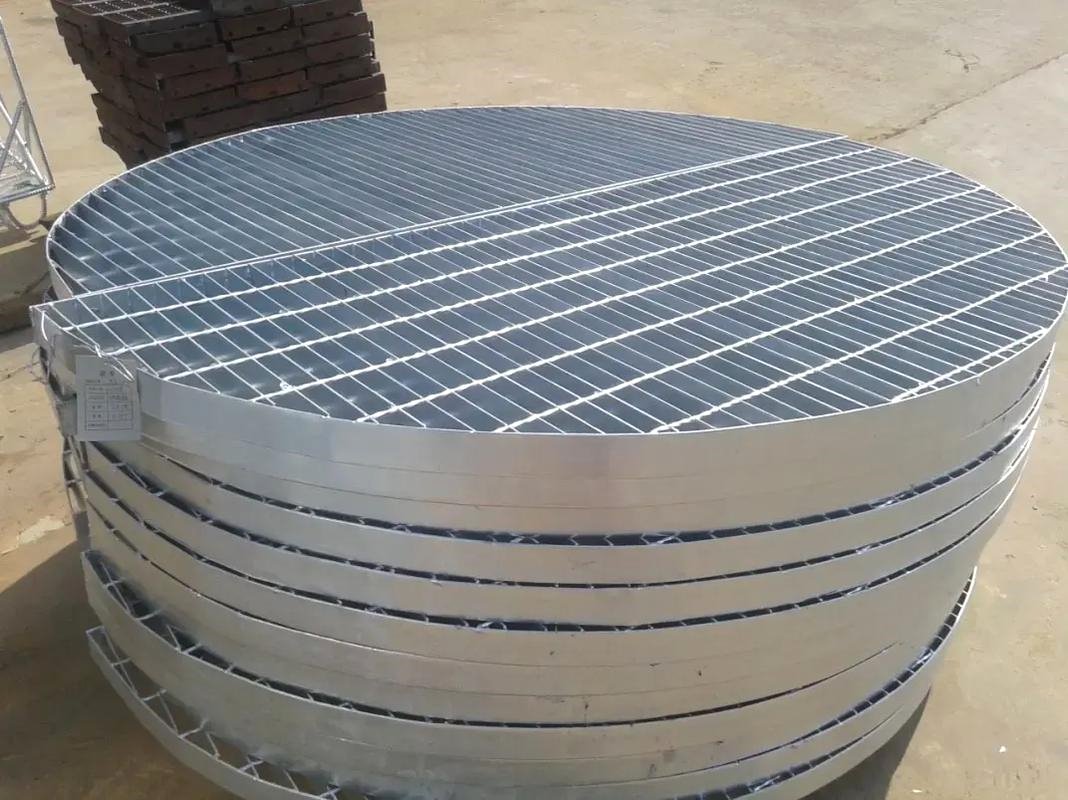
For bar grating versus welded or woven wire mesh, identify the members: flat bearing bars with cross members, or wires forming the mesh. An open grid or the word “steel” is not enough to name the product. If the member profile is hidden, leave the identification unresolved.
Here, “wire mesh” means the welded and woven wire constructions. QY’s broader Wire Mesh category also includes expanded metal and perforated sheet; this comparison does not classify those sheet products.
A round outline can still contain bar grating
QY bar-grating example: flat internal bars inside a circular outer edge. This photograph provides construction context, not a diameter, material-grade or load certificate.
Look inside the outline of this example: the deep, flat faces of the parallel bars are visible beneath the crossing members. Its round perimeter is a panel shape, rather than a wire-mesh designation.
QY’s Steel Bar Grating page names bar height, thickness, spacing and bearing direction as the first details to confirm. Its load-table terminology defines the bearing bar as the main load-carrying flat bar. That terminology identifies a component; it does not tell you the load capacity of the pictured panel.
Compare the wires, not just the holes
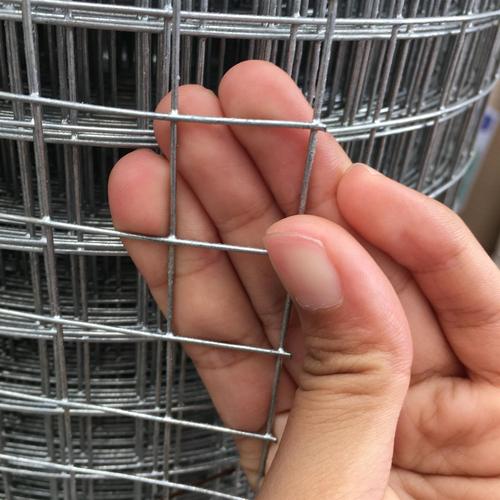
In this second example, follow an individual wire through the grid and compare its profile with the flat bar faces in the first photograph. The comparison concerns the visible members, without assigning a size or material grade to either example.
QY describes welded wire mesh as resistance-welded at each wire intersection to form square or rectangular openings. The product page asks for wire diameter and opening size, rather than bearing-bar height and thickness. A square opening alone therefore does not resolve the bar-versus-wire question.
The wire comparison also includes woven wire mesh, whose specification names weave type, opening and wire diameter. QY lists plain, twill and crimped weaves among its options. The welded photograph illustrates one wire construction; it does not stand for every woven pattern.
Name the construction before discussing size
For an ambiguous “steel mesh” description, replace the broad label with the confirmed construction: “bar grating—bearing-bar height and thickness” or “welded wire mesh—wire diameter and opening size.” Keep “woven wire mesh” and its weave designation when that is the confirmed product.
If the profile is obscured or the description disagrees with the photograph, ask for the product designation and an edge/detail view or drawing before choosing a label. QY’s contact page accepts drawings and photos for product inquiries. Identification is the outcome here: neither a shared material label nor these photographs establish that the two products can replace each other or meet a project’s loading requirements.
Related links
Related products and RFQ guides
- Steel grating productsOpen the related product family section.
- Steel grating topic entrySteel grating family page for platform grating, stair treads, drain covers, serrated grating, galvanized grating and drawing-based RFQs.
- Galvanized steel gratingRelated product or guide page.
- Steel grating stair treadsRelated product or guide page.
- Steel Grating RFQ Checklist for International BuyersRFQ checklist for steel grating buyers covering application, panel or opening size, bearing bar direction, support span, finish, quantity, packing, destination and drawings.
- FRP Grating vs Galvanized Steel Grating for Wet AreasComparison guide for wet or corrosive area grating selection, covering FRP grating and galvanized steel grating by environment, traffic, support, cutouts and quotation details.


