
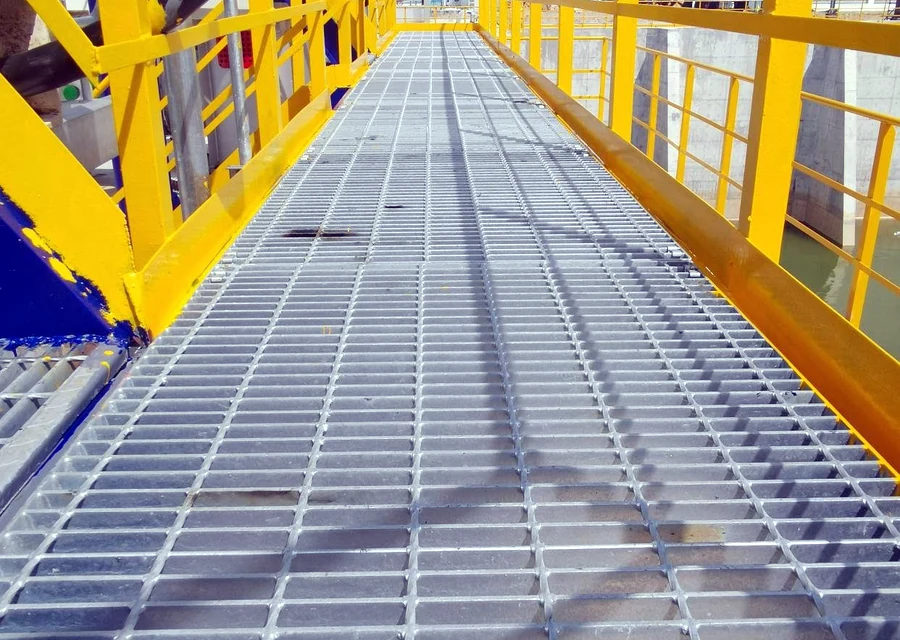
Technical resource
Welded vs Press-Locked Grating Comparison
Compare construction type, appearance, spacing options and typical project use before choosing a steel grating style.
Short answer
Choose welded grating for most industrial platforms, walkways, drainage covers and equipment access. Consider press-locked grating when the project specifically needs a cleaner grid appearance, close mesh openings or a mechanically locked bar layout.
Both welded and press-locked grating are open-grid flooring products made from bearing bars and cross bars. The practical difference is the connection method: welded grating uses welded intersections for industrial strength and cost efficiency; press-locked grating uses pressure-fitted cross bars for a more regular visual pattern.
For quotation, the construction type should be checked together with support span, load requirement, bearing bar direction, opening size, surface type, finish and fabrication details. A product name alone is not enough to confirm performance or price.
Main comparison table
| Welded grating | Welded joints between bearing bars and cross bars for common industrial flooring and access products |
|---|---|
| Press-locked grating | Mechanically locked bar layout with cleaner visual lines and close mesh options |
| Typical focus | Welded focuses on industrial strength and cost efficiency; press-locked focuses on appearance, alignment or smaller openings |
| Surface options | Both may be smooth or serrated depending on walking surface requirements |
| Finish options | Both can be hot-dip galvanized, painted, powder coated or supplied in stainless material by project |
Selection workflow
How buyers should compare welded and press-locked grating
The connection method matters, but it should be reviewed together with load, span, opening, finish and fabrication details.
1. Confirm application
Industrial platforms, drainage covers and maintenance walkways commonly start with welded grating.
2. Confirm appearance needs
Press-locked grating can be reviewed when a clean, aligned or architectural-looking grid is requested.
3. Check load and span
Bearing bar size, spacing and support span still decide whether the specification fits the load condition.
4. Review openings
Close mesh, dropped-object control or project-specific open area may affect the product type.
5. Choose surface
Smooth grating suits general use; serrated grating should be reviewed for wet, oily or outdoor walking areas.
6. Prepare drawings
Cutouts, banding, side plates, frames and fixing clips should be checked before quotation.
Application comparison table
| Industrial platforms | Welded grating is often the practical option for plant floors, access platforms and maintenance decks |
|---|---|
| Walkways and catwalks | Welded or press-locked can be reviewed by load, appearance and surface condition |
| Drainage covers | Welded grating is common where removable panels, open area and load support are required |
| Architectural or visible areas | Press-locked grating may be considered when the visual grid and bar alignment matter |
| Close mesh requirements | Press-locked or close mesh styles can be reviewed when smaller openings are needed |
Welded grating is usually the practical starting point
For industrial platforms, walkways, trench covers, drainage covers and equipment access areas, welded steel grating is usually the first construction type to review.
It is familiar to industrial buyers because it balances load support, open area, cost efficiency and finish options. The RFQ still needs panel size, bearing bar size, spacing, support direction, surface finish and drawing-based fabrication details.
Press-locked review
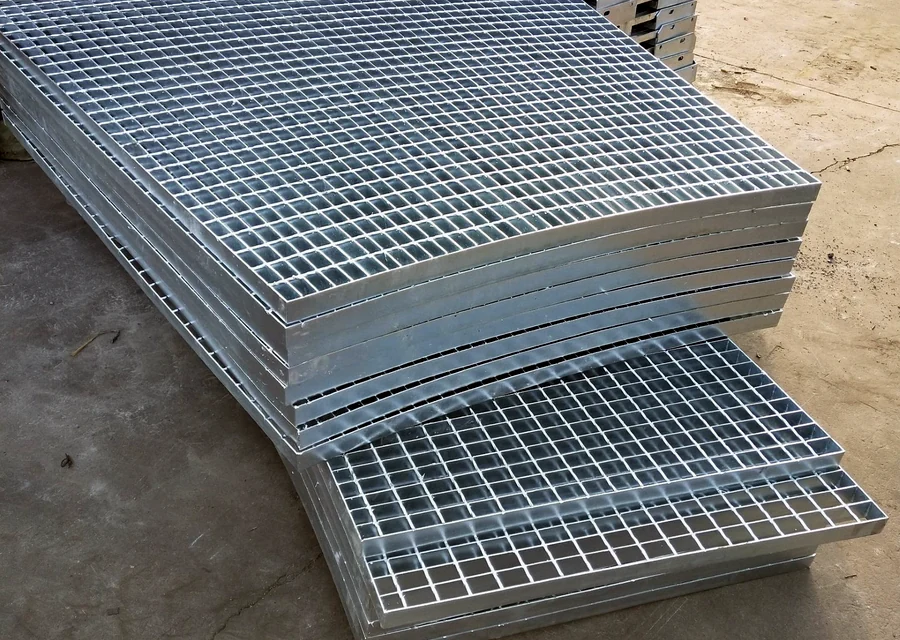
When press-locked grating should be considered
Press-locked grating is useful when the project is not only asking for open-grid flooring, but also for a more regular visual pattern or a specific mechanically locked construction. It can fit certain public-facing industrial areas, architectural metal flooring, close mesh panels and project drawings where appearance and opening layout are important.
Because press-locked grating can be more specification-sensitive, buyers should send drawings or clear sketches early. Bar size, bar spacing, cross bar spacing, panel direction, banding and finish should be confirmed before pricing.
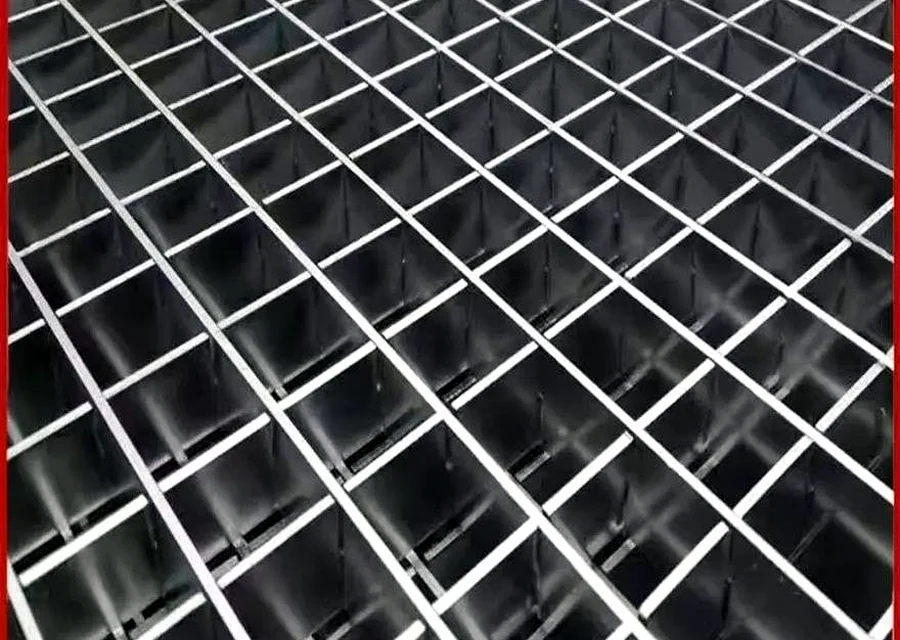
Specification factors
| Connection method | Welded joints or mechanically pressed cross bars |
|---|---|
| Bearing bar data | Height, thickness, spacing and direction of the main load-carrying bars |
| Cross bar data | Cross bar type, spacing and appearance requirement |
| Surface type | Smooth or serrated depending on walking environment |
| Drawing requirement | Panel size, bearing bar direction, opening size, edge banding and fixing method |
| Finish | Hot-dip galvanized, painted, powder coated, mill finish or stainless material by project |
Common purchasing mistakes to avoid
- Choosing press-locked only by appearance without checking load and support span
- Choosing welded only by cost without reviewing surface condition or corrosion exposure
- Sending panel size without bearing bar direction
- Forgetting cutouts, banding, side plates, frames or fixing clip details
- Using indoor finish assumptions for outdoor or wet environments
RFQ checklist
| Product type | Welded grating, press-locked grating, close mesh grating or not yet decided |
|---|---|
| Panel data | Panel width, length, bearing bar direction, support span and quantity |
| Bar data | Bearing bar size, bearing bar spacing, cross bar type and cross bar spacing |
| Application | Platform, walkway, drain cover, architectural area, stair tread or maintenance access |
| Order details | Finish, drawings, destination, packing preference and expected delivery timing |
FAQ
What is the difference between welded and press-locked grating?
Welded grating uses welded cross bars and is common for industrial strength and cost efficiency. Press-locked grating uses pressure-fitted intersections for cleaner alignment and close mesh options.
When should welded grating be used?
Welded grating is often reviewed for industrial platforms, walkways, drainage covers and general access flooring where strength and practical cost are important.
When should press-locked grating be considered?
Press-locked grating may be considered for architectural areas, close mesh requirements, cleaner appearance or projects where precise bar alignment matters.
Can welded and press-locked grating both be galvanized?
Yes. Both grating types can be hot-dip galvanized after fabrication when outdoor corrosion resistance is required.
What information is needed for a welded or press-locked grating quote?
Send grating type, panel size, bearing bar size, spacing, finish, load requirement, drawings, quantity, destination and packing notes.
RFQ support
Need help choosing welded or press-locked grating?
Send drawings, application, load requirement, surface type, finish, quantity and destination. QY Metal Tech will review the details and reply with quotation support.
Product and RFQ path
Use this guide to move into the right product page
After comparing grating construction, continue with product pages that handle welded bar grating, galvanized finish, load review and drawing-based RFQ details.


