
FRP Grating vs Galvanized Steel Grating for Wet Areas
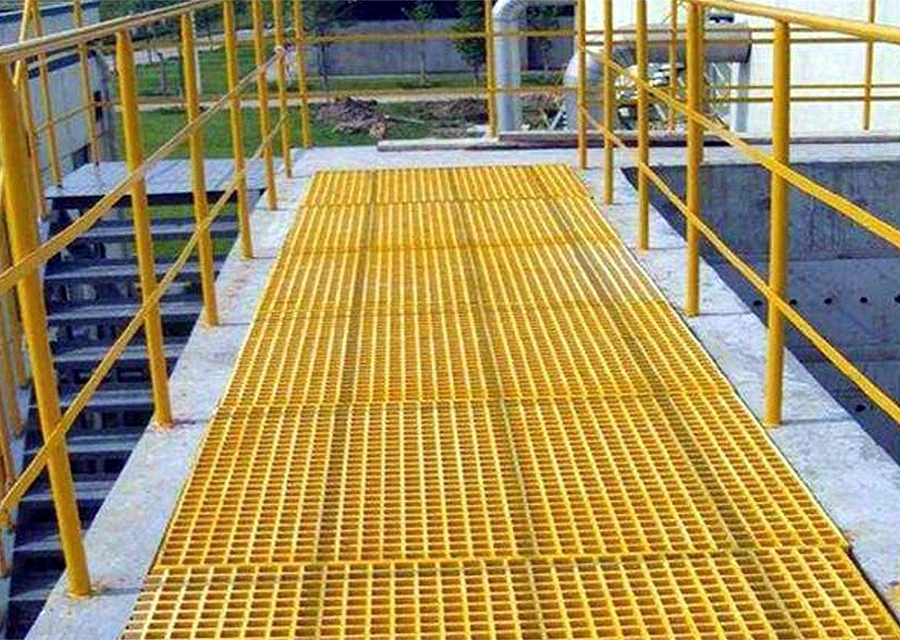
FRP grating is often considered for wet or corrosive areas, while galvanized steel grating is often reviewed for industrial access, fabrication flexibility, and familiar steel construction. Neither option is automatically better. The right choice depends on the wet condition, chemical or corrosion exposure, support span, traffic type, panel size, cutouts, finish or resin request, quantity, destination, and any project standard the buyer must follow.
Answer summary: Choose FRP grating when corrosion exposure and non-metallic material are important to review. Choose galvanized steel grating when the project prioritizes steel construction, fabrication details, industrial access, or steel product requirements. Confirm the application before quotation.
Quick answer: In constantly wet, chemical or washdown areas, molded FRP grating avoids rust and can reduce handling weight, depending on the specification. Hot-dip galvanized steel grating is the usual choice where a steel floor is specified. Choose by the actual chemicals and wet/dry conditions, by load and span checked against the specific product’s load table, and by any electrical or fire requirement confirmed for the specified product.
| Factor | Molded FRP grating | Hot-dip galvanized steel grating |
|---|---|---|
| Corrosion | Does not rust; chemical resistance depends on the resin and the actual media | Zinc coating protects the steel; coating life depends on the media, concentration or pH, temperature, wet/dry cycles and coating thickness |
| Weight (separate examples) | ≈ 19.5 kg/m² for a molded panel 38 mm thick with 38 × 38 mm mesh (QY reference table) | ≈ 41.9 kg/m² for bearing bars only, 32 × 5 mm at 30 mm pitch (QY weight chart); cross bars, banding and coating add more. QY’s calculator assumes about 6% for galvanizing. |
| Electrical | Standard glass-fibre/resin grating generally has low electrical conductivity. Confirm the specified product and surface against the project’s electrical requirements; do not infer insulation or antistatic performance from the material name alone. | Conductive; earthing as the project requires |
| Load and span | Selected from the specific product’s load and deflection data, the support layout and the project check | Selected from the specific grating’s load and deflection data, the support layout and the project check |
| Fire | Depends on the supplied grating product or system and the scope of its test report | Steel base material is non-combustible; this does not establish the fire rating of the complete floor system |
| Cut edges | Seal with a method approved by the manufacturer and compatible with the resin | Repair as the project’s galvanizing repair requirement specifies, for example zinc-rich coating to the specified thickness |
| Typical areas | Wastewater plants, chemical floors, car wash bays, marine walkways | Industrial platforms, plant floors, trench covers |
The two weights are separate examples, not an equal-performance comparison. Confirm final weight, load and span for your project in the quotation.
When is FRP grating a better fit?
FRP grating may be a better fit when the buyer is reviewing wet, damp, or corrosive conditions where a non-metallic grating option is preferred. It is commonly discussed for wet flooring, trench covers, wash areas, and environments where corrosion resistance is an important selection factor.
The buyer should still confirm the real operating condition. QY should not assume resin performance, chemical resistance, load capacity, or slip performance without the project details.
For the FRP product family, see molded FRP grating and the FRP grating selection guide.
When is galvanized steel grating a better fit?
Galvanized steel grating may be a better fit when the project requires steel construction, industrial access flooring, stair treads, platform panels, drainage covers, or custom fabrication details around steel grating.
Buyers often review steel grating when they already have steel platform drawings, bearing bar direction, support span, cutout details, or project specifications connected to steel material. Galvanizing should still be reviewed against the environment and project expectation.
For the steel option, see steel bar grating.
Decision table: FRP grating vs galvanized steel grating
| Selection question | FRP grating may fit when | Galvanized steel grating may fit when |
|---|---|---|
| Is the area wet or corrosive? | Wet or corrosive exposure is a major concern and non-metallic material is preferred | Wet exposure exists but the project still specifies steel construction or galvanized finish |
| What type of traffic is expected? | The project details support FRP panel selection after review | Industrial access, maintenance traffic, or steel platform details are already defined |
| Are drawings available? | Panel layout, opening size, and support details can be reviewed for FRP | Bearing bar direction, support span, and fabrication details can be reviewed for steel |
| Are cutouts or special shapes needed? | Cutout needs are clear and can be reviewed for FRP fabrication | Steel fabrication, edge banding, cutouts, or stair details are part of the drawing |
| Is the buyer unsure? | Send wet condition, size, traffic, support, and destination for review | Send drawings, finish request, support condition, and quantity for review |
What should buyers confirm before comparing prices?
Price comparison is weak if the RFQ does not define the same project basis for both materials. Before asking for quotation, confirm:
- Wet or corrosive condition.
- Application, such as floor, trench cover, platform, or access panel.
- Traffic type.
- Support span or opening size.
- Panel size and cutout needs.
- Surface or anti-slip requirement.
- Finish for steel or resin/color request for FRP if known.
- Quantity and destination.
- Drawings, sketches, or site photos.
QY Metal Tech reviews the product family, drawings, size, quantity, finish, packing, and destination details before quotation.
What mistakes should buyers avoid?
Avoid these common RFQ problems:
- Asking which material is best without explaining the environment.
- Comparing FRP and galvanized steel without the same panel size or support condition.
- Assuming FRP is always better in wet areas.
- Assuming galvanized steel is always enough for every wet condition.
- Requesting a final quotation without drawings, quantity, or destination.
- Treating resin performance, load capacity, or compliance as confirmed without project review.
The safer approach is to send the actual application and let QY review the quotation basis.
RFQ checklist
For a wet-area grating RFQ, send:
- Wet, damp, or corrosive condition.
- Application and traffic type.
- Support span or opening size.
- Panel size and cutout needs.
- Anti-slip requirement if any.
- FRP color or resin request if known.
- Galvanized steel finish request if reviewing steel.
- Quantity and destination.
- Drawings, sketches, or photos.
Related QY pages
- Molded FRP grating for FRP panel options.
- Steel bar grating for galvanized steel grating review.
- FRP grating selection guide for related selection notes.
- Contact QY Metal Tech to send drawings and RFQ details.
FAQ
Is FRP grating better than galvanized steel grating in wet areas?
Not always. FRP grating is often reviewed for wet or corrosive environments, while galvanized steel grating may fit projects that require steel construction, fabrication details, or industrial access. The final choice depends on application, support, traffic, environment, and project requirements.
When should buyers consider galvanized steel grating instead?
Buyers should consider galvanized steel grating when the project drawings, platform design, stair details, drainage covers, or specification call for steel grating or steel fabrication. The finish should still be reviewed against the environment.
What should buyers send for a wet-area grating RFQ?
Buyers should send the wet or corrosive condition, application, traffic type, support span or opening size, panel size, cutouts, anti-slip needs, finish or resin request, quantity, destination, and drawings or photos.
Can QY confirm resin performance or load capacity from a short inquiry?
No. Resin performance, chemical exposure, load capacity, and support requirements need project details. QY should review the application before confirming quotation assumptions.
Related links
Related products and RFQ guides
- FRP grating productsOpen the related product family section.
- FRP grating topic entryFRP grating family page for molded FRP grating, trench covers, car wash grating, tree grates and wet or corrosive access areas.
- FRP trench coversRelated product or guide page.
- FRP grating selection guideRelated product or guide page.
- Steel Grating RFQ Checklist for International BuyersRFQ checklist for steel grating buyers covering application, panel or opening size, bearing bar direction, support span, finish, quantity, packing, destination and drawings.
- How to Choose Steel Grating for Industrial PlatformsIndustrial platform grating selection guide covering platform use, support span, bearing direction, panel layout, finish, cutouts, fixing clips, drawings and RFQ details.


