
FRP Grating for Mining Walkways: Site and Load Selection
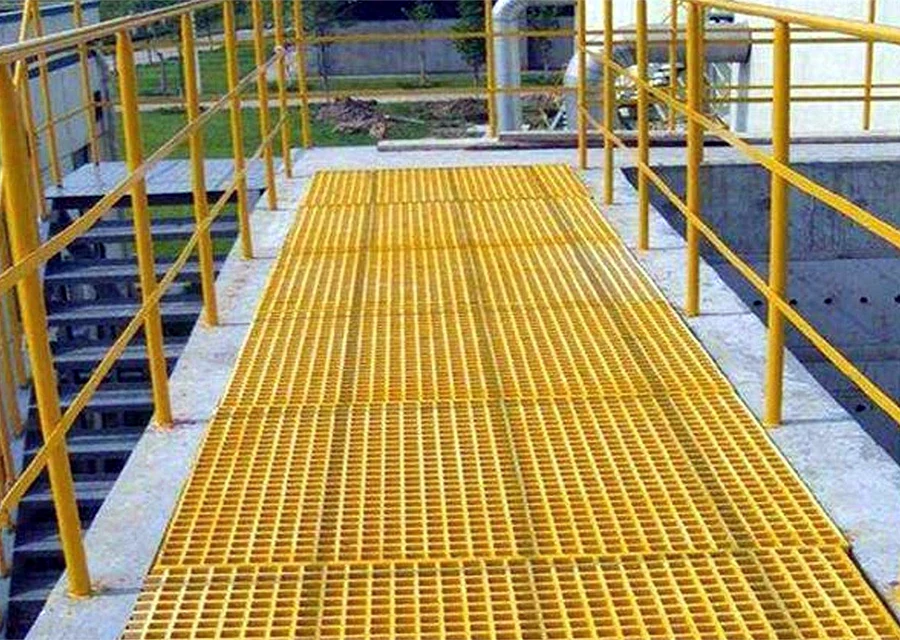
Direct answer: Select FRP grating for a mining walkway from the exact work zone, exposure and structural inputs. Send the process material and liquids, normal and upset temperatures, cleaning method, pedestrian or equipment traffic, load cases, clear support span, required surface, drainage and opening limits, panel layout, cutouts, clips, quantity, drawings and the documents that control approval. A mining-industry label alone cannot select a product.
Answer summary
| Decision | Buyer input | Completion rule |
|---|---|---|
| Work zone | Processing area, conveyor access, platform, stair landing, trench or maintenance route | Mark every zone on the drawing instead of applying one note to the whole mine |
| Exposure | Ore, dust, slurry, water, reagent, cleaner, temperature and contact cycle | Screen the exact proposed product against normal and upset conditions |
| Traffic | Pedestrians, carts, removable equipment, wheels, impact or dropped material | Give the responsible engineer each controlled load case |
| Structure | Product series, bearing direction, load type, clear span, support width and deflection criterion | Use the matching QY product record and approved structural basis |
| Surface and openings | Contaminants, footwear, drainage, cleaning, dropped-object and opening limits | State the required test or project criterion; do not rely on a surface name |
| Layout | Panel marks, joints, cutouts, edge support, removable zones, clips and adjacent equipment | Coordinate one current layout before fabrication release |
| Approval | Material, fire/smoke, slip, electrical, inspection and mine-site requirements | Name the document, revision and approving party for every required conclusion |
Start with QY's molded FRP grating product route. Use the FRP resin-system guide for exposure inputs and the FRP load-table and support-span guide for structural lookup fields.
When should mining buyers consider FRP grating?
FRP grating may enter the comparison for access routes exposed to moisture, process liquids, frequent washdown or handling constraints. It is not automatically the correct choice for every mine, platform or vehicle route.
Separate the site into real work zones:
- Processing and reagent areas.
- Conveyor, screening and transfer access.
- Pump, tank and washdown platforms.
- Stairs, landings and removable maintenance panels.
- Outdoor routes exposed to weather or sunlight.
- Areas with abrasive solids, impact, wheeled traffic or dropped material.
Each zone can change the required product construction, surface, support, fixing and evidence. Keep the generic FRP selection intent on the existing product and selection pages; this page owns the mining-zone decision record.
Build a zone and exposure schedule
| Field | What to record | What not to assume |
|---|---|---|
| Zone and elevation | Area name, equipment served, indoor/outdoor condition and access purpose | One product note fits every location |
| Process material | Ore, concentrate, dust, slurry or other material contacting the walkway | A material name proves compatibility |
| Liquids and cleaning | Water, reagent, cleaner or other medium; concentration, temperature, duration and frequency | A rinse removes every exposure before use |
| Upset condition | Spill, overflow, shutdown cleaning, unusual heat or prolonged contact | Normal operation is the only design condition |
| Wear and handling | Abrasion, impact, dragging, carts, wheels or removable equipment | A corrosion discussion covers mechanical damage |
| Approval boundary | Required document, test, inspection and responsible reviewer | A competitor case or generic FRP statement approves QY material |
QY can use this schedule to screen a proposed resin and product record. Final compatibility and service suitability require the exact evidence and project approval.
Confirm traffic, load and supports
The room name does not define the load. Send:
- Pedestrian, maintenance, cart, wheel, equipment and temporary load cases.
- Load units, footprint, location and travel path.
- Required deflection criterion and the responsible structural reviewer.
- Clear span between supports and bearing direction.
- Support width, ledges, frames and intermediate supports.
- Cutouts, unsupported edges, removable panels and transitions.
- Any impact, vibration or dropped-material condition identified by the project.
Do not use another manufacturer's load table to approve a QY panel. The construction, series, units, support condition, load type and test basis must match the proposed record.
Balance surface, drainage and inspection
Describe the walking condition rather than asking only for "anti-slip FRP":
- Footwear and whether the surface is dry, wet, muddy, dusty or coated with process material.
- Cleaning tools, pressure and inspection access.
- Drainage direction and maximum permitted opening.
- Dropped-object, toe-clearance or containment requirement.
- Meniscus, grit or another controlled surface request.
- Required slip test method and acceptance condition, when the project specifies one.
Use the FRP color and surface guide for terminology. A surface name does not prove slip performance in a particular contaminant or maintenance condition.
Coordinate panels, cutouts and clips
The layout should connect every panel to its supports and nearby equipment. Mark:
- Drawing revision, grid line, elevation and panel mark.
- Finished panel size, joint, bearing direction and field dimensions.
- Beams, angles, curbs, ledges and clear support spans.
- Pipes, columns, conveyors, chutes, equipment legs and door clearances.
- Cutouts, notches, removable areas and edge-support requirements.
- Clip and fastener material, location and supply responsibility.
- Installation sequence, access restriction, packing and zone labels.
The FRP industrial-floor drawing checklist organizes these fields. It does not replace engineering or site approval.
Four terms to keep unambiguous
- Clear span: the unsupported distance between bearing supports, not the overall panel length.
- Bearing direction: the direction in which a directional grating product carries load between supports.
- Load case: one defined combination of load type, magnitude, footprint and position.
- Upset exposure: a spill, overflow, cleaning or temperature condition outside normal operation that still requires review.
What QY evidence supports
QY's approved FRP walkway photograph shows a real QY open-mesh grating installation and visible product form. QY's reviewed resin-screening and load-table resources support the workflow of checking exact exposure, product series, load type, span and deflection basis before quotation.
This evidence supports product identity and QY's review process. It does not prove a QY mining case, chemical compatibility, slip rating, fire classification, electrical behavior, load capacity, service life or regulatory compliance for a particular mine.
What buyers should send
Mining-walkway FRP grating should be selected from a zone schedule and controlled drawing, not from an industry label. The buyer should define exposure, traffic, load cases, clear span, support width, surface, drainage, openings, panel layout, clips and required evidence. QY can then screen an exact product record while project engineers and site approvers retain responsibility for structural, safety and compliance decisions.
RFQ checklist
Send the following for a mining-walkway FRP grating quotation:
- Work-zone plan, elevations and access purpose.
- Process material, liquid, reagent and cleaning schedule.
- Concentration, temperature, duration, frequency and upset exposure.
- Pedestrian, cart, wheel, equipment, impact and temporary load cases.
- Required product type, series, depth, mesh and bearing direction when controlled.
- Clear span, support width, deflection criterion and responsible engineer.
- Surface, contaminant, footwear, drainage and opening requirements.
- Panel marks, joints, cutouts, removable areas, clips and supports.
- Required material, fire/smoke, slip, electrical, inspection and site documents.
- Quantity, spares, packing, destination and current drawings.
When these inputs are ready, contact QY Metal Tech for a document-based quotation.
Related QY pages
- Molded FRP grating for the main product route.
- FRP resin-system selection for exposure inputs.
- FRP load table and support span for structural lookup fields.
- FRP color and surface for walking-surface terminology.
- FRP industrial-floor drawing checklist for layout coordination.
- Contact QY Metal Tech for a drawing- and evidence-based RFQ.
FAQ
Is FRP grating automatically suitable for mining walkways?
No. Suitability depends on the exact zone, exposure, traffic, load, support, surface, layout and required evidence for the proposed product.
What exposure information should a mining FRP grating RFQ include?
List process materials, liquids, reagents or cleaners, concentration, temperature, duration, frequency, washdown and upset conditions for each zone.
Can a competitor mining case prove that a QY panel will perform the same way?
No. A competitor case proves only that its documented product was used under its stated conditions. QY selection requires QY product evidence and project approval.
Can a generic FRP load table select a mining walkway panel?
No. Use the exact proposed product series and confirm load type, units, clear span, bearing direction, support width, deflection criterion, cutouts and engineering approval.
Related links
Related products and RFQ guides
- FRP grating productsOpen the related product family section.
- FRP grating topic entryFRP grating family page for molded FRP grating, trench covers, car wash grating, tree grates and wet or corrosive access areas.
- FRP trench coversRelated product or guide page.
- FRP grating selection guideRelated product or guide page.
- FRP Grating vs Galvanized Steel Grating for Wet AreasComparison guide for wet or corrosive area grating selection, covering FRP grating and galvanized steel grating by environment, traffic, support, cutouts and quotation details.
- FRP Grating RFQ Checklist for Corrosive and Wet FlooringFRP grating RFQ checklist covering wet or corrosive environment, panel size, support condition, thickness, mesh size, surface, color or resin request, quantity and destination.


