
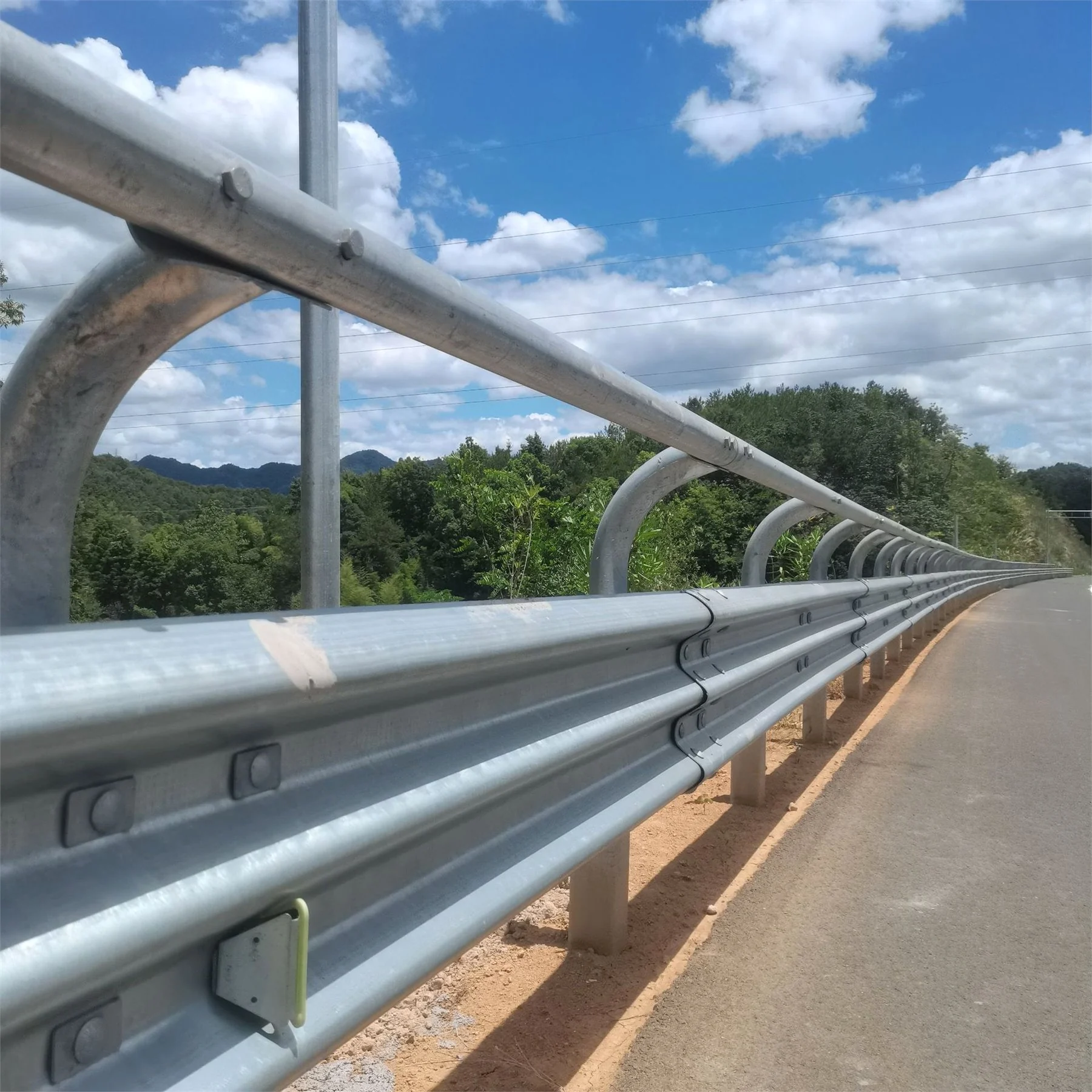
Fencing & Guardrails
Highway Guardrails
Highway guardrail packages are specified by beam profile, beam thickness, post type, spacer, terminal layout, coating and accessory list. Buyers should send drawings, road standard, total length and packing groups before quotation.
RFQ quick details
Product overview
How to Specify Highway Guardrails for Project RFQs
Guardrail quotation should follow the road layout first: beam profile, effective length, hole pattern, post spacing, terminals and transitions all need to match the drawing or local standard.
QY Metal Tech reviews road drawings, quantity lists, accessory schedules and export packing notes so beams, posts, spacers and bolt sets can be grouped for site installation instead of quoted as loose parts.
Highway Guardrails RFQ specification path
| Road layout | Send plan drawings, section length, curve or bridge transition information before beam quantity is confirmed. |
|---|---|
| Beam profile | W-beam, thrie-beam or project profile should match the drawing, hole pattern and applicable road standard. |
| Posts and spacers | Post type, post length, spacing, spacer block and installation method affect the accessory package. |
| Terminals | End terminals, transition sections, reflectors and special fittings should be listed by location. |
| Coating | Hot-dip galvanized finish is common, but coating thickness or color should follow the project requirement. |
| Packing groups | Beam bundles, post bundles and bolt cartons can be marked by road section for installation. |
Standards reference
Road standard, coating and accessory references
- Guardrail systems should follow approved road drawings, local highway safety standards and installation layout.
- Hot-dip galvanizing can be reviewed according to ISO 1461, ASTM A123/A123M or project-specified coating requirements.
- Beam profile, post section, spacer block, terminal and reflector details should match the drawing and accessory list.
- Final packing should group beams, posts, bolts and terminals by road section or installation sequence.
Specification examples
Common Highway Guardrail RFQ Models
| W-beam guardrail | Common road barrier profile reviewed with matching posts, spacers and bolt hole layout. |
|---|---|
| Thrie-beam guardrail | Deeper beam profile used when the drawing or containment requirement calls for higher protection. |
| Galvanized beam package | Beams, posts, spacers, terminals, reflectors and bolts grouped by road section. |
| Terminal and transition set | End terminals, bridge transitions and special sections confirmed from the project layout. |
Use these expressions as RFQ shorthand, then confirm drawing standard, beam length, post spacing, terminals, accessories, coating and packing marks before production.
Applications
Where Highway Guardrails Are Commonly Used
These examples connect guardrail specifications with road sections, slope edges, bridge approaches, installation sequence and accessory packing requirements.
Roadside safety barriers
W-beam or thrie-beam guardrails can be supplied with posts, spacers and bolts for road edges.
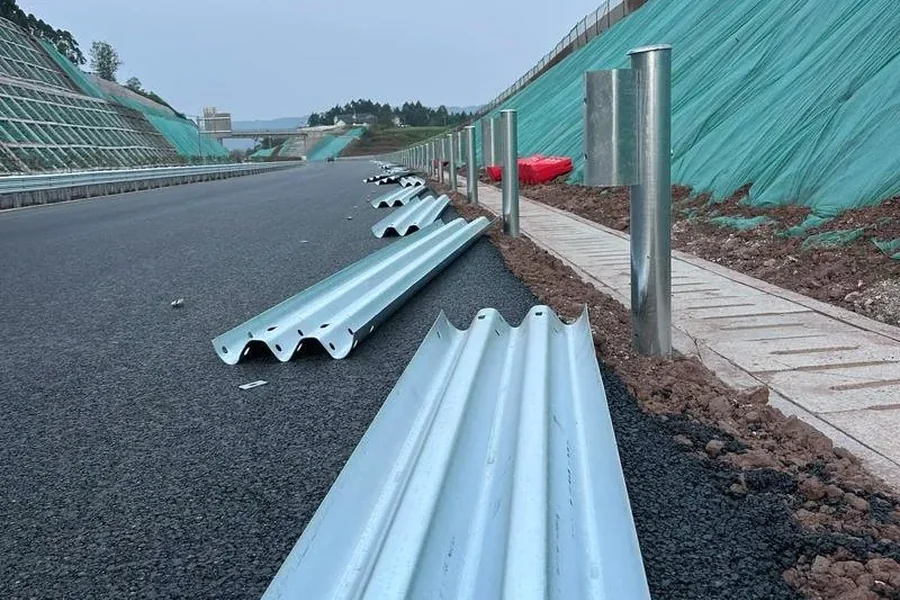
Beam and post packages
Loose beams, posts and spacers can be reviewed from drawings before installation sequence is confirmed.
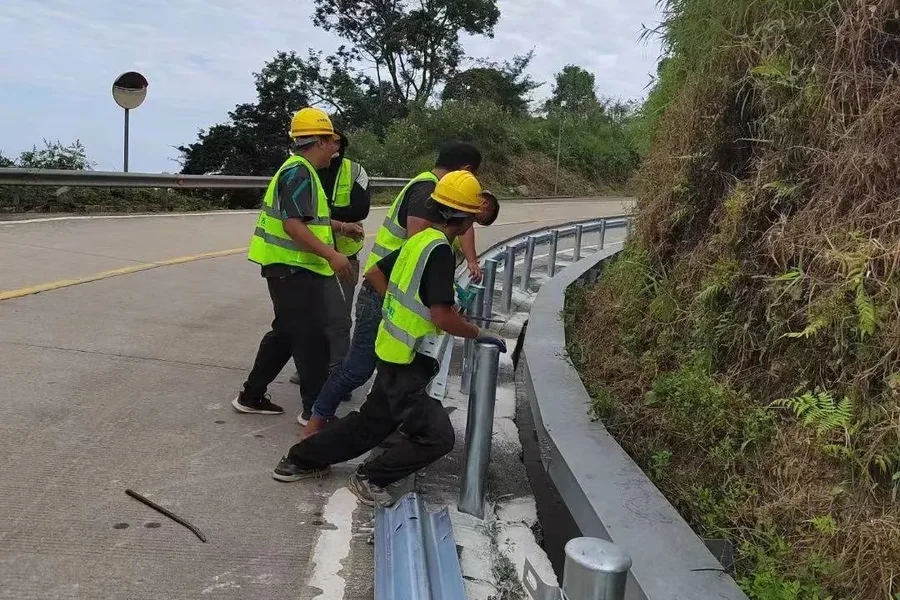
On-site installation review
Terminal details, post spacing and accessory marks help crews place each guardrail section correctly.
RFQ checklist
Send Highway Guardrail Layout Details for a Faster Quote
For faster quotation support, include beam profile, thickness, effective length, hole layout, post type, post spacing, spacers, terminals, bolts, finish, total length, quantity and destination. Layout drawings and packing sequence notes are useful for project supply.
Highway Guardrail RFQ checklist
- Road layout, section length, curve or bridge transition details
- Beam profile, thickness, effective length and hole pattern
- Post type, spacing, spacer blocks, terminals and reflectors
- Galvanizing requirement, quantity, destination and packing marks
FAQ
Project download: Highway Guardrail Product & RFQ Guide (PDF)
Specification inputs, components and document-control notes. Project-specific system approval and engineering review are still required.
Highway Guardrail Buyer Questions
W-beam or thrie-beam: which guardrail do I need?
Follow your project drawing, tender document or road standard. Thrie-beam is a deeper profile used where higher containment is required; if unclear, send the layout and containment notes for review.
Can you supply the complete system with posts, spacers and bolts?
Yes. Beams, posts, spacer blocks, bolts, nuts, washers, reflectors and special fittings can be quoted as one package. Terminals and transitions need the exact approved drawings.
Which coating is used?
Hot-dip galvanizing is standard. ASTM A123/A123M usually applies to fabricated parts and ASTM A153/A153M to hardware; coating thickness follows the project specification.
Can you make curved guardrail panels?
Yes. Send the chord, rise or radius with its reference basis, the orientation (inside or outside curve) and the tolerance from your drawing.
What documents come with the shipment?
Depending on your requirements: approved drawing, material certificates, dimensional and coating reports, fastener certificates, packing list and a deviation register.
How are guardrails packed for export?
Beams, posts and bolt cartons are bundled and marked by road section or installation sequence, so crews can sort parts on site.
Related paths
Continue from this product
Need a Highway Guardrail Package Quote?
Send drawings, road standard, beam profile, post spacing, terminals, accessories, quantity and destination. We will review compatibility and packing groups before replying.
System specification
Highway Guardrail System Specification and Component Matching
Highway guardrail should be quoted as a matched system, not as an isolated beam. Confirm the W-beam or Thrie-beam profile, rail and hole pattern, posts, spacer or blockout, fasteners, terminals, transitions, coating, road layout and exact supply boundary.
Guardrail system fields to confirm
| Field | What to send |
|---|---|
| Project basis | Road authority or engineer specification, drawing revision, location and approval basis. |
| Beam | W-beam or Thrie-beam profile, rail length, hole pattern, thickness or gauge wording and lap direction. |
| Post and offset | Post section and length, post spacing, spacer or blockout type and connection drawing. |
| Fasteners | Splice bolts, post bolts, washers, nuts and any project-specific hardware list. |
| Ends and transitions | Terminal, end section, transition, bridge or median interface and quantity by type. |
| Layout | Road section, curves or radius, slopes, obstacle interfaces, total length and sequence marks. |
| Finish | Coating specification, environment and any inspection or document requirement. |
| Supply boundary | Rails only or the complete rail, post, spacer, hardware, terminal and packing package. |
Compare W-beam vs Thrie-beam guardrail, confirm posts, spacers and bolts, review terminals and transitions, or use the replacement-part matching guide. Then send the approved system schedule and RFQ to QY.
QY can review submitted component descriptions, drawings, quantity, finish, packing and destination for quotation. QY does not infer crash performance, interchangeability or road-authority compliance from a photo or component name; final system selection and approval remain with the project authority or qualified engineer.
Highway guardrail engineering RFQ details
Source: QY-HGR-RFQ-01, Rev. 1.0 / 24 Jul 2026. A procurement and engineering clarification guide before project drawings and compliance evidence are approved; retain the original downloadable PDF.
System boundary: a loose W-beam is not an approved crash-barrier system. Rail profile, splices, posts, blockouts, fasteners, ends, transitions, foundation/soil and installed geometry must match the selected system. Changes can affect performance. This guide makes no blanket MASH, test-level or agency-approval claim.
On small screens, swipe wide tables sideways or focus the table and use the left/right arrow keys.
Choose the procurement route
| Route | Customer input | QY output |
|---|---|---|
| Build to approved drawing | Issued project drawing, bill of materials and governing specification | Component offer with deviation list and document package |
| Match a named public standard | Standard designation, edition, class/type and agency supplements | Specification review; exact evidence confirmed before claim |
| Develop an RFQ package | Site, barrier function, geometry, environment and authority | Preliminary schedule for designer/agency review; not an approved safety system |
Define straight or project-curved W-beam/thrie-beam panels, posts and blockouts, complete fasteners and the specified finish. Terminals, transitions and crash cushions require the exact approved assembly and interface, not a generic substitute.
Rail-panel manufacturing inputs
| Parameter | Required selection / entry |
|---|---|
| Profile | W-beam / thrie-beam / other approved profile |
| Nominal length | Overall and effective coverage length |
| Base metal | Grade, standard and certified thickness/gauge |
| Hole pattern | Approved drawing number and revision |
| End geometry | Standard splice / flared / special transition / custom |
| Curvature | Inside/outside curve, radius, chord, rise and orientation |
| Finish | Coating standard, class/grade, local repair method and appearance |
| Marking | Heat/lot, component ID, date or agency code as required |
| Quantity / packing | Panels per bundle, separators, lift points and destination |
Curve geometry: record the basis and units
Supply the drawing’s independent geometry controls and orientation. For a circular arc defined by chord C and rise M, R = C²/(8M) + M/2. Use consistent units for C, M and R before applying the relation; the worksheet’s alternative units are not permission to mix mm, in and ft. State whether the radius is centerline or another drawing reference. This geometric relation is not a capacity or crash-performance calculation.
Curve worksheet — project entries, not default dimensions
| Input | Definition | Record |
|---|---|---|
| Chord C | Straight-line distance between panel endpoints | [project entry] mm / in |
| Rise M | Maximum offset from chord to arc | [project entry] mm / in |
| Radius R | Centerline or reference radius — state basis | [project entry] mm / ft |
| Orientation | Inside / outside curve; traffic face; top/bottom | [project entry] |
| Tolerance | Project drawing tolerance | [project entry] |
Posts, blockouts and foundations
| Item | Specify | Do not assume |
|---|---|---|
| Steel post | Section, mass/length, grade, length, holes and coating | A visually similar post is structurally equivalent |
| Blockout | Material, geometry, hole pattern and orientation | Thickness or recycled content without approval |
| Post spacing | Exact approved system drawing | A universal spacing for all soils and test levels |
| Embedment | Approved depth, soil class or foundation detail | Field adjustment without designer acceptance |
| Base-plated post | Plate, anchors, concrete, edge distances and design loads | Anchor capacity from bolt diameter alone |
Fastener and interface schedule
For every connection, specify diameter, length, head form, nut, washer, grade and finish, plus thread position, shear plane and permitted projection. Use the approved tightening sequence. Kit parts by station, lot and drawing revision. Define exact terminal/transition drawings, connections and quantities before release; do not infer compatibility from a similar-looking component.
Coating and handling controls
| Control | Required record |
|---|---|
| Process route | After-fabrication hot dip / metallic-coated input / duplex system / other |
| Governing standard | Project-specified standard and edition; component-specific applicability checked |
| Coating acceptance | Thickness/mass, sampling plan, appearance and permitted repair |
| Drainage / venting | Fabrication features reviewed before galvanizing |
| Handling | No damaging chains on finished surfaces; dry, ventilated storage |
| Traceability | Coating batch linked to component and inspection report |
Specify the applicable contract edition and grade/class: ASTM A123/A123M commonly applies to fabricated steel products and ASTM A153/A153M to applicable hardware; they are not interchangeable component requirements. Agree coating measurement locations and sample size. Inspect bare areas, runs, sharp points, damage and repairs against the governing standard, keeping holes, slots, threads and mating surfaces fit for assembly. Packing must prevent finish damage and wet-storage staining while preserving dry ventilation. Keep coating batch, component and inspection identifiers linked.
Evidence supplied with the release
| Document | Release content |
|---|---|
| Approved drawing | Part number, revision, dimensions, tolerances and material/finish notes |
| Material certificate | Heat/lot, grade, chemistry/mechanical results and traceable quantity |
| Dimensional report | Critical profile, thickness, length, holes and curvature checks |
| Coating report | Standard/edition, sample locations, results and instrument identification |
| Fastener certificate | Grade, size, finish and lot |
| Packing list | Bundle/kit IDs, counts, gross/net mass and destination marks |
| Deviation register | Any difference from RFQ/drawing; purchaser disposition before release |
Use an inspection traveler covering forming, punching, coating and release. Keep part and bundle IDs visible, photograph special curves and labels, and retain the approved revision. Resolve deviations through recorded purchaser disposition before shipment.
Complete project RFQ checklist
| Category | Required information |
|---|---|
| Project authority | Country/state, road authority, governing specification and edition |
| System evidence | Approved system name/drawing/test level/eligibility or agency reference, if required |
| Rail panels | Profile, material, thickness, length, holes, ends, curves, quantity |
| Posts/blockouts | Section, grade, length, holes, spacing and foundation/soil detail |
| Fasteners | Complete bill of materials and coating |
| Transitions/terminals | Exact approved drawings; interface points and quantities |
| Finish | Standard, grade/class, appearance and repair requirements |
| Inspection | ITP, witness/hold points, certificates and language |
| Packing | Bundle size, kit sequence, container limits, marks and moisture controls |
| Commercial | Incoterm, destination, delivery, spare quantity and drawing approval date |
AASHTO M180, MASH, applicable coating standards and agency supplements are reference frameworks when required by the project. Record the exact adopted edition, system and evidence scope. Eligibility or agency references are supplied where required; this is not a statement that every project requires an FHWA eligibility letter. Project drawings and the responsible authority’s requirements govern.
Guardrail RFQ
Prepare a guardrail project RFQ
For road projects, quotation should connect guardrail type, post spacing, accessories, coating and packing requirements.
- Road standardW-beam or thrie-beam, project standard, rail thickness and post type.
- AccessoriesPosts, spacers, bolts, terminals, reflectors and drawing marks if available.
- ShipmentTotal length, bundle request, galvanizing, container loading and destination port.
Selection path
Specification, data and project references
1 · Check technical data
2 · See project references
3 · Datasheet and quotation
Order terms
- MOQ: guardrails are quoted per metre
- Samples available; sample and freight costs paid by the buyer
- Payment: 30% deposit, 70% before shipment
- Lead time: usually 30 days ex-works after deposit and drawing approval
- Quotation in 24–48 hours on working days
- Drawings: PDF, DWG, DXF, JPG, PNG, WebP up to 12 MB
Product datasheet
Highway Guardrails datasheet
2-page PDF: typical specifications, what we confirm before quotation, RFQ checklist and contact details. (418 KB)
RFQ form
Request Highway Guardrails quotation
Upload drawings if available. Include beam profile, post type, spacer, terminal details, road length, accessories, coating, quantity and destination for a faster technical response.
Related links
Related product and RFQ resources
- Fencing and guardrails product catalogBrowse the related product family section.
- Welded Mesh Fence RFQ Guide for Site Boundary ProjectsRFQ guide for welded mesh fence projects covering boundary use, panel size, wire diameter, mesh opening, posts, finish, gates, accessories, quantity and destination.
- Chain Link Fence vs Welded Mesh Fence for Site Boundary RFQsFence comparison and RFQ guide covering chain link fence, welded mesh fence, panel or roll form, posts, coating, gates, accessories, quantity and destination.
- Highway Guardrail RFQ Checklist for Road Safety ProjectsHighway guardrail RFQ checklist covering beam profile, beam length, post type, spacers or blockouts, bolts, terminals, finish, project standard, quantity, packing and destination.
- Send project RFQ detailsSend drawings, dimensions, finish notes, quantity and destination for review.
Factory verification and order terms
Video factory visits by appointment
Video factory visits can be arranged in advance. Contact our sales team to agree a time, platform and accessible production, inspection or packing areas. Other customers’ information and confidential areas are not shown.
Lead time: usually 30 days ex-works
For regular orders, production usually takes 30 days ex-works, counted from receipt of the deposit and approval of the drawings. Larger or special orders, and stock availability, are confirmed in the written quotation. Production and transport times are stated separately in the quotation or contract.
Written quotation and delivery terms
Trade terms are agreed for each order and logistics arrangement. The written quotation specifies the applicable Incoterms® 2020 rule, named delivery place or port of shipment, and whether freight, insurance and taxes are included. For containers handed to a carrier before vessel loading, FCA is considered rather than automatically using FOB.
Quality concerns and corrective action
Please provide the order number, affected quantity, photos or video, and relevant measurements or inspection records when reporting a quality concern. If responsibility is confirmed to lie with us, a remedy such as repair, additional supply, replacement, refund or price adjustment is agreed under the contract. Costs and the action plan are confirmed in writing; no unconditional return or fixed resolution period is promised.


